In today's manufacturing landscape, cutting techniques play a crucial role. Among these, laser cutting and mechanical cutting are prominent choices. Industries rely on precision and efficiency. However, what is the difference between laser cutting and mechanical cutting?
Laser cutting uses focused beams of light to cut materials. This method ensures high precision and minimal wastage. It is ideal for creating intricate designs. On the other hand, mechanical cutting involves tools like blades or drills. This method might be slower but offers robust durability for tougher materials.
Understanding these differences is important for selecting the right technique. Both methods have unique strengths. Laser cutting excels in delicate applications, while mechanical cutting suits heavy-duty tasks. However, limitations exist with both. Laser cutting may require higher initial costs, and mechanical cutting can be less flexible for designs. This exploration uncovers more than just technical specifications; it probes into the efficiency and applicability of each method in various industries.
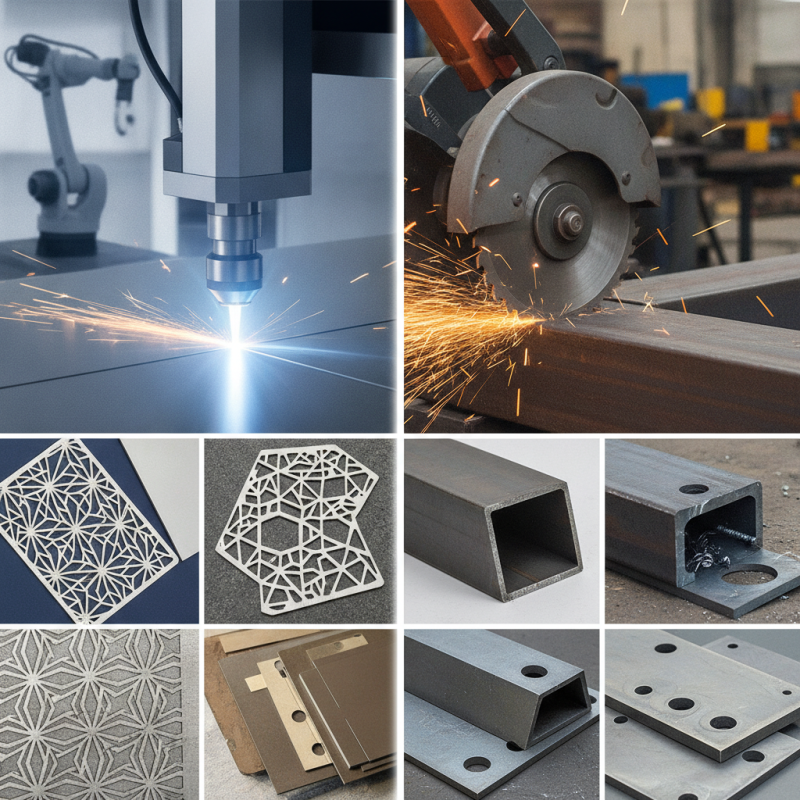
Manufacturing cutting techniques play a crucial role in various industries. Two common methods are laser cutting and mechanical cutting. Each has unique benefits and limitations that impact production efficiency and material utilization.
Laser cutting uses concentrated light beams to slice through materials. This method offers precision and flexibility. Laser systems can cut intricate designs outside the capabilities of mechanical methods. According to a report from the International Journal of Advanced Manufacturing Technology, precision laser cutting can reach tolerances of 0.1 mm. However, it also requires significant energy input, and costs can escalate for large production runs. Maintenance of laser equipment is another factor that manufacturers must consider.
On the other hand, mechanical cutting employs blades and tools to remove material. This traditional method is often more economical for metal and wood applications. It provides a high removal rate and can handle thicker materials effectively. A study by the American Society of Mechanical Engineers found that mechanical cutting is ideal for mass production scenarios. Yet, it can generate more waste and may not achieve the same precision as laser cutting. Understanding the intricacies of each technique is essential for optimizing manufacturing processes and minimizing costs.
Laser cutting technology is a revolutionary method of material processing. It uses a high-powered laser beam to cut through various materials with precision. This method is particularly effective for intricate designs that require exact specifications. The laser melts or vaporizes the material, resulting in clean edges. The versatility of laser cutting extends to metals, plastics, and wood, making it a preferred choice in many industries.
While laser cutting offers remarkable accuracy, it also presents challenges. The initial costs of laser cutting machines can be significant. Maintenance can become a concern, especially if the equipment is not properly cared for. Moreover, some materials may not respond well to laser cutting. For instance, reflective metals can create complications during the cutting process. It is essential to ensure that the material choices align with the capabilities of laser technology.
Understanding these factors is vital for anyone considering this technology. Each application may require careful analysis and adaptation. Laser cutting brings innovation to the manufacturing process, but ongoing evaluation is necessary. Knowledge of its strengths and limitations can lead to better decision-making in design and production.
Mechanical cutting processes are essential in various industries, including manufacturing and construction. Mechanical cutting uses tools like blades, mills, and lathes to remove material. This method relies on force and can result in different surface finishes based on tool quality and cutting conditions. Reports indicate that mechanical cutting accounts for approximately 70% of all metal processing activities.
Precision is critical in mechanical cutting. Techniques such as turning, milling, and drilling require careful setup and operation. Factors such as tool wear, vibration, and cutting speed can significantly affect quality. Engineers emphasize the importance of selecting the right tools and parameters to ensure effective cutting. Studies show that improper machining parameters can lead to a 30% reduction in tool life.
However, mechanical cutting can have limitations. It often generates significant heat due to friction, which may alter material properties. Additionally, complex geometries can be challenging to achieve. A survey of machinists highlighted that nearly 40% encountered issues with intricate designs. Understanding these challenges is key for improving efficiency and accuracy in mechanical processes.
In the context of modern manufacturing, laser cutting and mechanical cutting offer distinct advantages and challenges. Laser cutting utilizes focused light to modify materials. It provides precision and the ability to cut intricate designs. The process is efficient for various materials, including metal and plastics. However, it may not be suitable for very thick materials.
Mechanical cutting, on the other hand, employs physical tools to penetrate materials. This can include processes like sawing or milling. While it can be slower, it often works better on thicker or more robust materials. The technology is well-understood and has been refined over decades. However, it might struggle to achieve the intricate precision that laser cutting delivers, especially on complex shapes.
Tips: When choosing between these cutting methods, consider material thickness and design complexity. For large production runs, laser cutting may be more efficient. Additionally, evaluate cost-effectiveness based on the specifics of your project. Always test a small sample to ensure the chosen method meets your quality requirements, as results can vary significantly.
Laser cutting and mechanical cutting serve distinct purposes in various industries. Laser cutting is widely used in sectors requiring precision, such as aerospace and electronics. This method allows for intricate designs and fine details. For example, it is ideal for cutting thin materials like plastics and metals. Many manufacturers favor laser cutting for its clean edges and minimal thermal distortion.
On the other hand, mechanical cutting is prominent in the construction and automotive industries. It is often used for thicker materials, where durability is a priority. Mechanical cutting includes techniques like sawing and milling. These methods can handle heavy-duty tasks but may leave rough edges that require further finishing.
Each cutting technique has its advantages and drawbacks. While laser cutting boasts efficiency, it may not suit all materials, especially those with reflective surfaces. Mechanical cutting, while versatile, can be slower and produce more waste. Understanding the applications of each method allows industries to choose the appropriate technology for their specific needs.
: The two main techniques are laser cutting and mechanical cutting. Each has unique characteristics.
Laser cutting offers precision and can create intricate designs. It works well with thin materials.
Laser cutting requires a lot of energy and can be costly for large production runs. Maintenance is also needed.
Mechanical cutting uses tools like blades and mills to remove material through force. It is more traditional.
Mechanical cutting is widely used in construction and automotive industries. It suits heavier and thicker materials.
Mechanical cutting can generate heat and waste. Issues with precision on complex designs are common.
Tool selection is crucial. Wrong tools can lead to reduced effectiveness and a decrease in tool life.
No, laser cutting is less effective on thicker materials. Mechanical cutting is better for such applications.
Using incorrect parameters can reduce tool life by up to 30%. Precision is vital in mechanical cutting.
Manufacturers often prefer laser cutting for its clean edges and minimal thermal distortion. It's perfect for detailed work.
In the realm of manufacturing, understanding various cutting techniques is crucial for optimizing production processes. The article "What is the Difference Between Laser Cutting and Mechanical Cutting?" delves into two predominant methods: laser cutting and mechanical cutting. Laser cutting technology employs focused light beams to precisely cut materials, providing high accuracy and minimal material wastage. In contrast, mechanical cutting utilizes physical blades or tools, which may lead to more significant wear and tear over time.
The comparative analysis highlights key differences such as speed, cost-effectiveness, and the types of materials suitable for each method. Industries utilize these approaches based on specific requirements, with laser cutting being favored for intricate designs and thin materials, while mechanical cutting is often used for thicker substrates and more straightforward shapes. Ultimately, this article serves as a guide to discern what is the difference between laser cutting and mechanical cutting, helping manufacturers make informed decisions for their specific applications.
Focus Laser