Laser cutting technology has transformed the electronics manufacturing industry. Specifically, it plays a vital role in the production of printed circuit boards (PCBs). Understanding how does laser cutting affect PCB conductivity is crucial for engineers and designers.
The precision of laser cutting allows for intricate designs without compromising the integrity of the conductive paths. When using a laser, the heat affects the material properties; this can be both beneficial and detrimental. Improper settings may lead to overheating, which could create micro-cracks in copper layers. These defects impact conductivity negatively.
On the other hand, the right laser parameters enhance edge quality, leading to better electrical performance. Additionally, laser cutting eliminates the need for mechanical drilling, reducing material stress. Yet, the challenge remains in finding the perfect balance between speed, accuracy, and thermal effects. As the industry evolves, monitoring these factors becomes essential for optimal PCB design and function.
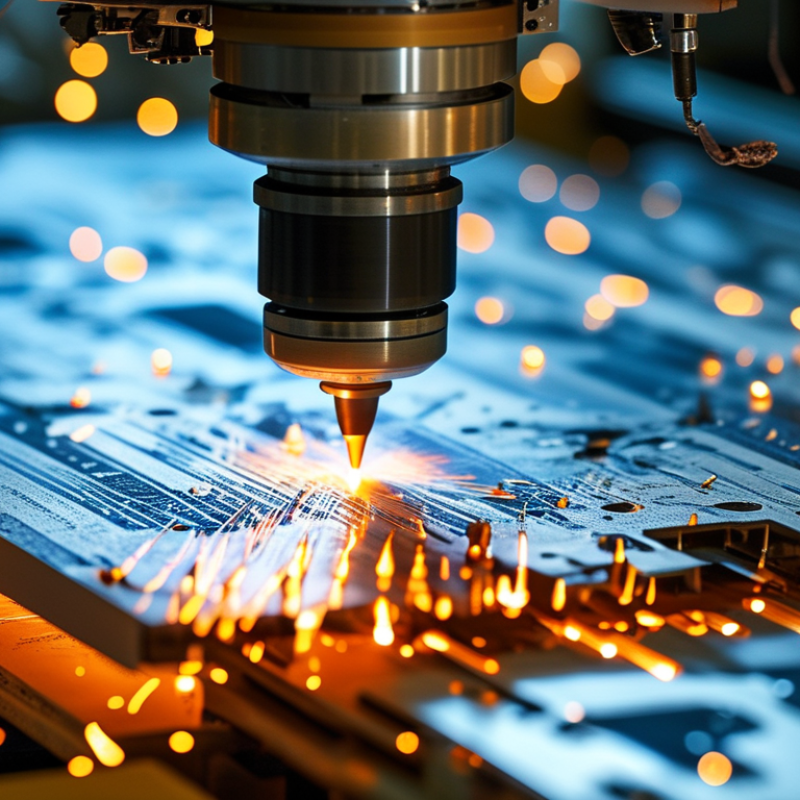
Laser cutting has transformed the manufacturing of printed circuit boards (PCBs) by enhancing precision in various aspects. This precision is crucial for conductivity levels in PCBs. When the laser is finely tuned, it can accurately cut traces and pads, minimizing material loss. However, inconsistencies in laser power or focus can lead to uneven cuts, potentially affecting conductivity.
The relationship between laser cutting and PCB conductivity is complex. An optimal cut can ensure the integrity of conductive paths. This allows for effective electrical flow. Conversely, a poorly executed cut may introduce resistance. This could lead to failures in electronic devices. Designers must carefully consider the laser settings to achieve desired PCB performance. Precision is not just technical; it requires a deep understanding of material properties and design needs.
Expecting perfection in laser cut PCBs can lead to disappointment. Variabilities can stem from factors like material density or moisture content. Each PCB can react differently, despite identical cutting parameters. Therefore, continuous testing and refinement are essential for achieving reliable conductivity. The quest for precision in laser cutting is ongoing and requires consistent evaluation of techniques and outcomes.
| Method | Influence on Conductivity | Precision Level | Impact on Manufacturing |
|---|---|---|---|
| High-Power Laser Cutting | Increases thermal efficiency | High | Speeds up production |
| Controlled Laser Ablation | Enhances surface purity | Medium | Reduces defects |
| Fine Laser Cutting | Improves precise edge features | High | Increases product quality |
| Variable Laser Speed | Controls heat affected zone (HAZ) | Medium | Optimizes material usage |
| Micro Laser Cutting | Increases control at microscopic level | Very High | Enables complex designs |
| Laser Scanning Technology | Improves overall connectivity | High | Facilitates rapid prototyping |
| Marking and Etching | Enhances identification | Medium | Improves traceability |
| Adaptive Laser Techniques | Optimizes laser parameters | High | Maximizes efficiency |
| Pulsed Laser Systems | Reduces heat damage | Medium | Ensures uncompromised signals |
| Two-Dimensional Laser Processing | Facilitates intricate layouts | High | Boosts design capabilities |
: Laser cutting enhances PCB conductivity by minimizing material loss and ensuring accurate cuts of traces and pads.
Inconsistent laser power can lead to uneven cuts, which may affect conductivity and cause potential device failures.
Effective thermal management prevents heat accumulation, protecting components and improving the lifespan and reliability of electronic devices.
Not all designs benefit equally; some may experience trade-offs between cut precision and thermal dissipation, risking micro-cracks.
Laser cutting outperforms traditional mechanical drilling methods by reducing discrepancies in trace dimensions, thus lowering resistance.
Laser-cut PCBs maintain higher conductivity at high frequencies due to smoother cut edges, enhancing electrical flow in modern applications.
Investing in training programs on laser technologies can help close the knowledge gap associated with traditional manufacturing methods.
Improper calibration may lead to excessive heat, altering material properties, and potentially harming the final product's performance.
Continuous testing is vital to achieve reliable conductivity due to variations in material properties and environmental conditions affecting each PCB.
Manufacturers may face higher initial costs and maintenance issues while transitioning from traditional methods to laser technologies.
Laser cutting has revolutionized the manufacturing process of printed circuit boards (PCBs) by enhancing precision and efficiency, which directly affects PCB conductivity. This article explores how does laser cutting affect PCB conductivity through various factors. The precision of the cutting process is crucial, as more accurate cuts minimize the risk of damaging conductive pathways, thereby improving conductivity levels. Additionally, the selection of materials during the laser cutting process also plays a significant role in determining the overall conductivity of the PCBs.
Furthermore, effective thermal management is addressed, highlighting how laser cutting influences heat dissipation in PCBs, which is essential for maintaining optimal performance. The variations in surface finish resulting from laser cutting techniques can also impact conductivity, emphasizing the importance of surface quality. Finally, a comparative analysis of laser cutting versus traditional methods reveals that laser techniques often yield better conductivity outcomes, showcasing their advantages in modern PCB manufacturing.

 Focus Laser