7 Best Answers To How Does Laser Affect Optical Glass Quality?

Time:2026-10-10 Author:Charlotte
0%

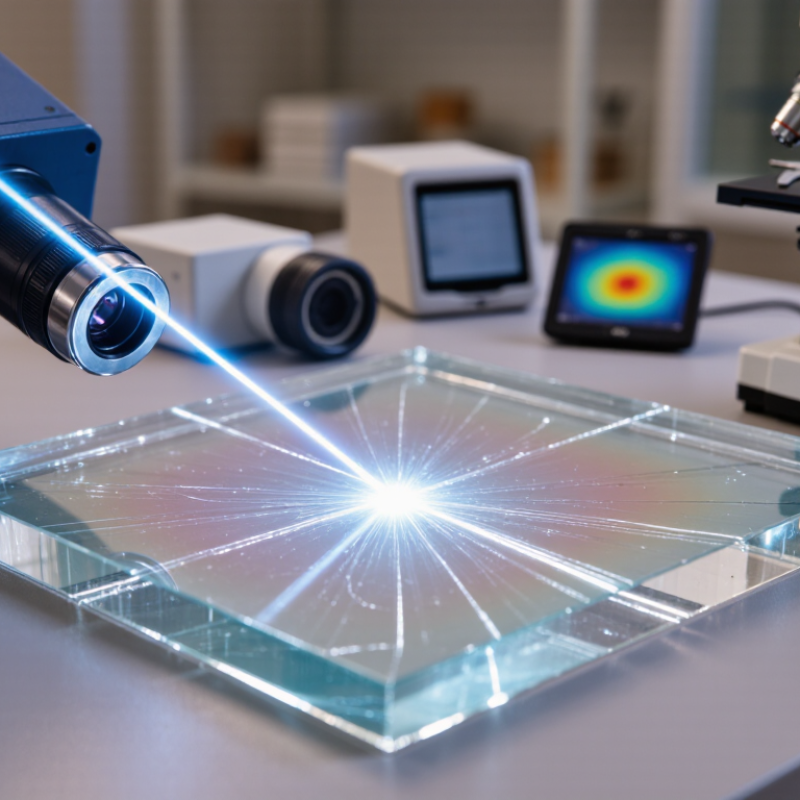
Laser processing can change optical glass in ways that are visible, measurable, or hidden. The question “how does laser affect optical glass quality” depends on wavelength, pulse duration, energy density, and the glass composition. A low-power beam may leave the surface unchanged. A focused pulse can create heating, microcracks, coating damage, or permanent refractive-index changes.

In practical testing, technicians inspect the glass under angled light and magnification. They also measure surface roughness, transmission, wavefront distortion, and scattering. A faint white line near the beam path may indicate subsurface damage, even when the surface feels smooth. Thermal imaging can reveal localized heating around the laser spot. Interferometry may show a distorted wavefront after repeated exposure. Small details matter.

These seven answers examine the main ways laser exposure influences optical glass quality. They connect laboratory evidence with manufacturing experience, including cutting, marking, welding, and precision measurement. However, no single answer fits every setup. Different glass types absorb different wavelengths, and protective coatings may fail before the substrate does. Some measurements can also disagree. That is why reliable evaluation should combine visual inspection, instrument testing, and controlled exposure records. A cautious interpretation is better than a confident guess. The guide also considers beam alignment, cooling, contamination, and repeated pulses, since real production conditions are rarely perfect. Understanding these factors helps engineers choose safer parameters and recognize damage before it affects an optical system.
7 Best Answers To How Does Laser Affect Optical Glass Quality?

What Is the Interaction Between Laser Light and Optical Glass?

Laser light interacts with optical glass through reflection, transmission, absorption, and scattering. The wavelength matters because glass does not respond equally across the spectrum. A clear lens may transmit visible light yet absorb more energy in infrared bands. At each surface, a small portion reflects. Coatings can reduce this loss, but they cannot remove it completely. Internal impurities, microcracks, or polishing marks may scatter the beam. The result is lower transmission and a less stable image. Small defects matter.

When absorbed energy becomes heat, the glass expands locally. This creates thermal stress and can change the refractive index. Engineers call this thermal lensing. The beam may then focus differently, distort, or produce a bright damaged spot. Continuous-wave lasers usually create gradual heating, while short pulses can cause rapid fracture or localized material removal. Pulse energy, spot size, repetition rate, and exposure time must be evaluated together. One number is not enough. The damage threshold is also wavelength-dependent.

Reliable assessment combines power measurements, wavelength data, surface inspection, and controlled exposure tests. Keep the optical path clean; a dust particle can absorb energy and leave a tiny crater. Calculations may look safe while contamination changes the outcome. That is a useful warning. Glass quality is not judged by appearance alone. Transmission maps, surface flatness, and post-test microscopy reveal changes that the eye misses. Still, laboratory results may not predict every field condition. Mounting stress, cooling, alignment, and beam instability can alter performance. Careful records make the interaction easier to understand.

Which Laser Properties Determine Optical Glass Damage?

Laser properties decide whether optical glass remains clear or develops pits, cracks, or cloudy absorption zones. Wavelength matters because glass absorbs some spectral bands more strongly than others. At 1064 nm, transparent fused silica usually tolerates higher energy than absorbing glasses. However, surface contamination can reverse that advantage.

Pulse duration is equally important. Nanosecond pulses often create thermal damage, while femtosecond pulses can trigger nonlinear breakdown. Published measurements in the Laser-Induced Damage in Optical Materials conference proceedings commonly place nanosecond thresholds for polished fused silica near 5–20 J/cm² at 1064 nm. Ultrafast tests may show thresholds around 1–3 J/cm², depending on pulse width and test method. These figures are not universal. ISO 21254 testing guidance also stresses beam conditioning, site selection, and statistical reporting.

Repetition rate creates another risk. A glass surface may survive one pulse but fail after thousands of pulses through heat accumulation. Peak fluence, beam hot spots, polarization, focus position, and incidence angle also change the result. A Gaussian beam can hide dangerous local peaks. I would not trust one threshold number.

Tips: Measure pulse energy at the optic, not only at the laser output. Inspect with dark-field illumination. Keep dust away. Record wavelength, pulse duration, repetition rate, and beam diameter. A clean-looking optic can still contain subsurface defects, so visual inspection alone is weak evidence.

How Does Laser Exposure Change Glass Transmission and Clarity?

Laser exposure can change optical glass transmission through heat, absorption, and microscopic structural damage. The effect depends on wavelength, pulse duration, beam intensity, and exposure time. Even clear glass may absorb a small portion of laser energy. That energy becomes heat.

The change is gradual. Repeated pulses can create tiny color centers inside the glass. These defects may increase absorption at specific wavelengths, reducing transmitted power. A surface coating can also crack, blister, or develop a faint haze. Under inspection, the glass may show cloudy edges, rainbow-like reflections, or small dark spots near the beam path.

Clarity can decline when thermal stress produces microfractures or refractive-index variations. In practical testing, technicians compare before-and-after transmission curves rather than relying only on visual inspection. They also examine scatter with a controlled light source and microscope. A clean-looking sample may still lose performance at the operating wavelength.

My experience with optical evaluations suggests that contamination is often underestimated. Dust or residue can absorb energy and create localized damage faster than the glass itself. However, not every transmission loss proves permanent damage; alignment errors and detector drift can produce misleading readings. Reliable testing requires stable power, calibrated instruments, and repeated measurements. Some results remain uncertain without knowing the glass composition, coating structure, and laser exposure history.

What Types of Laser-Induced Defects Affect Optical Glass Quality?

Laser changes optical glass quality through several laser-induced defects, not only visible burn marks. Surface damage often begins with microscopic scratches, dust, or polishing residues. These sites absorb more energy and form tiny craters, pits, or radial cracks.

Inside the glass, inclusions and bubbles can create local heating. Repeated pulses may produce color centers, stress birefringence, or permanent refractive-index changes. Coated surfaces can delaminate when thermal expansion exceeds layer adhesion. The 2023 Laser-Induced Damage in Optical Materials proceedings report that measured damage thresholds vary widely with pulse duration, wavelength, beam size, and test method. ISO 21254 also requires controlled conditioning and inspection because contamination can distort threshold results. A higher threshold does not always mean better optical quality. It may hide early scattering or wavefront distortion.

Tips: Inspect both surfaces and the beam path. Use dark-field microscopy for small pits. Measure transmission before and after exposure. Keep cleaning records. Do not assume a polished surface is defect-free. In practice, handling marks can matter more than expected. NIST measurement guidance emphasizes traceable calibration and uncertainty reporting. That point is easy to overlook. Threshold data without uncertainty can encourage false confidence, especially when defects appear after many pulses rather than one.

How Can Optical Glass Resist or Recover from Laser Damage?

Laser damage does not always destroy optical glass instantly. It often begins with tiny absorbers, polishing defects, or contamination on the surface. Published ISO 21254-based studies commonly report nanosecond damage thresholds of about 5–20 J/cm² for polished fused silica. Coatings may show lower values, depending on design and manufacturing quality.

Resistance starts with low-absorption glass, clean handling, and controlled polishing. A single fingerprint can form a hot spot under a focused beam. Operators should inspect surfaces with suitable illumination before alignment. Thermal management also matters. Repeated pulses can create heat faster than the glass can release it. ISO 21254-1 testing shows that pulse duration, beam size, repetition rate, and test procedure strongly affect measured thresholds. Comparing numbers without these details can mislead engineers.

Damage recovery is limited. Cleaning may remove contamination, but it cannot restore a crater or fracture. Light damage can sometimes be reduced through professional repolishing or controlled annealing. Laser conditioning may improve practical resistance, yet it can also enlarge hidden defects. That uncomfortable trade-off deserves attention.

Tips: Keep optics sealed when possible. Use lint-free tools and filtered air. Record pulse energy, spot size, and inspection images. Treat every threshold value as application-specific, not permanent. Industry studies from SPIE and ISO-based laboratories support this cautious approach.

FAQS

How can laser exposure reduce glass transmission?

Absorbed laser energy becomes heat inside the glass. Repeated pulses may create color centers that absorb selected wavelengths. Transmitted power then falls. The change may remain invisible.

What visible signs suggest laser damage?

Inspect the beam path for cloudy edges, rainbow reflections, dark spots, pits, or faint haze. Coatings may crack or blister. Small radial cracks can surround tiny craters. Visual inspection alone is unreliable.

Can glass lose clarity without obvious damage?

Yes. Microscopic fractures and refractive-index changes can increase light scatter. A sample may look clear but perform poorly at its working wavelength. That result can surprise people.

Which defects commonly affect optical glass?

Common defects include color centers, inclusions, bubbles, stress birefringence, pits, scratches, and coating separation. Polishing residue can become a small heat source. Dust matters more than expected.

How should damaged glass be tested?

Measure transmission before and after exposure. Compare transmission curves at relevant wavelengths. Use controlled illumination, microscopy, and scatter measurements. Repeat the test with calibrated instruments.

Why might transmission measurements be misleading?

Alignment errors, unstable power, detector drift, and contamination can distort results. A single reading cannot prove permanent damage. Record repeated measurements and test conditions. Uncertainty remains.

How can optical glass resist laser damage?

Use low-absorption glass, careful polishing, clean handling, and suitable thermal control. Keep optics sealed when practical. Use filtered air and lint-free tools. A fingerprint can create a hot spot.

Can damaged optical glass recover?

Cleaning may remove dust or residue, but it cannot repair craters or fractures. Professional repolishing may reduce light damage. Controlled heat treatment can help sometimes. Recovery is limited.

Conclusion

Understanding how does laser affect optical glass quality requires examining both the laser and the glass itself. Laser wavelength, intensity, pulse duration, repetition rate, and beam focus determine how much energy enters the material and whether it is absorbed, reflected, or transmitted. Low-energy exposure may produce little visible change, while high-energy or repeated pulses can create heat, stress, and permanent damage. The glass composition, surface finish, thickness, and internal uniformity also influence its resistance.

Laser exposure may reduce transmission and clarity through absorption, discoloration, scattering, or localized refractive-index changes. Common laser-induced defects include surface pits, cracks, bubbles, coating damage, and internal fractures caused by thermal stress. In some cases, careful control of beam conditions, cooling, cleaning, and optical alignment can limit further deterioration. However, severe damage usually cannot be fully reversed, so selecting suitable glass, maintaining clean surfaces, and monitoring exposure are essential for preserving optical performance.

Charlotte

Charlotte

Charlotte is a seasoned marketing professional with a deep understanding of the company's portfolio and a passion for elevating its presence in the market. With a keen eye for detail and a commitment to excellence, she ensures that our professional blog is regularly updated with insightful articles......