Advancements in laser technology are reshaping the landscape of miniaturized electronics. As devices continue to shrink, the demand for precision increases. How does laser technology support miniaturized electronics? It offers unparalleled accuracy in the manufacturing process. Lasers can etch intricate patterns on tiny components, ensuring high functionality in small spaces.
Moreover, laser technology speeds up production times. The ability to create complex designs rapidly is revolutionary. This efficiency is crucial in today’s fast-paced market. However, it is essential to acknowledge the limitations. The integration of laser processes demands specific expertise. Without proper training, the risks of errors increase.
In conclusion, understanding how does laser technology support miniaturized electronics is crucial for industry professionals. As the field evolves, ongoing research and development are vital. The potential for further improvements remains significant. Embracing these innovations could lead to even smaller and more efficient devices.
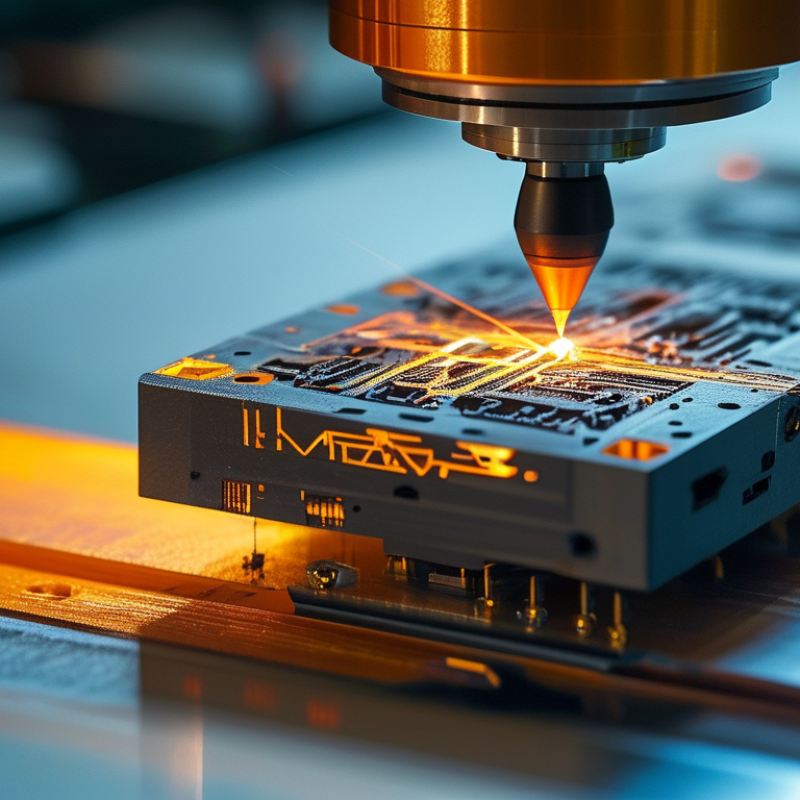
The Basics of Laser Technology in Electronics Manufacturing
Laser technology is revolutionizing electronics manufacturing. It plays a crucial role in producing miniaturized components. These components require precision and efficiency. Lasers provide both. They can cut, etch, and assemble materials at a microscopic level. This enhances the performance of small devices, from smartphones to medical instruments.
In a typical process, lasers enable high-precision drilling. This creates tiny holes in circuit boards. Such techniques reduce material waste. They also improve energy efficiency. Despite these advances, challenges remain. The cost of laser equipment can be high. Also, not all materials interact well with laser technology. Testing and refinement are essential.
Understanding the intricacies of lasers in electronics is important. Innovations are ongoing, and further improvements are likely. The evolution of laser technology will shape the future of miniaturized electronics. It’s a field that continues to grow, demanding continuous learning.
Understanding Miniaturization in Electronic Components
Miniaturization in electronic components is a critical trend affecting various industries. The shift towards smaller devices demands advancements in technology. Traditional manufacturing methods struggle to meet the precision needed for compact designs. Thus, new techniques, like laser technology, play a vital role.
Laser technology enhances miniaturization by enabling precise cutting and shaping of materials. The high accuracy of lasers allows manufacturers to create tiny components without compromising their integrity. This process reduces wastage and improves efficiency.
For instance, lasers can etch intricate patterns on circuit boards, effectively utilizing limited space. The ability to manipulate materials at a microscopic scale opens new possibilities for innovative designs.
However, the application of laser technology is not without challenges. Achieving uniform results requires expert knowledge. Temperature control during laser processes is essential, as overheating can damage sensitive components. Moreover, the learning curve for adopting new technology can be steep. These factors highlight the need for continuous research and development in the field. As the industry evolves, the balance between innovation and reliability remains a concern.
The Role of Laser Cutting in Precise Component Fabrication
Laser cutting technology plays a vital role in the fabrication of miniaturized electronic components. This method is known for its precision and efficiency. In microelectronics, maintaining the smallest tolerances is critical. According to a report by the market research firm Research and Markets, the global market for laser cutting technology in electronics is projected to reach $3.49 billion by 2025. This growth is driven by the demand for smaller and more complex components that traditional manufacturing methods struggle to produce.
Laser cutting enables manufacturers to achieve intricate designs without compromising the integrity of materials. The focused beam of light in laser cutting minimizes heat damage and reduces waste. This precision is essential for delicate components like printed circuit boards (PCBs). In fact, studies show that laser cutting reduces production time by nearly 30%. However, companies must continually evaluate their cutting strategies to maximize efficiency while ensuring quality.
Tips: Ensure your laser settings are optimized for the material you're cutting. Test different parameters to reduce errors. Keep an eye on maintenance to maintain cutting edge performance. Remember, slight inconsistencies can lead to larger issues down the line, especially in high-tolerance environments.
Impact of Laser Technology on Miniaturized Electronics
Laser Ablation Techniques for Surface Modification in Electronics
Laser ablation techniques are revolutionizing surface modification in miniaturized electronics. This method uses focused laser beams to remove material from solid surfaces. Small-scale precision is crucial for modern electronics, which require intricate designs. Laser ablation allows manufacturers to create fine patterns and features with incredible accuracy.
One primary application of this technology is in the creation of
circuit boards. By precisely removing layers, engineers can make way for new components. This process enhances conductivity and adhesion in electronic devices. However, the challenges often arise in the form of
material compatibility and surface uniformity. Different materials react uniquely to laser energy, leading to potential defects.
Another notable application lies in the
integration of microcomponents. With laser ablation, manufacturers can join components seamlessly. Yet, achieving this without compromising the overall integrity of the device remains a concern. Overall, while laser technology significantly boosts innovation in miniaturized electronics, it necessitates careful consideration of its complexities and limitations.
Future Trends: Laser Technology Advancements in Miniaturized Devices
As laser technology continues to evolve, its impact on miniaturized electronics is becoming increasingly significant. Recent industry reports indicate that the global laser technology market is projected to reach $19 billion by 2026, driven largely by advancements in manufacturing processes. This growth is not just about size reduction; it's also about enhancing performance and efficiency in a variety of devices.
For instance, the precision offered by lasers allows for high-resolution patterning in semiconductor production. This process results in more compact circuit designs, leading to faster and more efficient electronic components. A study published by an industry analysts' group highlighted that laser-based manufacturing can improve yield rates by approximately 30%. Such improvements are critical as the demand for smaller and more powerful devices rises exponentially in sectors like healthcare and telecommunications.
However, challenges remain. Despite these advancements, integrating laser technology into existing manufacturing lines can be complex and costly. Many companies struggle with the transition. Additionally, as devices shrink, thermal management becomes more critical. Overheating in miniaturized electronics could negate the benefits of increased efficiency. Balancing innovation with practical application remains a key focus for engineers and researchers alike.
How Does Laser Technology Enhance Miniaturized Electronics? - Future Trends: Laser Technology Advancements in Miniaturized Devices
| Aspect |
Description |
Impact on Electronics |
Future Trends |
| Cutting Technology |
Precision cutting and shaping of components |
Enables smaller, more intricate designs |
Increase in use of 3D laser cutting |
| Surface Treatment |
Improving surface quality and functionality |
Enhances durability and performance |
Development of advanced surface coatings |
| Soldering Techniques |
Laser soldering for electronic components |
Reduces thermal stress on components |
Integration of automated laser soldering systems |
| Micro-Machining |
Fabrication of tiny components and features |
Facilitates development of microelectromechanical systems (MEMS) |
Growth in demand for MEMS devices |
| Customization |
Tailored manufacturing solutions via laser |
Allows flexible production of unique designs |
Expansion of bespoke electronics market |
FAQS
: Laser cutting offers precision and efficiency for miniaturized components. It ensures minimal heat damage and reduces waste.
Studies indicate that laser cutting can reduce production time by nearly 30%. This helps manufacturers stay competitive.
Laser settings must be optimized for each material. Testing different parameters can help reduce errors significantly.
Material compatibility poses challenges. Different materials may react inconsistently to laser energy, leading to potential defects.
Laser ablation improves conductivity and adhesion in circuit boards by precisely removing layers for new components.
Surface uniformity ensures the quality of components. Inconsistencies can cause larger issues in high-tolerance environments.
Yes, while laser ablation allows for integration of microcomponents, it may risk the overall integrity of the device.
Continual evaluation of cutting strategies is crucial. This helps maximize efficiency while upholding quality standards.
The global market for laser cutting technology in electronics is expected to reach $3.49 billion by 2025.
Regular maintenance of equipment is essential. It ensures consistent cutting edge performance and minimizes potential issues.
Conclusion
Laser technology plays a crucial role in enhancing miniaturized electronics by providing precise manufacturing methods that support the trend toward smaller, more efficient components. The basics of laser technology in electronics manufacturing include techniques such as laser cutting and laser ablation, which are essential for accurately fabricating intricate designs. These methods allow for the creation of miniaturized components without compromising quality, as lasers can achieve finer cuts and modifications than traditional manufacturing techniques.
Furthermore, understanding how does laser technology support miniaturized electronics is key to exploring future advancements. Continuous improvements in laser capabilities promise to drive innovation in electronic device design, enabling even more complex functionalities while maintaining optimal space utilization. As the industry progresses, the integration of advanced laser techniques will likely lead to the production of next-generation miniaturized devices that meet the ever-growing demand for compactness and performance.

 Focus Laser