Glass laser cutting is moving beyond specialist laboratories and into high-value production. The real question is: what industries use glass laser cutting technology today?
Electronics manufacturers use ultrafast lasers to cut display glass, smartphone covers, camera windows, and semiconductor components. These systems can create narrow kerfs with limited chipping. That matters when a fragile panel must retain optical clarity. Medical-device companies also process diagnostic cartridges, microfluidic glass, and precision laboratory parts. Small edges matter here.
Automotive suppliers are adopting laser methods for windshield sensors, heads-up displays, and electric-vehicle battery interfaces. Solar manufacturers apply them to thin glass substrates and photovoltaic modules. Architecture and furniture producers use laser cutting for decorative panels, fitted partitions, and complex interior details. The method can reduce mechanical contact, although it does not eliminate every finishing step.
Grand View Research valued the global glass market at approximately USD 166.5 billion in 2023. Fortune Business Insights also reports strong growth in the broader laser-cutting-machine market through 2032. These figures show momentum, but they should not be treated as direct measurements of glass laser cutting. Market reports often combine several laser applications.
Dr. Stefan Kaierle of Laser Zentrum Hannover describes laser material processing as “a key technology for modern manufacturing.” His point reflects industry experience: precision, repeatability, and digital control are driving adoption. Still, the technology is not universally superior. Material thickness, coating damage, heat management, and equipment costs remain practical concerns. This guide examines the leading sectors, their real applications, and the limitations decision-makers should consider before investing.
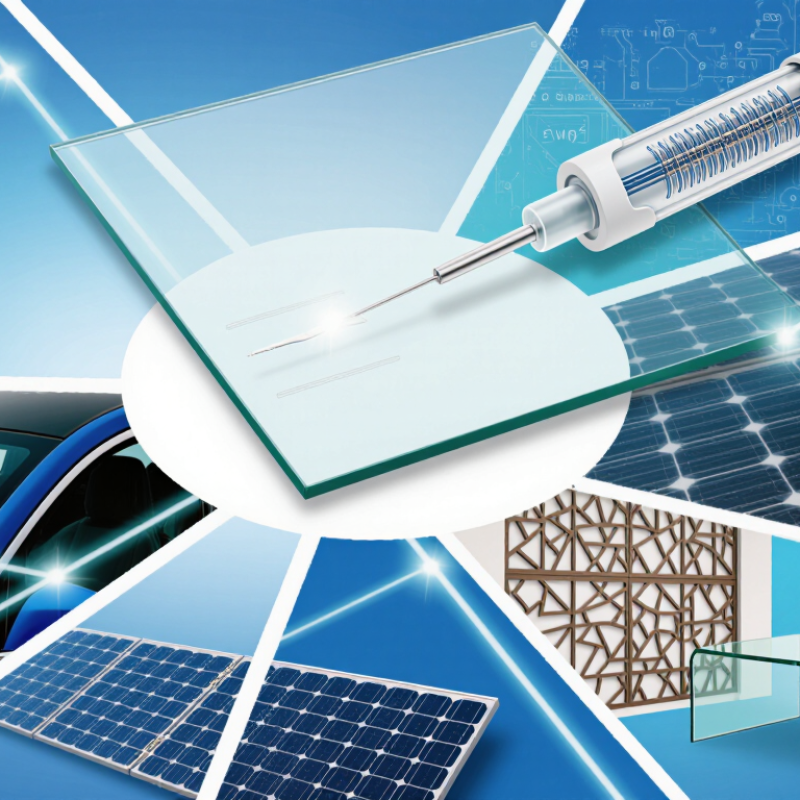
Glass laser cutting technology uses a focused light beam to separate or modify glass with controlled energy. In 2026, manufacturers apply it to electronics, solar panels, medical devices, and architectural components.
The operating principle is precise, not mysterious. A laser concentrates energy into a narrow spot, creating thermal stress or microscopic material removal. The selected wavelength matters because glass transmits some light and absorbs other wavelengths. Pulse duration, power, scanning speed, and focus depth must match the glass type and thickness.
Ultrafast pulses can form internal damage lines with limited surface heating. A later mechanical force follows this weakened path, producing a controlled break. Continuous beams may heat the surface more directly, but they can create cracks, rough edges, or unwanted stress. Cooling and beam alignment remain essential. A tiny focus error can ruin a large sheet.
The edge must be inspected.
In production settings, technicians often check edge chipping, perpendicularity, and residual stress under magnification. They also test sample pieces before changing batch settings. This practical step is easy to skip, and that is a mistake. Glass responds differently because of coatings, impurities, thickness changes, and internal tension. Laser cutting is highly repeatable, but never automatically perfect. Human judgment still affects quality, especially when the design has holes, corners, or narrow channels.
Top Industries Using Glass Laser Cutting Technology in 2026
Glass laser cutting is gaining attention across photovoltaic, automotive, electronics, and medical-device manufacturing. The International Energy Agency reported over 400 gigawatts of new solar capacity in 2023. That expansion increases demand for accurately processed glass substrates. Laser systems can create narrow kerfs, smooth edges, and complex profiles without physical contact. This reduces chipping risks during thin-glass processing.
The advantages extend beyond precision. Lasers produce localized energy, which can limit mechanical stress and simplify automated handling. In automotive displays, this supports curved panels and compact sensor windows. In electronics, smaller kerfs can improve material utilization. The International Organization of Motor Vehicle Manufacturers recorded more than 93 million vehicles produced globally in 2023. This scale strengthens demand for repeatable glass processing.
However, the benefit is not automatic. A poorly selected wavelength may increase thermal damage or create invisible microcracks. Cutting speed, coating type, thickness, and cooling conditions must be tested together. Industry studies on laser-material interaction consistently link process stability with lower defect rates and better yield. Still, published results often use controlled laboratory glass. Factory glass contains coatings, dust, and edge variation. That difference deserves more attention. Engineers should validate every setting through microscopic inspection, strength testing, and long-cycle production trials.
| Industry | Main Glass Applications | Common Glass Types | Typical Cutting Requirements | Key Advantages of Laser Cutting | 2026 Manufacturing Priority |
|---|---|---|---|---|---|
| Consumer Electronics and Displays | Cover glass, touch panels, camera windows, fingerprint-sensor covers, and display substrates | Aluminosilicate, chemically strengthened glass, borosilicate, and thin display glass | Small apertures, curved profiles, thin sheets, tight dimensional tolerances, and low edge chipping | Non-contact processing, narrow kerf, high repeatability, reduced mechanical stress, and suitability for intricate geometries | Miniaturization, higher component density, flexible production, and reduced post-processing |
| Solar Photovoltaics | Solar-module glass, cell substrates, thin-film photovoltaic panels, and glass-glass module components | Low-iron float glass, tempered solar glass, coated glass, and ultra-thin glass | Large-format sheets, straight or patterned cuts, low thermal damage, and clean edges for lamination | High process consistency, limited contact contamination, reduced edge damage, and compatibility with automated production lines | Higher panel durability, material utilization, throughput, and reliable processing of advanced module designs |
| Automotive and Transportation | Windshields, side windows, roof glass, heads-up-display components, sensors, and interior glass parts | Laminated glass, tempered soda-lime glass, borosilicate, and specialty coated glass | Complex contours, holes, slots, edge shaping, coating-safe processing, and high dimensional consistency | Flexible contour cutting, reduced tooling requirements, precise openings, and lower risk of mechanical deformation | Lightweight vehicle design, sensor integration, advanced glazing, and shorter model-changeover times |
| Medical and Laboratory Equipment | Diagnostic cartridges, microscope components, microfluidic chips, optical windows, and laboratory vessels | Borosilicate, fused silica, quartz, soda-lime, and chemically resistant specialty glass | Microscale channels, slots, ports, smooth edges, low contamination, and tight fit-up requirements | High positional accuracy, clean non-contact cutting, repeatable microfeatures, and reduced risk of tool-related contamination | Miniaturized diagnostics, disposable devices, rapid prototyping, and consistent laboratory performance |
| Architecture and Construction | Façade panels, architectural partitions, doors, balustrades, shower enclosures, and decorative glazing | Annealed, tempered, laminated, low-emissivity coated, patterned, and tinted architectural glass | Large panels, openings near edges, complex shapes, repeat orders, and controlled treatment of coated surfaces | Design flexibility, reduced physical tooling, accurate openings, and digital production of customized shapes | Mass customization, energy-efficient glazing, reduced material waste, and integration with computer-aided design |
| Lighting and Optical Components | Light guides, diffusers, optical windows, reflector components, lenses, and LED cover plates | Optical glass, fused silica, borosilicate, crystal glass, and transparent technical glass | Fine outlines, internal apertures, low surface damage, controlled heat input, and high optical clarity | High geometric precision, reduced contact marks, repeatable profiles, and suitability for delicate optical materials | Compact optical assemblies, efficient light management, advanced illumination, and lower defect rates |
| Aerospace and Defense | Cockpit windows, optical sensors, transparent armor components, instrument panels, and satellite optics | Fused silica, borosilicate, aluminosilicate, laminated glass, and transparent ceramic-related materials | Complex profiles, high traceability, low microcracking, stringent dimensional control, and specialized coatings | Repeatable precision, minimized mechanical loading, digital process control, and reduced need for custom cutting tools | Lightweight structures, optical performance, dependable quality assurance, and low-volume high-mix production |
| Industrial Automation and Instrumentation | Machine guards, inspection windows, control panels, sensor covers, flow cells, and measurement components | Soda-lime, tempered, borosilicate, fused silica, and coated technical glass | Repeated holes, slots, irregular profiles, transparent surfaces, and compatibility with automated inspection | Fast changeovers, programmable cutting paths, consistent dimensions, and reduced dependence on dedicated tooling | Flexible manufacturing, traceable quality, shorter lead times, and integration with smart-factory systems |
In 2026, consumer electronics manufacturers are adopting glass laser cutting for displays, camera covers, and compact control panels. The process creates clean edges around narrow openings. It also supports thinner designs with fewer mechanical stresses. Production teams often inspect each panel under angled light. Tiny edge chips can appear after cutting, not during it. That detail matters.
Automotive companies are applying the technology to dashboard screens, sensor windows, and interior lighting components. Architects and solar equipment makers are also testing laser-cut glass for façades, skylights, and patterned photovoltaic modules. Medical device producers value precise openings in laboratory slides and diagnostic covers. These industries need repeatable dimensions, controlled heat, and traceable inspection records. Laser systems can help, but they do not remove every manufacturing risk.
The strongest adoption appears where complex shapes justify higher processing costs. Engineers adjust pulse duration, focus position, and cutting speed for each glass type. Tempered glass remains difficult because hidden stress can cause sudden breakage. Sometimes, a slower process produces better results. This is less impressive on paper, but more reliable on the factory floor. Waste reduction also depends on nesting layouts and careful edge handling. Companies still need skilled operators, protective procedures, and independent quality checks before expanding production.
Glass laser cutting is moving from specialist workshops into solar, display, automotive, and architectural production. The International Energy Agency reported that solar power supplied about three-quarters of new renewable capacity added in 2023. This growth increases demand for thin, cleanly cut cover glass and photovoltaic substrates. Solar manufacturers need edge chipping below tight limits, stable throughput, and minimal heat-affected zones. A microscopic defect can become a visible crack during lamination.
Display production has different requirements. Panels may be large, thin, and chemically strengthened. Laser systems must control pulse energy, kerf width, debris, and alignment across extended sheets. The Semiconductor Industry Association’s industry data shows continuing growth in advanced electronics demand. That trend supports more precise glass processing, although display production remains sensitive to yield losses. One wrong parameter can ruin an expensive panel.
Tips:
Test the complete production stack, not only the laser. Measure edge strength after washing, coating, bending, and thermal cycling. Automotive plants also require traceable quality records, rapid cycle times, and reliable cutting around sensors. Architectural processors usually value flexibility more than extreme speed. They may cut laminated, patterned, or oversized glass in smaller batches. I would not assume one laser recipe fits every facility. Real production includes dust, vibration, operator changes, and imperfect material flatness. These details often expose weaknesses that laboratory trials miss.
Glass laser cutting is moving from a precision tool to an intelligent production system. In 2026, construction manufacturers will use laser processes for low-emission windows, curved façades, and thin interior panels. Machine vision can detect scratches before cutting begins. Closed-loop controls can then adjust pulse energy and focus in real time.
Automotive factories are testing laser-cut glass for lighter roofs, displays, and sensor openings. The same trend is visible in electronics, where narrow kerfs protect compact circuits and fragile substrates. Medical equipment makers also need clean edges for diagnostic covers and sterile instrument components. Tiny heat-affected zones matter here. A rough edge can create failure during assembly or cleaning.
Energy companies are pushing for larger solar glass and thinner protective covers. Future systems may combine digital twins, robotic loading, and predictive maintenance. Operators could inspect each cut through a live quality dashboard, rather than relying only on final sampling. This sounds efficient, but it is not flawless. Dust, coating variation, and changing glass composition still challenge automated settings. Human judgment remains necessary. The industry may improve through shared process data, stronger training, and clearer quality standards across suppliers.
It uses a focused light beam to separate or modify glass. The beam creates thermal stress or microscopic material removal. The process is controlled, but not magical.
The laser concentrates energy into a narrow spot. Ultrafast pulses can create internal damage lines with limited surface heating. Mechanical force then follows the weakened path.
Glass transmits some wavelengths and absorbs others. Pulse duration, power, scanning speed, and focus depth must match the glass type. A tiny focus error can damage a large sheet.
Continuous beams heat the surface more directly. They may cause cracks, rough edges, or unwanted internal stress. Cooling and beam alignment remain essential.
Technicians inspect chipping, perpendicularity, and residual stress under magnification. They should test sample pieces before changing production settings. The edge matters.
Solar, display, automotive, medical, and architectural production use this technology. Solar panels need clean edges and small heat-affected zones. Displays require careful control across large, thin sheets.
No single recipe reliably fits every material or factory. Coatings, impurities, thickness changes, dust, vibration, and flatness can alter results. I would not assume laboratory settings will survive production.
They should measure edge strength after washing, coating, bending, and thermal cycling. Quality records should track settings and results. This step is easy to skip. That can be a costly mistake.
Automotive plants often need fast cycles and traceable records. Architectural processors may value flexibility for laminated, patterned, or oversized glass. Display lines focus heavily on alignment, debris, and yield.
No. The process can be highly repeatable, yet defects still appear. Human judgment remains important around holes, corners, and narrow channels. Perfect results are not automatic.
Glass laser cutting technology uses focused laser energy to separate or shape glass with high precision, minimal physical contact, and carefully controlled heat. This process supports complex designs, narrow cutting paths, reduced material waste, and improved consistency compared with many conventional methods. Its advantages make it valuable for both prototyping and high-volume manufacturing, especially where surface quality, dimensional accuracy, and repeatability are essential.
In 2026, what industries use glass laser cutting technology? Major adopters include consumer electronics, automotive manufacturing, architecture, solar energy, medical equipment, laboratory instruments, and advanced packaging. Applications range from display panels and protective covers to vehicle glazing, building façades, photovoltaic components, precision instruments, and customized containers. Each sector requires different combinations of thickness control, edge quality, speed, automation, and inspection. Future development is expected to focus on smarter process monitoring, automated handling, improved efficiency, three-dimensional processing, and more sustainable production methods.

Focus Laser