Choosing the right PCB laser cutting method is crucial for effective manufacturing. Various methods exist, each with unique advantages and drawbacks. Understanding these differences can impact the quality, precision, and cost of the final product.
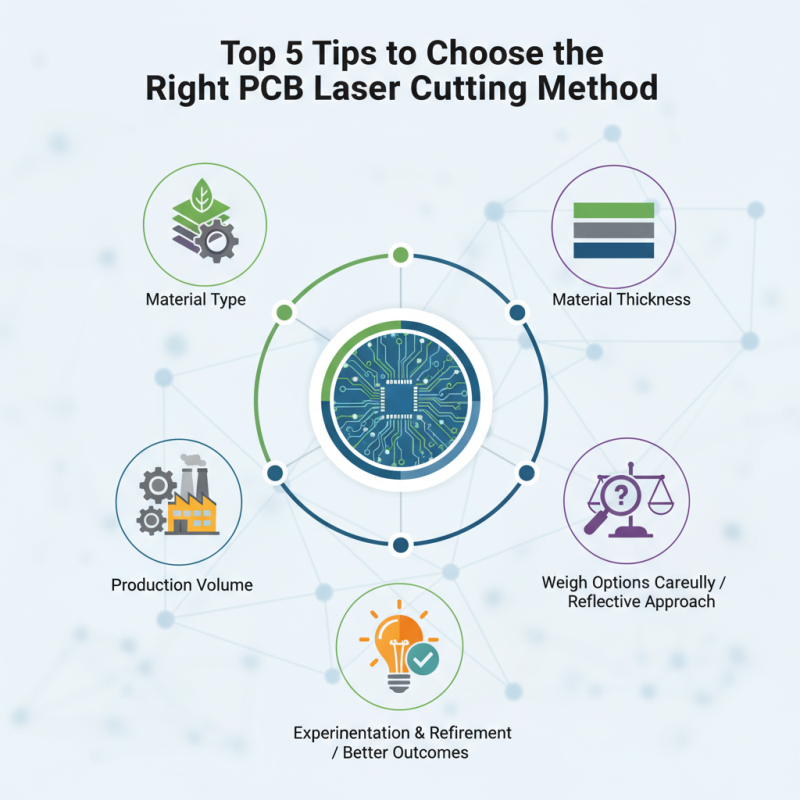
When exploring how to choose the right PCB laser cutting method, consider factors like material type, thickness, and production volume. These elements greatly affect the cutting process. For instance, some materials might require specific laser technologies for optimal results.
It's essential to weigh options carefully. Experimenting with various methods may lead to unexpected challenges. Not all methods will fit every project perfectly. A reflective approach can help refine your choice, leading to better outcomes and enhanced efficiency.
Understanding Different PCB Laser Cutting Techniques and Their Applications
Laser cutting is a precise method used in PCB manufacturing. There are several techniques available for different applications. Understanding these methods is crucial for optimizing your production process.
The CO2 laser cutting technique, for example, excels at cutting through non-metal materials. It’s popular for its cleanliness. However, it may not cut through thicker materials as effectively.
On the other hand, fiber lasers are great for metal PCBs. They provide high precision and speed. Yet, their initial setup cost can be higher.
Ultraviolet (UV) lasers are another option. They are ideal for intricate designs. The limited heat affected zone reduces damage to sensitive components. Still, UV lasers may require a specialized skill set.
Choosing the right technique involves assessing project requirements and constraints. Each method has its own set of advantages, but the selection is not always straightforward.
Evaluating Cost Efficiency: Comparing Various Laser Cutting Methods for PCBs
Evaluating cost efficiency in PCB laser cutting methods is crucial for manufacturers. According to a report by IPC, laser cutting can reduce waste by up to 30%. This efficiency can substantially lower overall production costs. Additionally, some advanced laser systems have a quicker setup time, providing potential savings in labor costs.
When considering the right method, consider the type of PCB material. For instance, certain lasers work better with specific materials like FR4 or aluminum. A study published in the Journal of Materials Processing Technology notes that CO2 lasers are efficient for cutting organic materials but may not perform well with metallics. This can lead to unexpected costs if inappropriate methods are chosen.
One tip for businesses is to conduct a cost-benefit analysis of different cutting technologies. Understanding the initial investment versus long-term savings is vital. Another insight is to consult with industry experts. They can provide valuable feedback on best practices and unforeseen challenges. Each method presents unique benefits and challenges that may not be apparent upfront.
Assessing Precision and Tolerance Levels in PCB Laser Cutting Processes
Precision and tolerance levels are crucial when selecting a PCB laser cutting method. High-precision cutting is essential for ensuring the integrity of intricate designs, especially in advanced electronics. According to recent industry data, laser cutting can achieve tolerances as low as ±0.02 mm, which is vital for high-density interconnect (HDI) applications. These specifications are often necessary for devices requiring compact designs, like smartphones and medical equipment.
A study by IPC International showed that improper tolerance can lead to significant waste and rework costs, amounting to 20% of production expenses. Choosing a method that guarantees precision helps mitigate these issues. Additionally, factors like the material and thickness of the PCB must be considered. For example, materials with different thermal properties may respond differently to laser cutting. Hence, understanding the specifics of each method is key to minimizing defects.
Balancing cost and quality is also challenging. While advanced methods offer superior precision, they often come with higher operational costs. Companies must weigh their budget against the need for exact tolerances. In some cases, investing in upgraded laser systems can enhance yield, but initial expenses may deter smaller firms. Adapting processes requires careful evaluation of both immediate and long-term impacts on manufacturing efficiency.
Analyzing Material Compatibility: Which Method Suits Your PCB Substrates?
When selecting a PCB laser cutting method, the material compatibility is crucial. Different substrates have unique physical and chemical properties. For example, materials like FR4, a common PCB substrate, require a specific laser wavelength for optimal cutting. Understanding these material characteristics can greatly influence the cutting efficiency and end product quality.
According to industry research, laser cutting can achieve precise tolerances as tight as ±0.1 mm. However, not all lasers can process every material. For instance, CO2 lasers work well on organic materials but struggle with metals. In contrast, fiber lasers excel with metal, causing some users to overlook their advantages for non-metal substrates. Awareness of these nuances is essential for manufacturers aiming for high-quality results.
Operational considerations also come into play. The laser type directly affects the power, speed, and material thickness achievable during cutting. Data indicates that improper matching of laser types can double processing times, leading to increased costs. Industry professionals must reflect on their current processes to ensure they are utilizing the most effective methods. Balancing efficiency with quality is a challenge that requires constant evaluation.
Top 5 Tips to Choose the Right PCB Laser Cutting Method
| Cutting Method |
Material Compatibility |
Advantages |
Disadvantages |
Best For |
| CO2 Laser Cutting |
FR-4, PTFE, Acrylic |
High speed, Cost-effective |
Limited to non-metal materials |
General PCB Production |
| Fiber Laser Cutting |
Metal substrates (Copper, Aluminum) |
Superior precision, Long lifespan |
Higher initial setup cost |
High-precision & Metal PCBs |
| UV Laser Cutting |
Flexible PCBs, Glass Epoxy |
Less heat affected zone, Fine details |
Slower cutting speed |
Complex geometries & small parts |
| Excimer Laser Cutting |
Polyimides, Silicones |
Minimal thermal impact, High precision |
Very costly operation |
Specialized applications |
| Nd:YAG Laser Cutting |
Metals, Ceramics |
Versatile, Good for various materials |
Lower speed compared to fiber lasers |
Medium to thick materials |
Considering Production Volume: Selecting a Laser Cutting Method for Scale
When selecting a laser cutting method for PCB production, consider the scale of your operations. High production volumes often require systems that can handle speed and efficiency. For smaller batches, precision and detail are usually more crucial. Different cutting techniques yield various results, affecting both quality and turnaround time. Evaluate how your needs align with the capabilities of available technologies.
A focus on production volume will guide your choice. For large-scale manufacturing, CO2 lasers are popular due to their speed and ability to cut through various materials. However, these systems may lack fine detail. In contrast, fiber lasers excel in precision, ideal for intricate designs. The trade-off is slower processing times, which may not suit high-demand environments. Careful balancing of these factors is key.
Reflecting on your specific needs and production goals is vital. Trial runs can reveal if a method meets your expectations. The wrong choice could lead to delays or increased costs. Ensuring that you select a suitable method from the start can save time and resources down the line. Consider these elements carefully as part of your decision-making process.
Top 5 Laser Cutting Methods Based on Production Volume
Conclusion
When considering how to choose the right PCB laser cutting method, it’s essential to understand the various techniques available and their specific applications. Different methods can significantly impact the quality and functionality of the printed circuit boards. Cost efficiency is also a critical factor; evaluating the budgeting implications of each method will help in deciding the most suitable option. Furthermore, precision and tolerance levels are crucial in PCB manufacturing, requiring careful assessment to ensure the desired performance.
Material compatibility plays a vital role in selecting the appropriate laser cutting technique for different PCB substrates. Each method may react differently to various materials, thus influencing the final output quality. Additionally, considering the production volume is essential; some methods may be more suited for high-scale production, while others might be better for low-volume needs. By weighing these factors, one can make an informed decision in selecting the most effective laser cutting method for PCBs.

 Focus Laser