7 Best Reasons Why Manufacturers Prefer Laser Over Blades?

Time:2026-11-07 Author:Oliver
0%

Why do manufacturers prefer laser over blades? The answer is rarely just speed. On a production floor, a laser can cut intricate shapes without a blade pressing against the material. That matters. Less contact can mean fewer torn edges, less tool wear, and more consistent parts across a long run. A focused beam can also follow tight curves, small openings, and changing patterns that would challenge a fixed cutting tool.

The choice still depends on the job. Material thickness, heat sensitivity, production volume, and operating cost all matter. Lasers require careful setup, ventilation, and maintenance; they are not automatically the better option. Dr. Reinhart Poprawe, a leading laser-manufacturing researcher, has emphasized the importance of matching laser processes to specific production requirements. Put as a paraphrase, the practical lesson is simple: choose the process that fits the material, geometry, and target quality. Not the tool that sounds more advanced. A manufacturer comparing a laser with blades should inspect real samples: edge finish, kerf width, scrap levels, and cycle time. Those details can reveal trade-offs that a brochure misses. There is no perfect process. For some soft, thick, or heat-sensitive materials, blades may remain the more practical choice. This guide explores seven reasons manufacturers often choose lasers, while keeping the limitations in view.
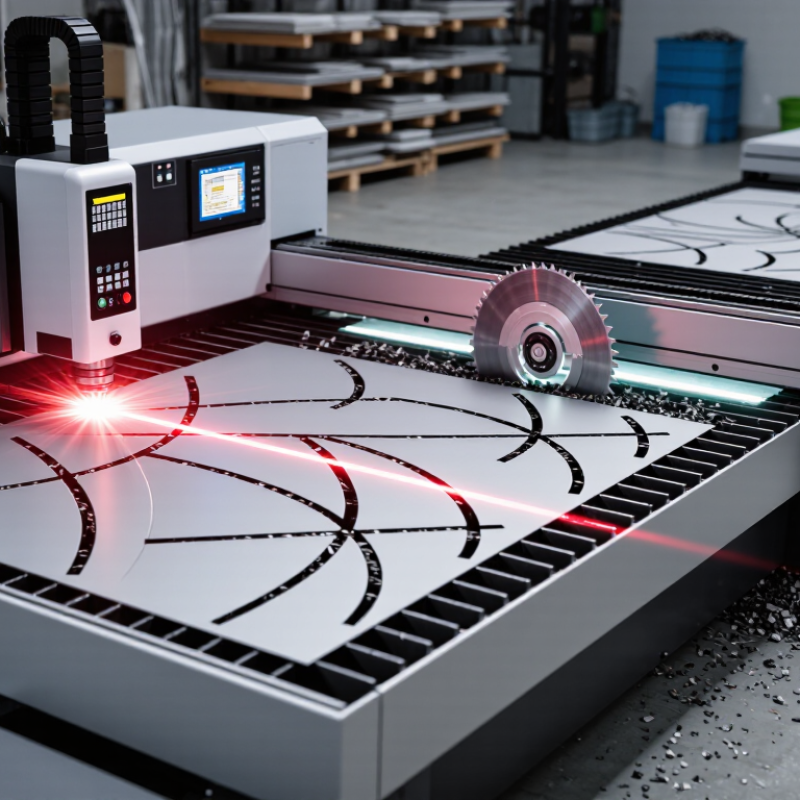
7 Best Reasons Why Manufacturers Prefer Laser Over Blades?

How Laser Cutting Differs From Blade-Based Manufacturing

7 Best Reasons Why Manufacturers Prefer Laser Over Blades?

How Laser Cutting Differs From Blade-Based Manufacturing

Laser cutting uses focused heat; blade cutting relies on physical contact and force. A moving blade can flex or dull as it presses through dense material. A laser leaves no tool marks from contact and can follow intricate digital paths. On the shop floor, that means fewer blade changes and cleaner corners on detailed parts. It also means heat can affect an edge, especially on heat-sensitive materials. Laser is different, not universally better.

Blades remain useful for soft, thick, or layered stock, and their equipment can be simpler to run. Laser systems suit repeatable patterns and quick design changes, but need suitable extraction and careful material settings. Deloitte and MAPI’s 2019 Smart Factory Study reported that 86% of surveyed manufacturers expected smart factory solutions to be a primary driver of competitiveness within five years. That finding supports the value of connected, programmable production, not a claim that every laser setup beats every blade.

Tips: Test the actual material first. Check edge quality, heat effects, and cycle time on a representative part. Keep the sample; settings that look right on screen may need adjustment on the machine.

Why Laser Cutting Delivers Greater Precision and Consistency

A laser holds its focus on a narrow path, so cut edges can stay consistent across repeated parts. With a blade, wear, lateral pressure, and material movement can gradually change the cut. Small differences become visible when parts must fit together. That matters.

ISO 9013:2017 classifies thermal-cut quality using measurable criteria, including perpendicularity tolerance and mean profile height (Rz5). This gives production teams a consistent way to inspect edges instead of relying only on appearance. A focused laser can also make intricate contours without a physical blade pushing against thin sheet. Less contact means less risk of bending delicate parts during cutting.

The result depends on setup. Material thickness, focus position, assist gas, and machine condition all affect the edge. Not magic. A poorly tuned laser can leave dross or a rough surface, and blades may remain practical for some jobs. In production, operators can compare sample cuts against ISO 9013 criteria, then adjust parameters before running a large batch. That extra check is easy to overlook. It can prevent subtle edge variation from becoming an assembly problem.

How Lasers Handle Diverse Materials and Complex Designs

Laser cutting suits mixed-material production because the beam follows programmed paths without a shaped blade. A single setup can cut thin stainless steel, acrylic, wood, or fabric, provided the laser type and settings match the material. That flexibility matters when a job moves from a straight panel to small holes, tight curves, or intricate lettering. No blade changes. Less tool wear, too. But it is not magic: reflective metals, thick stock, and heat-sensitive plastics need careful testing to avoid poor edges or scorching.

Complex designs also benefit from digital nesting and repeatable motion. The International Federation of Robotics’ World Robotics 2024 report counted about 4.28 million industrial robots operating worldwide in 2023, showing how deeply programmable automation is embedded in manufacturing. Laser cutting can fit into these automated workflows, helping teams reproduce detailed parts with less manual repositioning. ISO 9013:2017 provides a framework for assessing thermal-cut edges, including perpendicularity and roughness; those checks matter because a clean-looking edge is not always a precise one. In practice, operators still adjust focus, speed, and assist gas for each material batch. That takes experience. A slightly imperfect cut may reveal a setting problem before it becomes a whole production run.

Why Laser Systems Improve Production Speed and Automation

A laser system can move directly from one digital cutting path to another, reducing time spent changing dies or replacing worn blades. On a busy line, that means fewer pauses between custom shapes and less manual handling of small parts. Cameras and motion controls can also align material as it travels, helping operators keep production moving with fewer adjustments. Fast, repeatable cuts matter most when designs change often.

Automation is part of a wider manufacturing shift. The International Federation of Robotics reported 4,281,585 industrial robots operating worldwide in 2023, a 10% increase from 2022. Deloitte and MAPI’s 2019 Smart Factory study found that 86% of surveyed manufacturers expected smart-factory initiatives to be a primary driver of competitiveness. These figures describe automation broadly, not laser cutting alone. Still, they show why manufacturers seek equipment that can connect with digital workflows.

There are limits. Reflective metals, thick stock, and poor setup can slow cutting or affect edge quality. Blades may remain simpler for some materials and short runs. Not every job needs a laser. Teams should compare actual cycle times, changeover effort, and scrap rates on their own production parts before investing.

How Laser Cutting Reduces Tool Wear and Finishing Needs

A laser cuts without pressing a blade against the workpiece, so there is no cutting edge to chip, dull, or replace during production. For manufacturers running repeated profiles in sheet metal or plastics, this can reduce tool changes and interruptions. The cut also leaves no blade marks or burrs caused by a worn edge. That often means less deburring before parts move to assembly. Small improvements add up across a long production run.

Tips: Check focus and assist-gas settings when changing material thickness. Inspect the first cut for dross, a rough edge, or heat discoloration. These details can reveal a setup problem early.

Laser cutting does not remove every finishing step. Heat-sensitive materials may warp, and thick sections can need edge cleanup if the settings are off. A narrow kerf can improve detail, but it still depends on stable motion and careful calibration. In practice, I would compare finished parts from both processes, not just machine cycle times. Some jobs are better suited to blades, especially when heat could damage the material. The trade-off is real.

FAQS

Which materials can laser cutting handle?

With the right laser type and settings, one setup can cut thin stainless steel, acrylic, wood, or fabric. Each material needs testing.

Can laser cutting create detailed shapes?

Yes. Programmed paths can form small holes, tight curves, and intricate lettering without changing a shaped blade. Setup still matters.

Does laser cutting eliminate tool changes?

It can reduce blade changes and tool wear between different designs. But some jobs may still be simpler with blades.

How does laser cutting support automation?

Digital paths and repeatable motion can reduce manual repositioning. Cameras may help align material as it moves along a production line.

Is laser cutting always faster?

No. Reflective metals, thick stock, or poor settings can slow production. Compare real cycle times before choosing a process.

What affects the quality of a laser-cut edge?

Focus, cutting speed, assist gas, and material variation all matter. A clean-looking edge may still lack precision.

How can teams avoid scorching or poor edges?

Test settings on each material batch before a full run. A small flawed cut can reveal a problem early.

Does every manufacturer need a laser system?

Not necessarily. Compare changeover time, scrap rates, and cycle times on actual parts. It is easy to overestimate the benefits.

Conclusion

Manufacturers increasingly choose laser cutting because it offers a more controlled and adaptable alternative to blade-based production. Unlike blades, which can press against, drag across, or deform a workpiece, a laser cuts without direct contact. This helps create clean, precise edges and consistent results across repeated parts, while reducing the risk of material distortion. For businesses asking why do manufacturers prefer laser over blades, precision and repeatability are key reasons.

Laser systems can process a wide range of materials and produce intricate shapes that may be difficult to achieve with conventional cutting tools. Their compatibility with automated workflows can also help speed up production and reduce manual handling. Because lasers do not rely on blades that dull or require frequent replacement, they can lower tool wear and maintenance needs. Cleaner cuts may also reduce the amount of finishing required, helping manufacturers use time and materials more efficiently.

Oliver

Oliver

Oliver is a seasoned marketing professional with a wealth of expertise in driving brand awareness and engagement. With a deep understanding of our company's product offerings, he consistently delivers high-quality content that enriches our professional blog. His insights not only shed light on......