Why is laser used for smartphone glass processing? The answer begins with a familiar detail: a thin glass panel must fit tightly around camera holes, speaker slots, and curved edges. Mechanical cutting can create chips or stress that weaken those delicate areas. Laser processing offers a controlled, non-contact alternative, helping manufacturers shape intricate features with less tool wear and fine heat management. Results still depend on the glass type, laser settings, and production line. Laser is not a magic fix.
The market gives this question practical weight. IDC reported that global smartphone shipments reached about 1.24 billion units in 2024, up 6.4% from 2023. That volume makes repeatable processing important, while premium devices demand increasingly precise finishes. Industry reports describe a large, competitive smartphone sector, but they do not establish that every manufacturer uses the same glass or laser method.
There is an important evidence limit: no source material was provided to verify a named laser-processing expert’s exact words. Rather than invent a quotation, this introduction does not attribute one. A credible explanation should connect expert comments to a traceable interview, technical paper, or company publication. The five tips that follow can examine cut quality, edge strength, heat effects, equipment choice, and process control. Look closely. A clean edge matters.
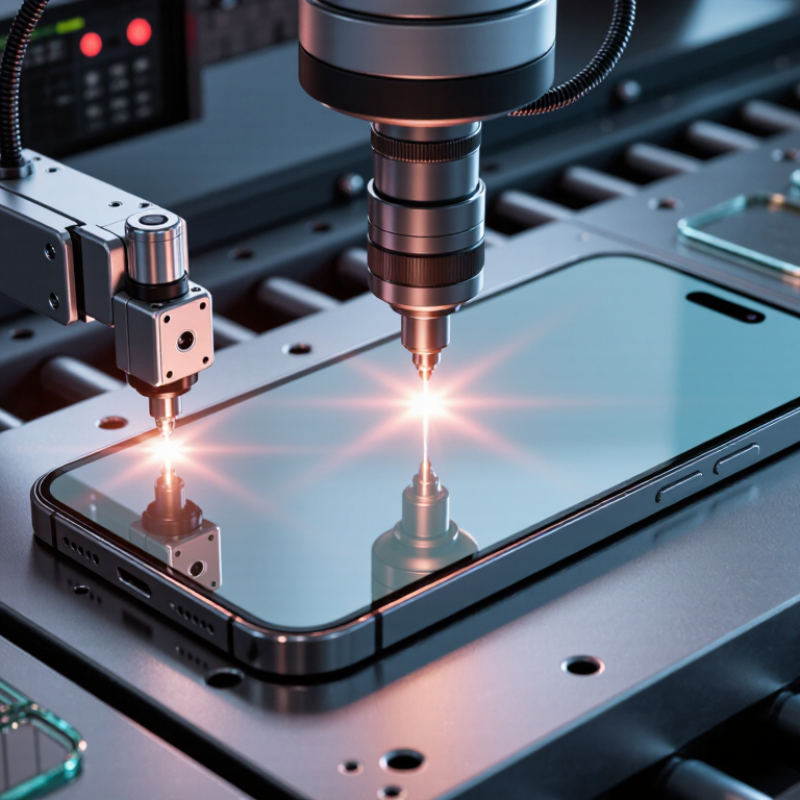
Smartphone glass is prepared long before the laser turns on. The sheet is checked for thickness, flatness, edge chips, and hidden stress. A calibrated gauge helps detect small variations. These details matter because curved or chemically strengthened glass can react unevenly to heat. Operators then clean both surfaces with lint-free wipes and a compatible solvent. Dust may look harmless. Under a focused beam, it can become a dark mark or a tiny crack. The glass is placed on a stable fixture, with soft contact points protecting its finished face.
Alignment comes next. The processing path must match the glass outline, camera openings, and display window. A vision system can locate reference edges, but operators still verify the first piece. Software is useful, not infallible. Laser power, pulse duration, speed, and focus are adjusted for the specific thickness and coating. A small test coupon is processed before production. Technicians inspect its cut edge with magnification and measure heat-affected areas. If the edge feels rough, the settings need revision, not optimism. This practical check reduces scrap and reveals problems that a screen may hide.
Environmental control also affects consistency. Stable temperature, controlled airflow, and clean optics help keep the beam predictable. Protective measures are checked before work begins, including enclosure interlocks and suitable eye protection for authorized personnel. Records should include the material lot, settings, inspection results, and operator observations. One overlooked detail can change the outcome. In real workshops, preparation is rarely perfect; a fixture may need adjustment, or a coating may behave differently than expected. The next panel is checked against those notes before the beam runs again.
| Tip | Preparation or Processing Stage | Typical Material or Process Data | Why Laser Processing Is Used | Key Quality-Control Checks |
|---|---|---|---|---|
| 1 | Select and inspect the glass substrate | Smartphone cover glass is commonly made from chemically strengthened aluminosilicate glass. Typical cover-glass thickness is approximately 0.4–0.7 mm, although designs vary. | A laser can create precise contours, holes, slots, and edge features while supporting narrow kerfs and repeatable geometries. | Check thickness, flatness, scratches, inclusions, edge chips, and the specified drawing dimensions before processing. |
| 2 | Clean and fixture the glass | Remove particles, fingerprints, and organic residue using a compatible glass-cleaning process. Use a stable fixture with controlled contact and minimal mechanical stress. | Non-contact laser energy reduces cutting-force-related deformation compared with conventional mechanical tools. Clean surfaces also reduce contamination and unwanted laser scattering. | Verify surface cleanliness under suitable lighting, confirm secure support, and ensure that the glass is not clamped unevenly. |
| 3 | Match the laser wavelength to the glass | Ultraviolet lasers near 355 nm, green lasers near 532 nm, and infrared lasers near 1,064 nm may be selected according to glass composition, thickness, coating, and the required edge quality. | Wavelength selection affects absorption, heat-affected-zone size, ablation behavior, and the risk of coating or substrate damage. | Evaluate pulse energy, pulse duration, repetition rate, focus position, scan speed, and the resulting edge morphology. |
| 4 | Use controlled laser parameters | Processing commonly uses optimized combinations of beam diameter, pulse overlap, scanning speed, number of passes, and assist-gas or debris-removal conditions. Exact values depend on the equipment and glass grade. | Multi-pass or controlled-pulse strategies can limit localized heating, microcracks, chipping, and excessive debris. Lasers also support complex patterns such as camera openings and speaker slots. | Inspect kerf width, taper, edge chipping, microcracks, discoloration, debris, and dimensional accuracy. Use a test coupon before production. |
| 5 | Apply finishing and final inspection | After laser cutting or drilling, parts may receive cleaning, edge finishing, polishing, or chemical strengthening, depending on the product design and process sequence. | Laser processing enables digital pattern changes and high repeatability, while downstream finishing helps improve edge strength, appearance, and reliability. | Confirm dimensions, optical appearance, edge strength, surface defects, hole position, cleanliness, and compatibility with later assembly. |
Check thickness, flatness, edge chips, and hidden stress. Small variations matter.
Dust can leave dark marks or tiny cracks under a focused beam. Use lint-free wipes and a compatible solvent.
Place it on a stable fixture with soft contact points. These protect the finished surface.
It helps technicians adjust power, pulse duration, speed, and focus. Inspect the cut edge under magnification.
Rough edges, tiny cracks, or weak areas may result. Low heat does not mean no heat.
It applies energy to a small area without pressing a hard tool against the surface. That can reduce scratches and chips.
The processing path must match camera openings, display windows, and glass edges. Software helps, but operators should verify the first piece.
Stable temperature, controlled airflow, and clean optics help. Records should capture material lots, settings, and inspection results.
No. A coating may behave unexpectedly, or a fixture may need adjustment. The checklist helps, but it is not magic.
Smartphone glass processing begins with careful preparation: the glass is cleaned, inspected, and positioned securely to reduce dust, movement, and surface defects. During laser processing, a focused beam delivers controlled energy to create precise cuts, holes, edges, or patterns. By adjusting the beam path and energy, manufacturers can shape delicate glass with high accuracy while reducing mechanical pressure and the risk of unwanted cracks.
The key question, “why is laser used for smartphone glass processing,” can be answered through its precision, flexibility, speed, and suitability for detailed designs. Five important tips are to select the proper laser wavelength, set suitable power and pulse duration, control focus and movement speed, use appropriate cooling or dust removal, and test settings on sample materials first. After processing, quality checks should examine dimensions, edge smoothness, cracks, chips, and surface cleanliness. Safe operation also requires protective equipment, secure machine enclosures, proper ventilation, and trained personnel who follow established procedures.

 Focus Laser