Designed specifically to meet the high mechanical tolerances and material complexities demanded by the automotive display and glass industries.
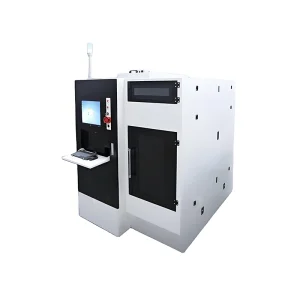
Advanced through-glass via (TGV) system delivering micro-diameter precision holes for multi-layer sensor interfaces.
Send Inquiry Now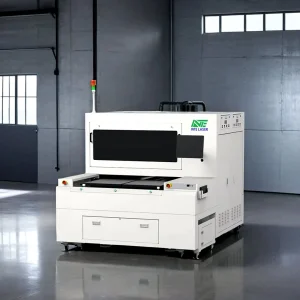
High-productivity laser scoring and splitting system customized for thin-sheet laminated structural glass.
Send Inquiry Now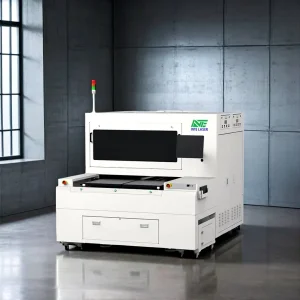
Industrial workhorse optimized for panoramic sunroof profiles, large windshield blanks, and architectural glazing.
Send Inquiry Now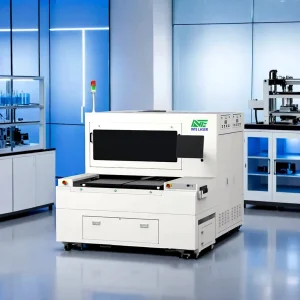
State-of-the-art infrared laser engine providing high thermal stress control for clean edge breakages.
Send Inquiry NowThe global automotive sector is undergoing an unprecedented paradigm shift, fueled by advancements in vehicle electrification, autonomous capabilities (ADAS), and integrated connectivity systems. Among these changes, the physical architecture of the vehicle itself is evolving. Automotive glass—historically a passive structural element designed solely for wind protection and basic occupant safety—has transformed into an active interface. Today's modern passenger vehicles integrate complex Head-Up Displays (HUDs), electrochromic smart glazing, integrated telematics antennas, and multi-layered touch interfaces.
To manufacture these advanced components, tier-one suppliers and OEMs are transitioning away from mechanical glass-cutting methods, such as diamond-wheel scribing and CNC grinding, towards ultra-fast laser processing. Traditional methods introduce mechanical stresses, micro-cracks, and edge chipping that compromise the tensile strength of the glass, necessitating costly secondary finishing steps. By contrast, advanced laser systems offer contactless, high-speed, and ultra-precise cutting that maintains the structural integrity of the substrate.
Hangzhou Focus Laser Co., Ltd. stands at the forefront of this industrial transformation. Specializing in advanced laser processing equipment for electronics, display industries, and structural automotive glass, the company integrates high-precision fiber laser systems, state-of-the-art CNC control, and machine vision alignment to deliver robust processing solutions. This white paper examines the technological milestones, manufacturing dynamics, and application scenarios of laser glass cutting systems, with a particular focus on the industrial cluster of Busan, South Korea.
The city of Busan, alongside the adjacent Ulsan and South Gyeongsang provinces (the Southeast Economic Region), constitutes the backbone of South Korea's heavy manufacturing, automotive assembly, and maritime logistics. As home to large automotive manufacturing complexes and an extensive network of Tier-1 and Tier-2 suppliers serving brands like Hyundai, Kia, and Renault Korea, Busan is quickly transitioning into a smart mobility hub.
This local industrial ecosystem demands manufacturing equipment that complies with strict quality standards, such as IATF 16949. Traditional mechanical tooling cannot cost-effectively meet the design specifications of modern curved dashboards, integrated pillars, or complex ADAS camera apertures. This technological bottleneck has created a demand in Busan for advanced, high-performance laser cutting systems.
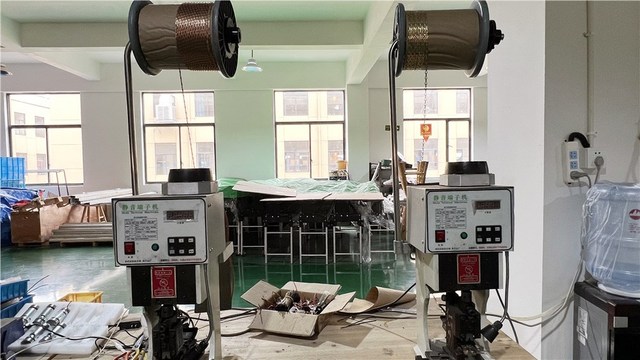
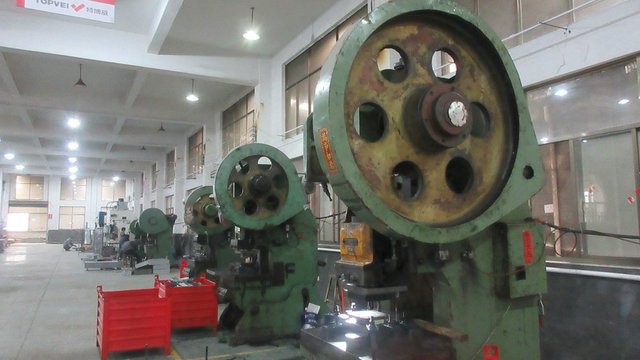
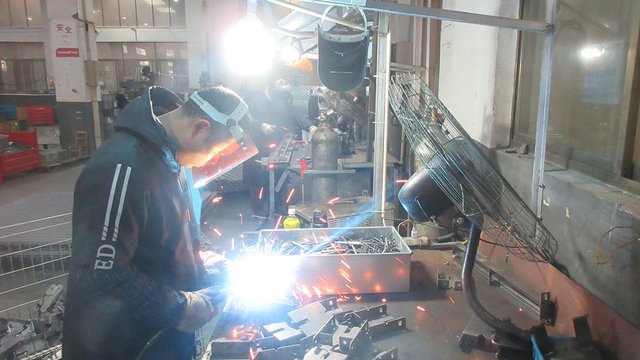
Hangzhou Focus Laser Co., Ltd. serves the Busan industrial sector by offering optimized laser machines engineered for local smart factories. From Gijang-gun to the Mieum and Noksan Industrial Complexes, local suppliers require localized service networks, robust machine vision systems for precise alignment, and high-throughput automated handling to remain competitive in the global automotive value chain.
"By deploying high-power ultra-fast laser systems within the Southeast Korean industrial zone, suppliers can expect up to a 40% reduction in manufacturing footprints and a virtual elimination of mechanical edge grinding overheads."
Globally, the automotive glass market is evolving due to two main factors: weight reduction for Electric Vehicles (EVs) to extend battery range, and the integration of digital display technologies. The use of traditional 4mm to 5mm soda-lime glass is declining in premium applications, replaced by thin, chemically strengthened glasses (such as aluminosilicate and borosilicate) down to thicknesses of 0.7mm to 2.0mm.
These thin, high-strength glass variants pose challenges for mechanical cutting tools, which often cause micro-cracking and edge failure under minimal torsional loads. Advanced laser processing addresses these challenges by concentrating high-peak-power energy within ultra-short pulse periods.
| Processing Parameter | Mechanical Diamond Scribing | CO2 Laser Splitting | Ultrafast Laser Filamentation |
|---|---|---|---|
| Heat Affected Zone (HAZ) | None (High mechanical stress) | High (Thermal stress risk) | Negligible (Cold ablation) |
| Edge Roughness (Ra) | > 5.0 μm | < 2.5 μm | < 1.0 μm |
| Bending Strength (MPa) | Low (~120 MPa) | Medium (~200 MPa) | High (>350 MPa) |
| Processing Speed | Medium (Requires secondary grinding) | High (Linear only) | Very High (Complex geometry) |
The core of modern automotive glass cutting relies on **Laser Filamentation**—a process enabled by ultrafast picosecond or femtosecond pulses. Unlike thermal laser cutting, which melts and volatilizes material via continuous wave or long-pulse heating, ultrafast lasers utilize non-linear absorption.
When an intense, ultra-short pulse is focused into transparent glass, the peak intensity becomes high enough to alter the local refractive index. This causes self-focusing (the Kerr effect), while the resulting plasma defocuses the beam. The balance between self-focusing and plasma defocusing creates a stable, high-intensity filament channel through the thickness of the glass.
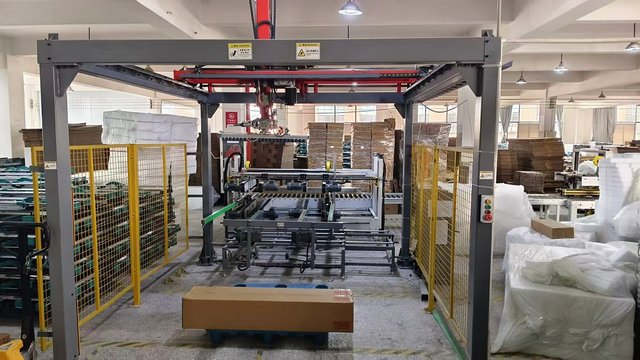
These filament arrays, spaced micrometers apart, form a clean separation plane. A secondary low-power CO2 laser or minor mechanical tension then splits the glass along the filament line. The result is a smooth, perpendicular edge with minimal chipping and a heat-affected zone of virtually zero.
Hangzhou Focus Laser Co., Ltd. builds production-grade machines that combine advanced mechanics, optics, and software control. Key technical integration features include:
These technologies allow our systems to cut complex contours, drill micro-vias, and engrave tracking barcodes on a wide variety of substrates.

Partner with a leading manufacturer of laser glass micromachining systems. Get a customized engineering consultation tailored to your facility's specifications in Busan or worldwide.
Send Inquiry NowExplore our range of multi-axis, fiber-based, and CO2 engraving control hardware built to upgrade industrial processes and automations.
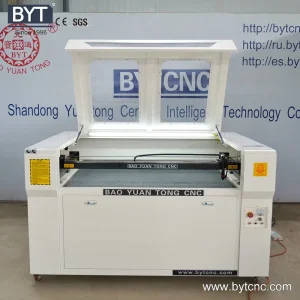
Versatile laser cutter and engraver featuring high-reliability Ruida control, perfect for rubber, leather, and interior trimming components.
Send Inquiry Now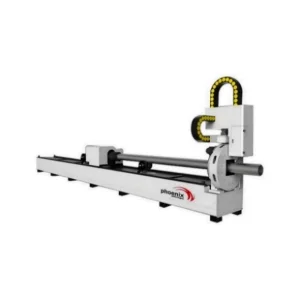
High-frequency fiber laser source designed for processing small-diameter tubes and metallic exhaust conduits with high precision.
Send Inquiry Now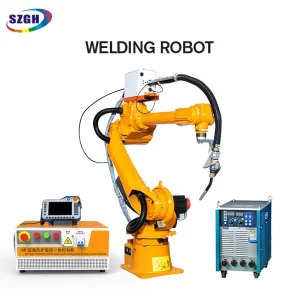
Robot arm integrated laser tool offering flexible kinematic motion profiles for three-dimensional curved glass and body panels.
Send Inquiry Now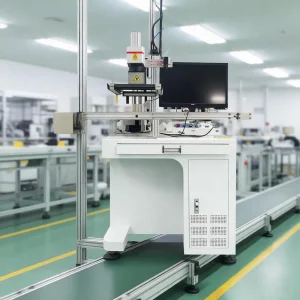
High-speed marking station designed for embedding permanent QR/Barcodes and fiducial markers on raw automotive glass panels.
Send Inquiry Now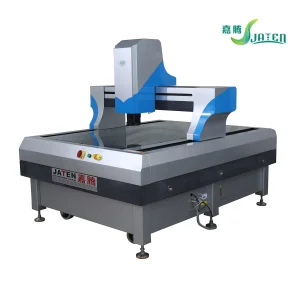
Sub-millisecond smart optical system for real-time edge defect analysis, dimensional validation, and alignment mapping.
Send Inquiry Now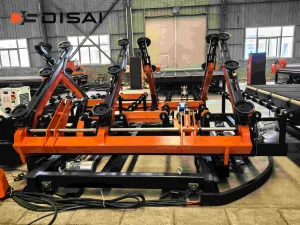
Heavy-duty vacuum gripper arm synchronizing with production line speeds to load large-format glass panels without scratching.
Send Inquiry Now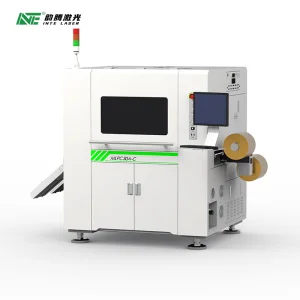
355nm UV cold-ablation system ideal for micro-engraving layered structures, display films, and automotive windshield coatings.
Send Inquiry Now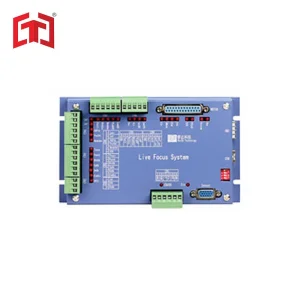
Advanced multi-axis motion controller optimized for high-power laser systems and precise vector path planning.
Send Inquiry NowThe automotive supply chain in Busan and the surrounding Yeongnam region requires precise solutions tailored to complex geometric designs. Key industrial applications of laser glass systems include:
Modern HUDs require specialized wedges within the laminated PVB layer of the windshield to prevent ghosting. Laser cutting systems perform precise, high-speed profile cutting on these variable-thickness sheets, leaving smooth edges that prevent bubble formation during lamination.
Center consoles now feature large, curved display interfaces. These cover plates require complex cutouts for mechanical rotary buttons, ventilation shafts, and safety hardware. Hangzhou Focus Laser’s systems can cut internal shapes, circles, and chamfers without causing structural micro-cracks.
For autonomous vehicles to navigate safely, camera lenses and LiDAR sensors must be mounted behind clean glass apertures. Laser systems drill micro-vias and clean boundaries, ensuring optimal light transmission and minimal optical distortion.
Looking forward, the laser micromachining sector is trending toward further system integration and smart automation. Key developments on our product roadmap include:
"By implementing these roadmap technologies, automotive glass suppliers can achieve consistent edge quality and higher throughputs, preparing their operations for the next generation of smart vehicle production."
Laser cutting is a contactless process that avoids the mechanical stress, micro-fracturing, and edge-chipping associated with mechanical tools. This eliminates the need for expensive secondary grinding and polishing steps, improves the bending strength of the glass, and allows for the processing of complex curves and internal cutouts.
Our systems are designed to process soda-lime glass, borosilicate glass, aluminosilicate glass, and chemically strengthened variants (such as Gorilla Glass). We can also process multi-layer laminated glass and transparent ceramic substrates.
The integrated machine vision system automatically detects fiducial marks on the glass substrate, calculating and correcting for any placement offsets before the cutting process begins. This ensures cutting accuracy to within sub-micron tolerances, reducing waste and increasing yields.
Yes. Our systems feature PLC interfaces, standardized fieldbus communications, and optional automated robot arm loaders, allowing them to integrate into existing production lines and communicate with MES and SCADA manufacturing systems.
 Focus Laser