🔍Product Description
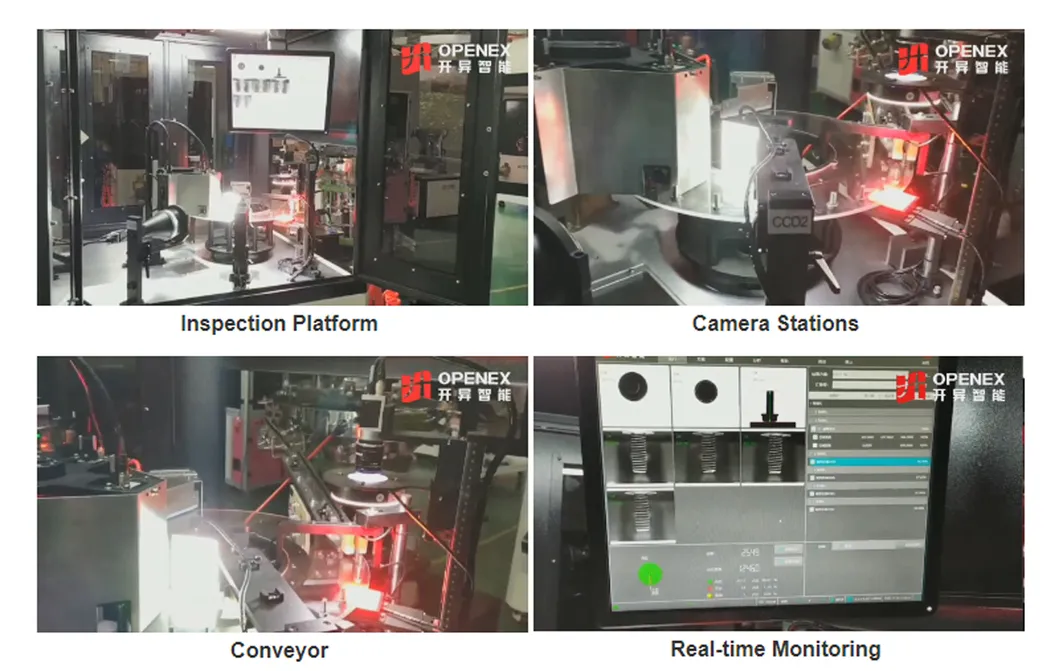
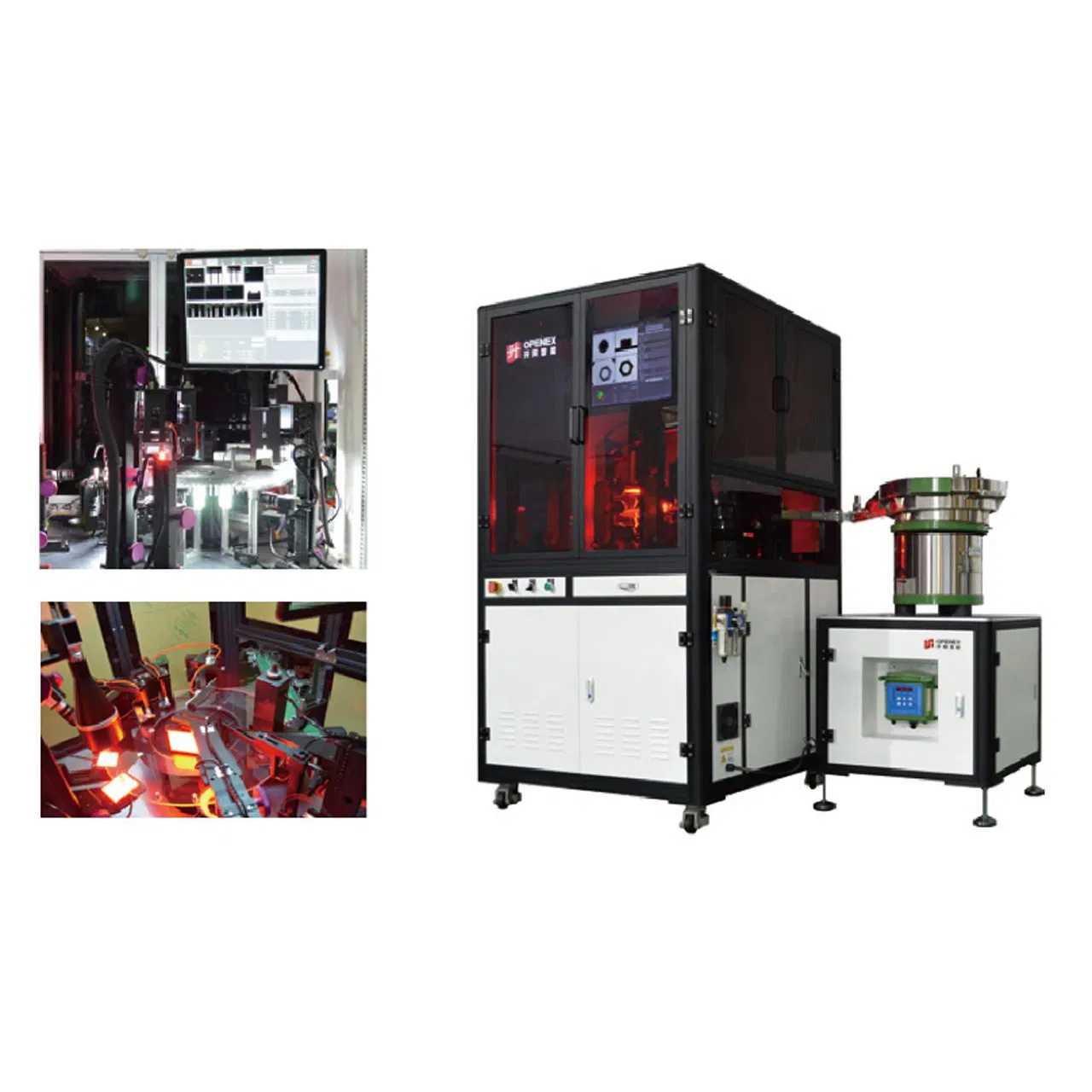
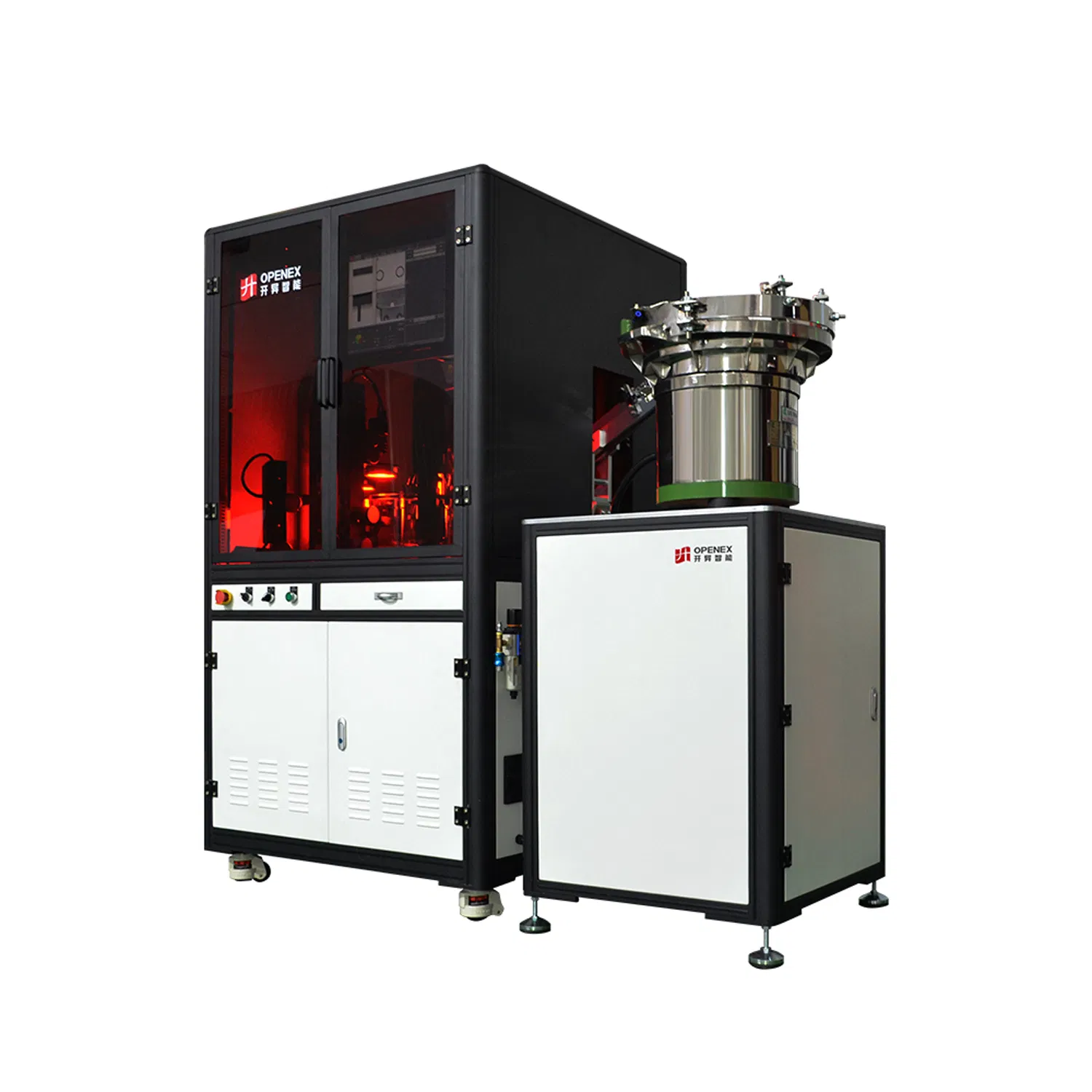
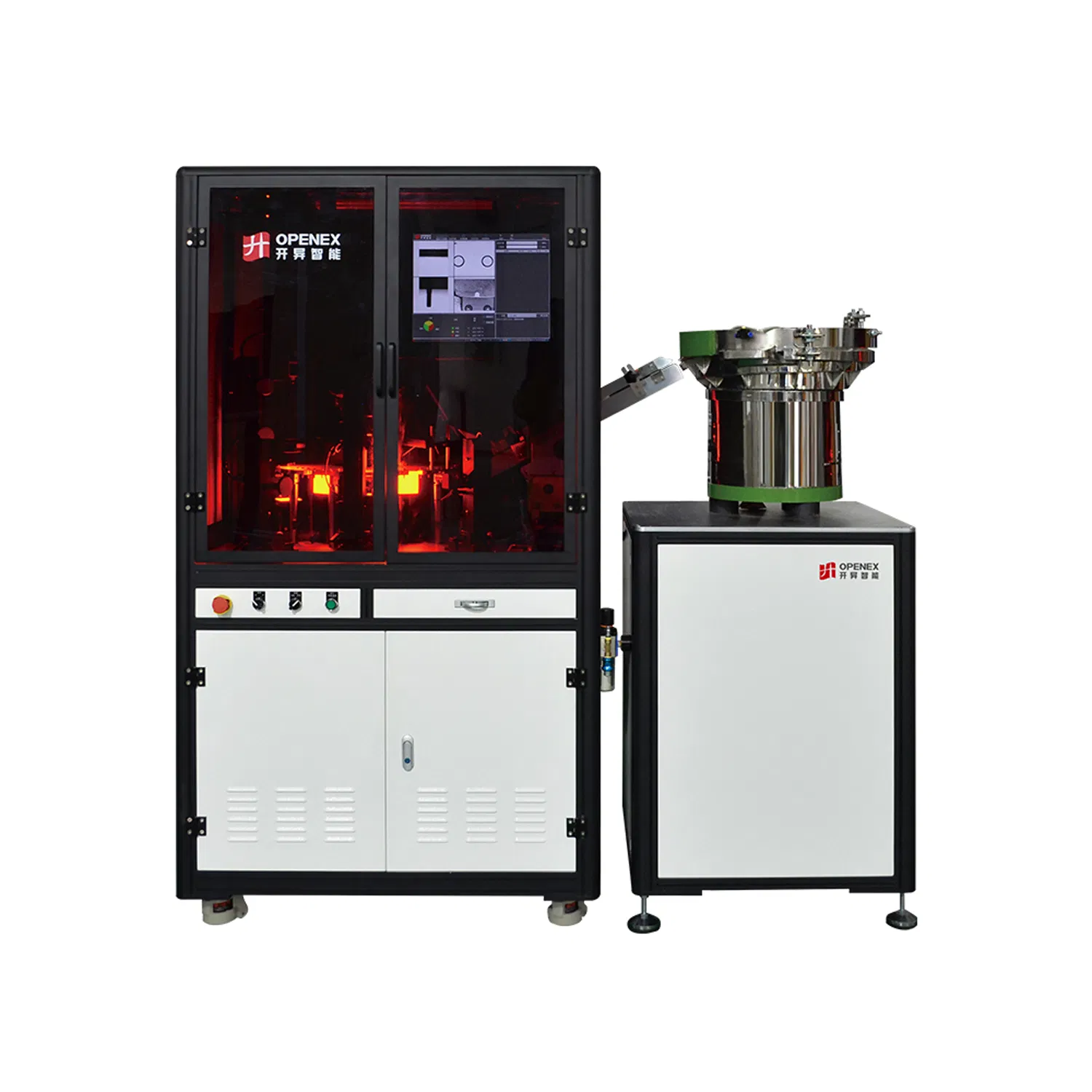
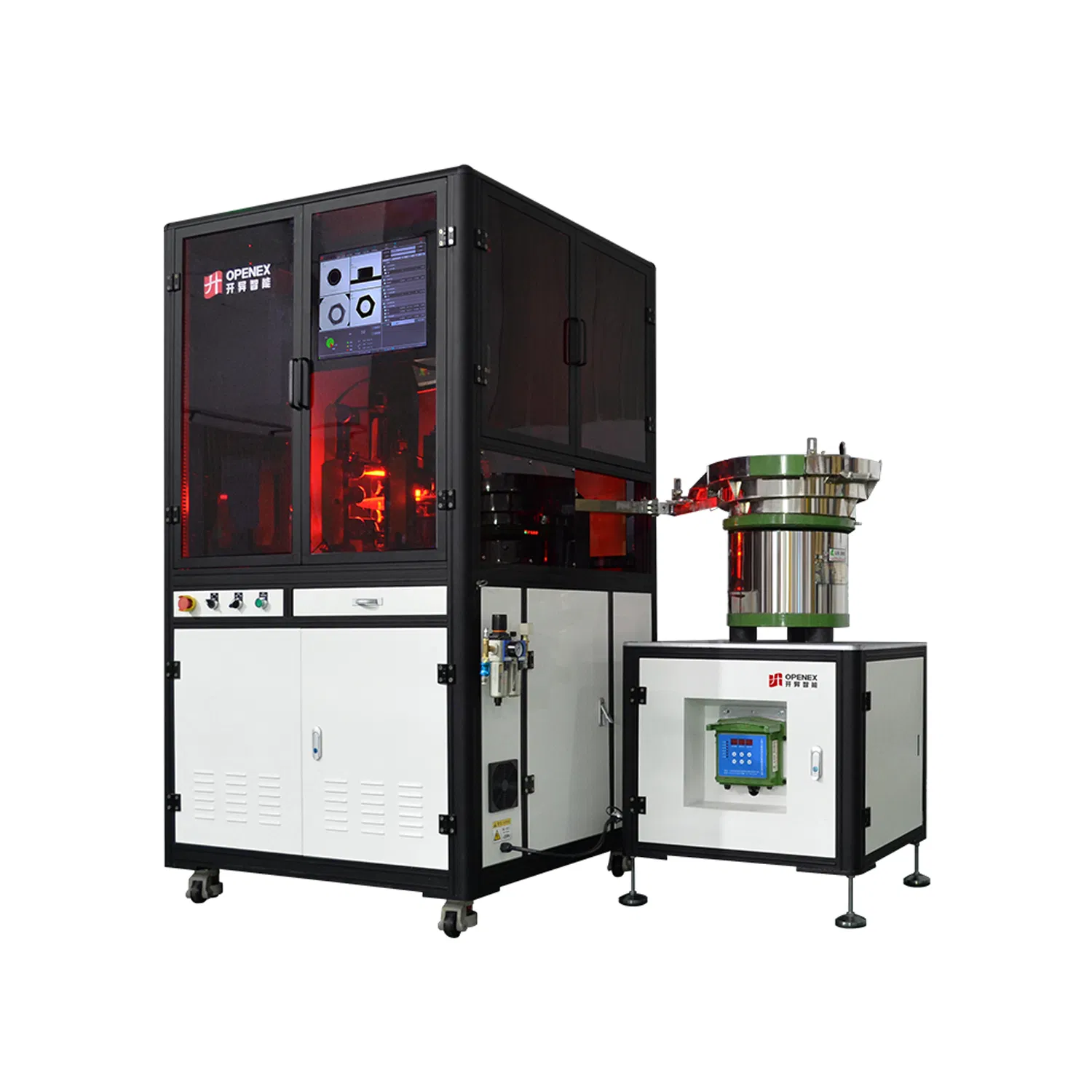
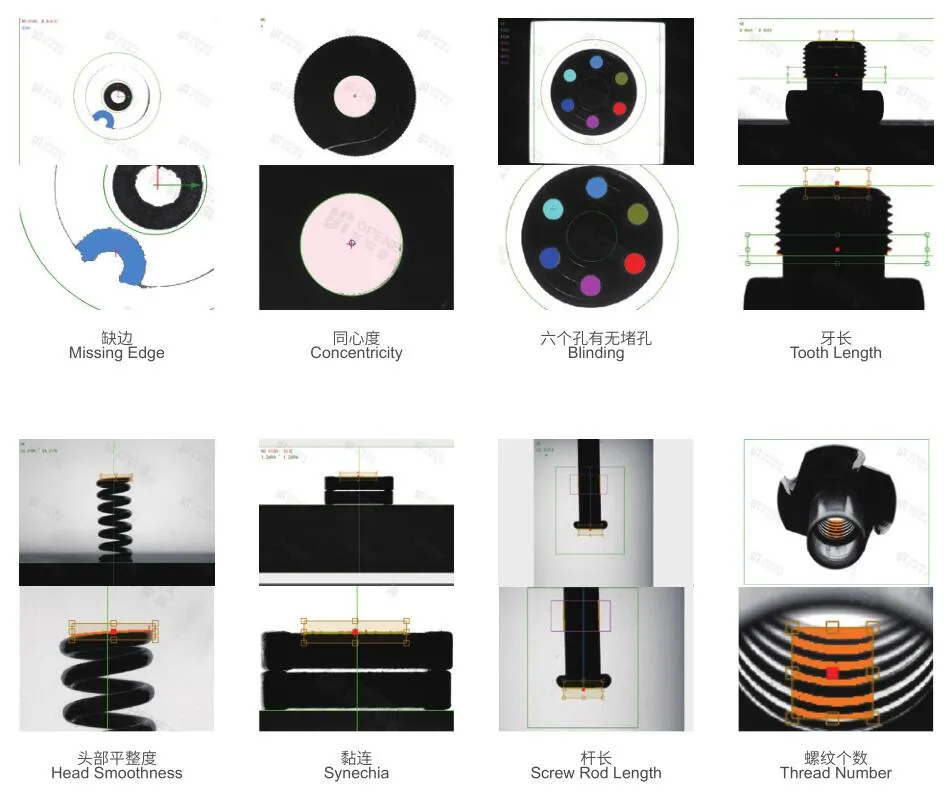
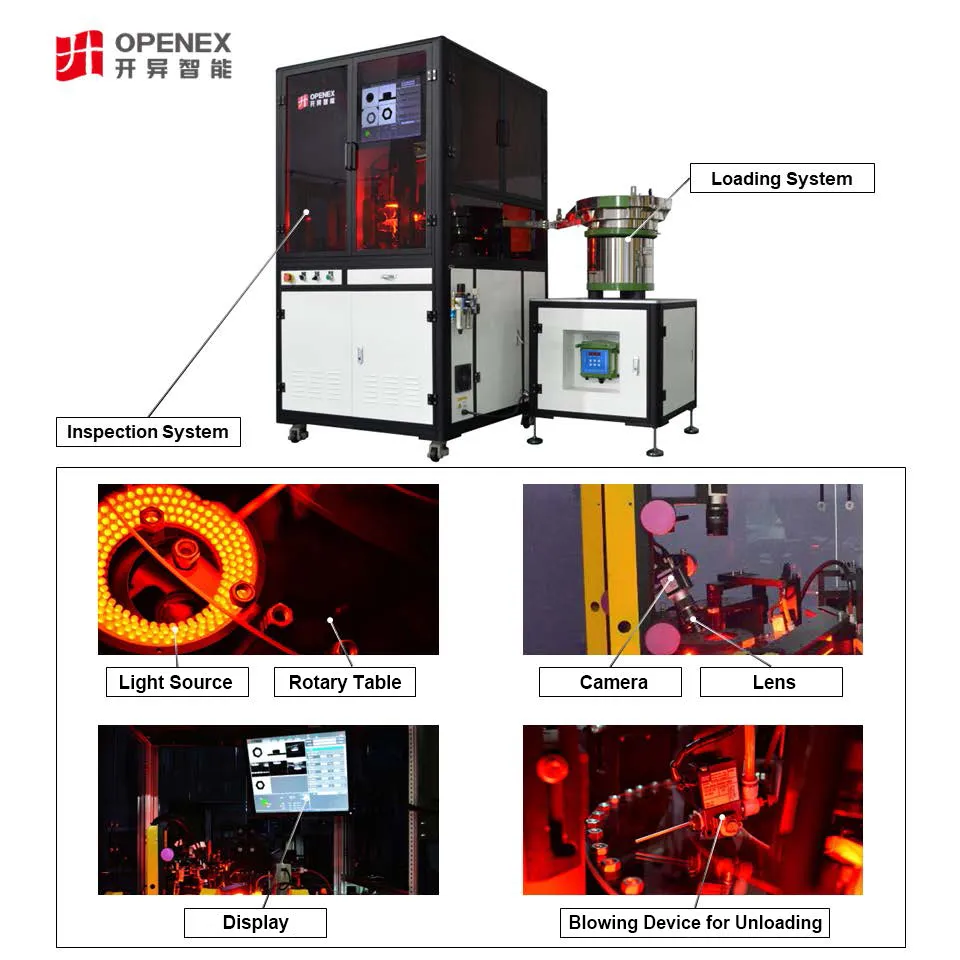
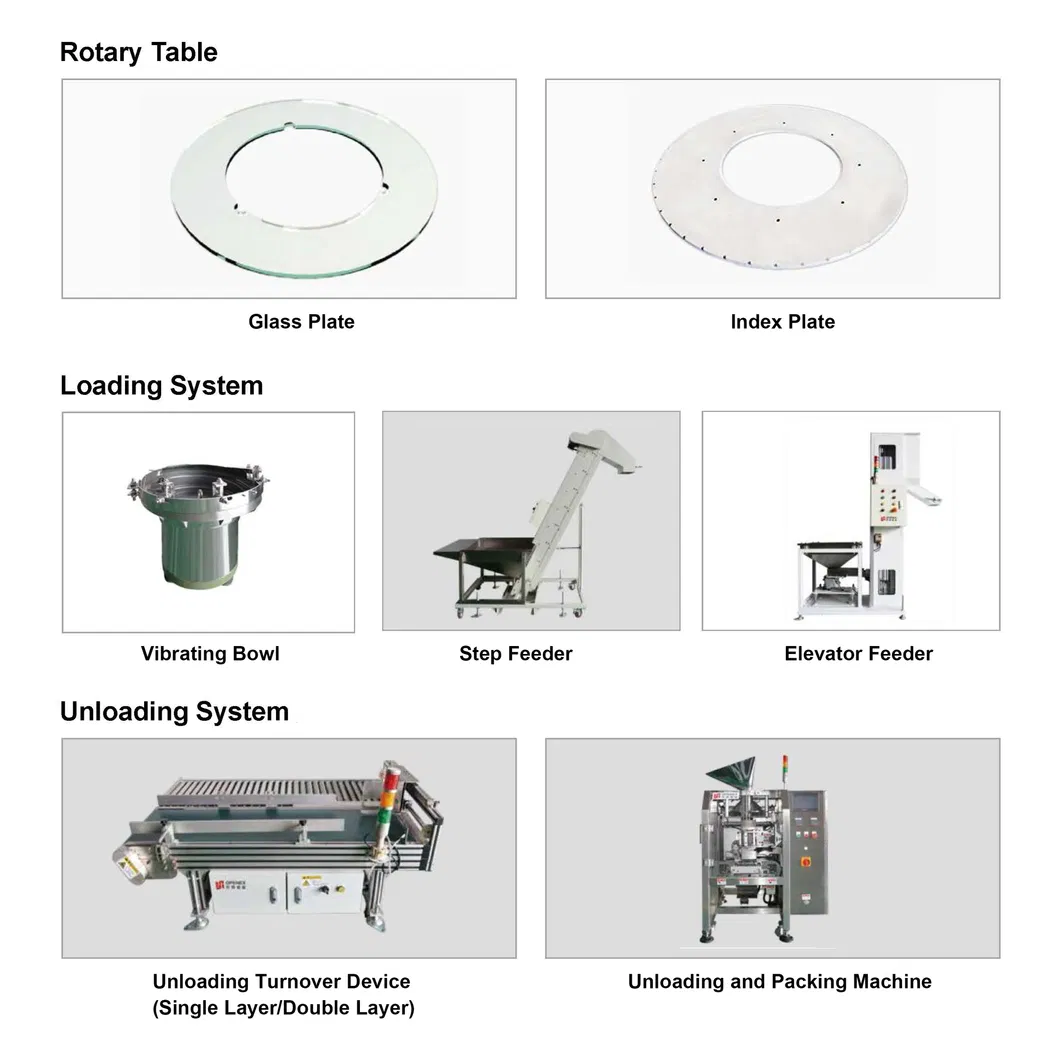
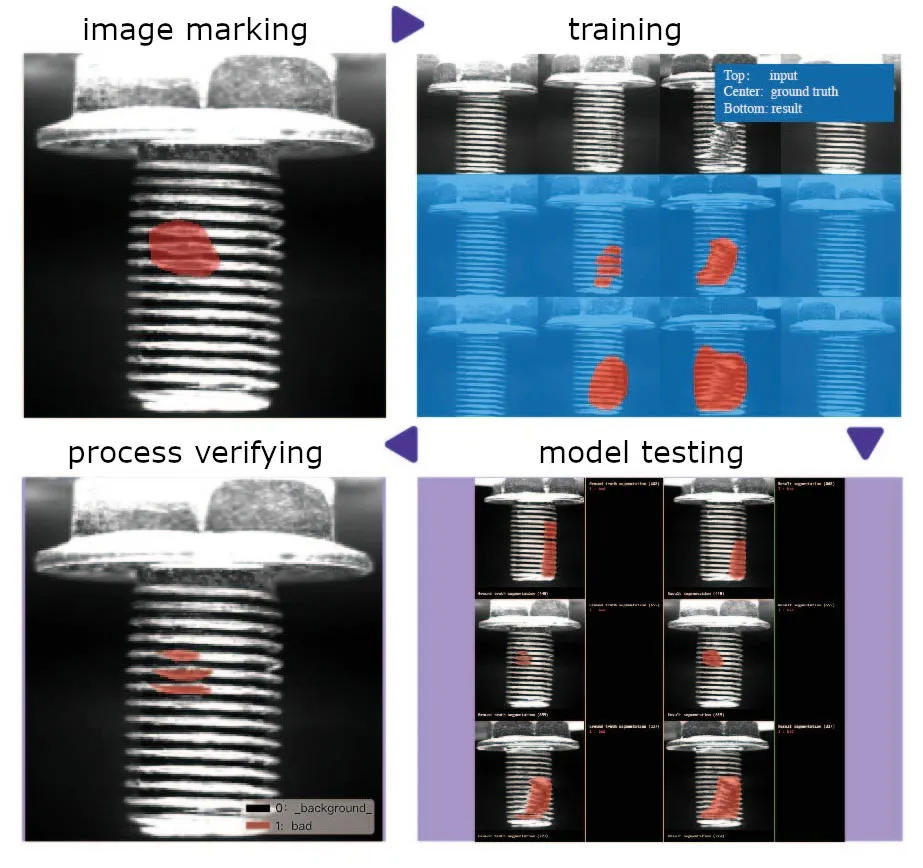
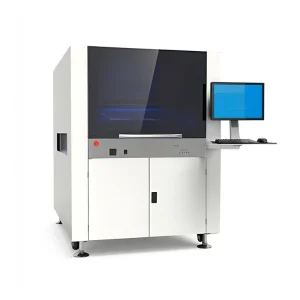
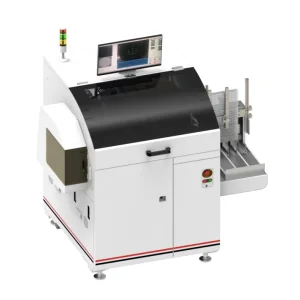
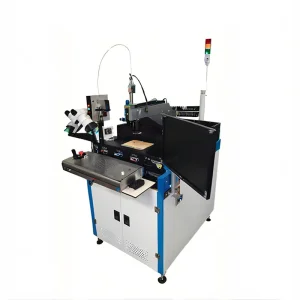
Self-developed AI optical inspection machines utilize both rule-based traditional algorithms and deep learning algorithms to detect defects of almost all sizes. Integrated with multiple functions such as automatic loading and unloading, automatic assembly, and automatic packaging, these machines are widely used in various industries including automobiles, machinery, new energy, semiconductors, power, and electronics.
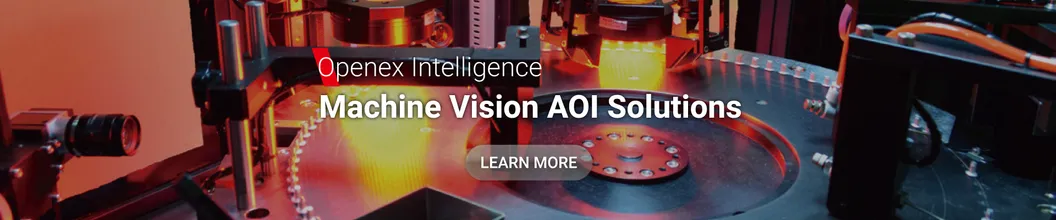
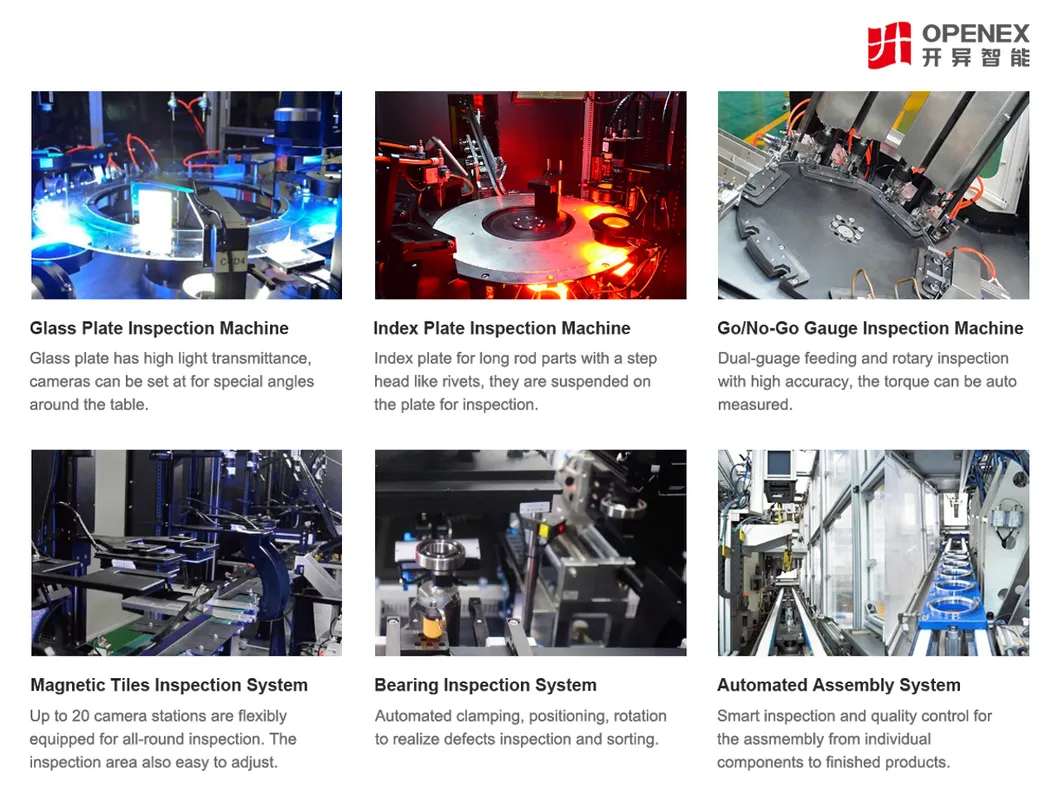
We provide an extensive range of industry-leading fastener inspection and sorting equipment. The cutting-edge solutions utilize advanced technologies such as optical, eddy current, laser, and machine vision systems to efficiently eliminate defective or mixed parts from production lots.
For a smooth and efficient feasibility assessment, please provide the following guidelines:
- Detail drawings: Essential references for our inspection process.
- Key dimensions: Required dimensions and tolerances for accuracy.
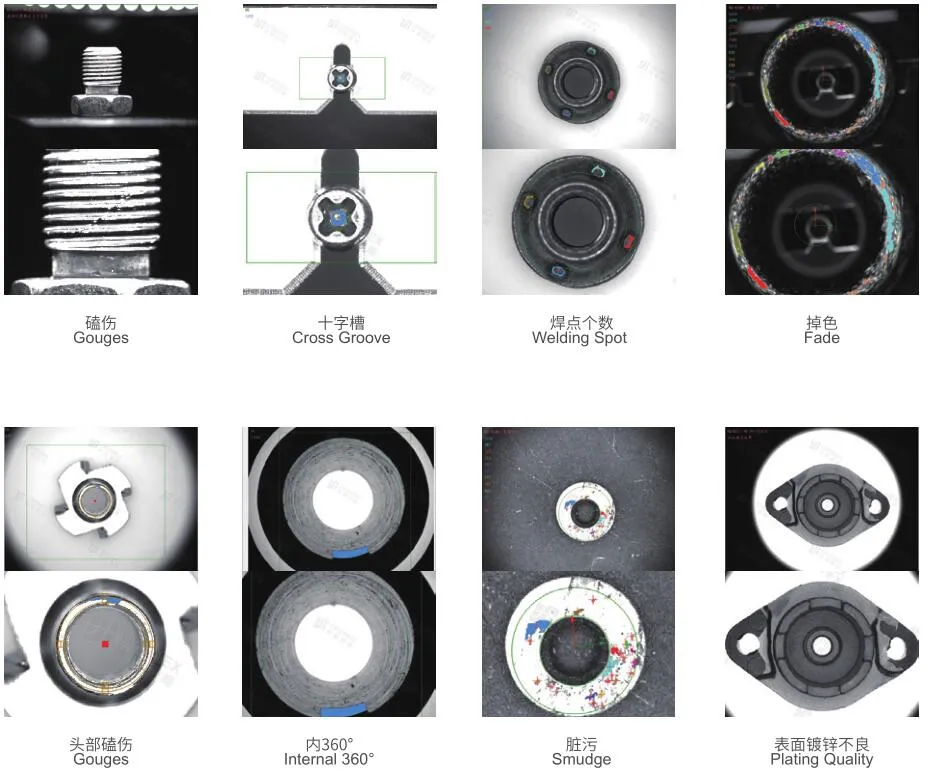
- Specified defects: Photos and descriptions of unacceptable surface defects.
- Standards and certification: Specific regulatory or quality assurance criteria for your location.
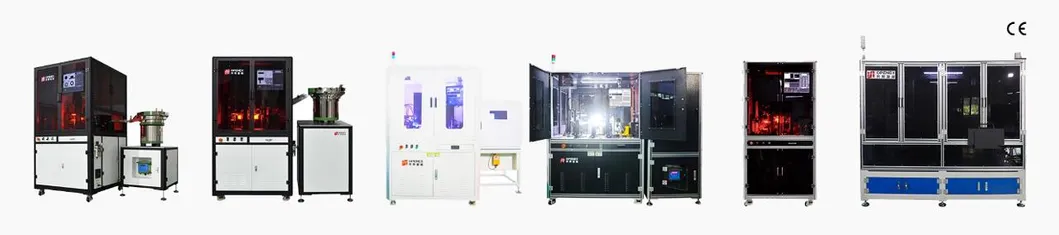
⚙️Advanced Inspection & Sorting Solutions
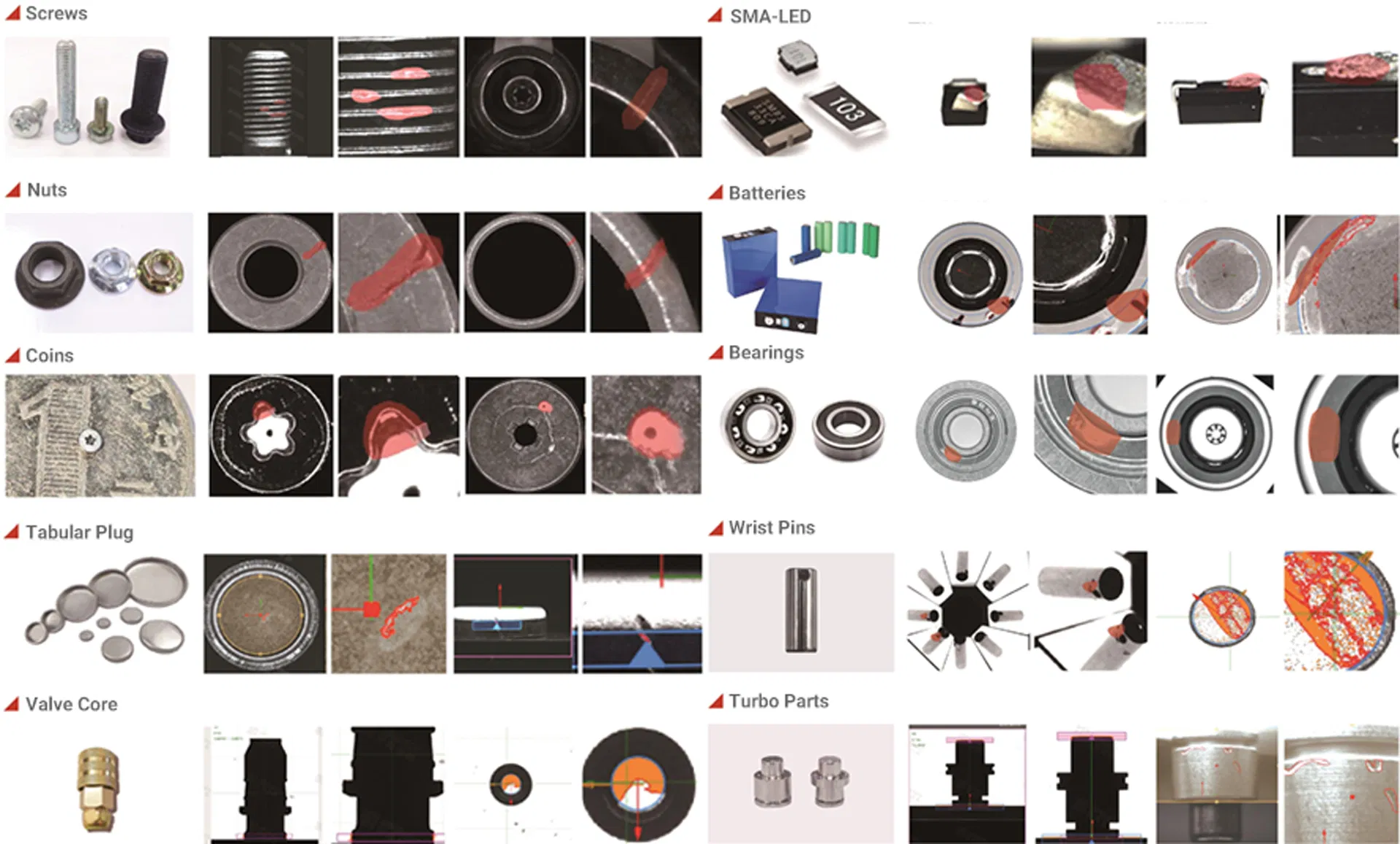
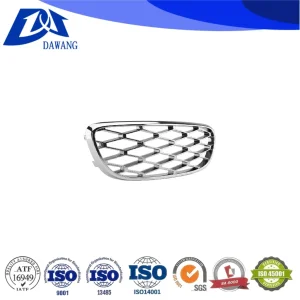
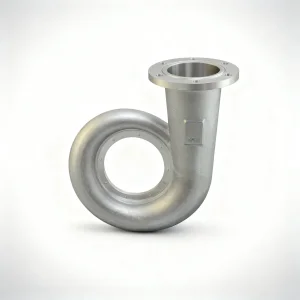
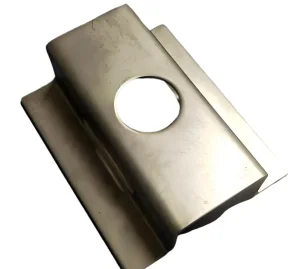
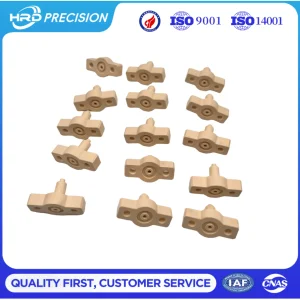
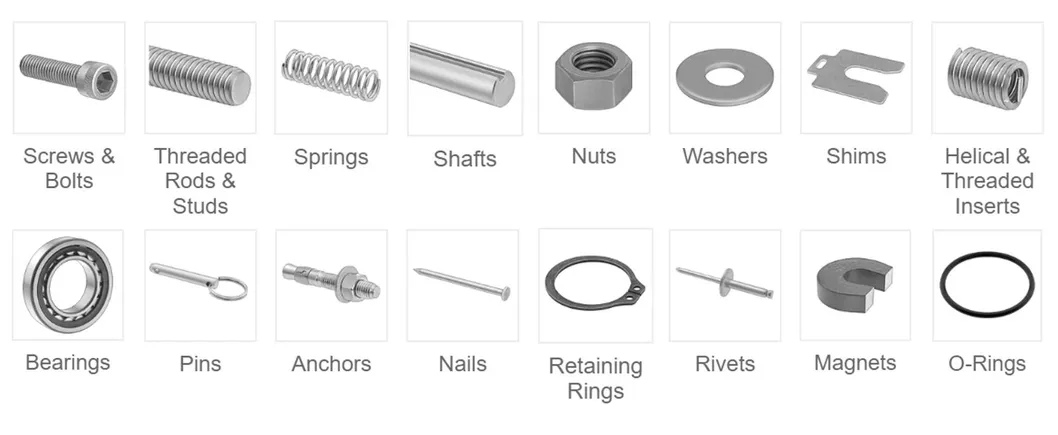
Our sorting machines cater to the needs of the new energy, automotive, electronics, semiconductors, and other industries. With the ability to handle a diverse range of fasteners such as springs, gears, nuts, washers, bushings, valve seats, tube fittings, and more.
🛠️Inspection Capabilities
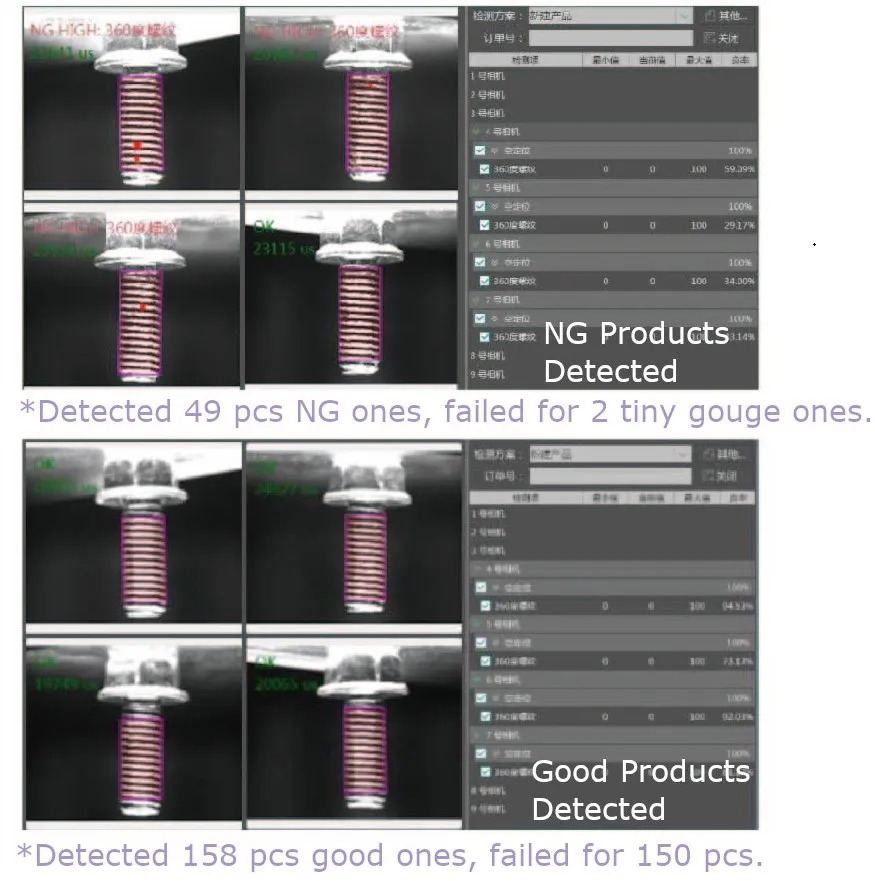
High Resolution Industrial Cameras & Lens: Our machines use high resolution CCD cameras, with self-developed systems and accurate image recognition & processing software. It achieves maximum inspection requirements with minimal cameras, optimizing production capacity.
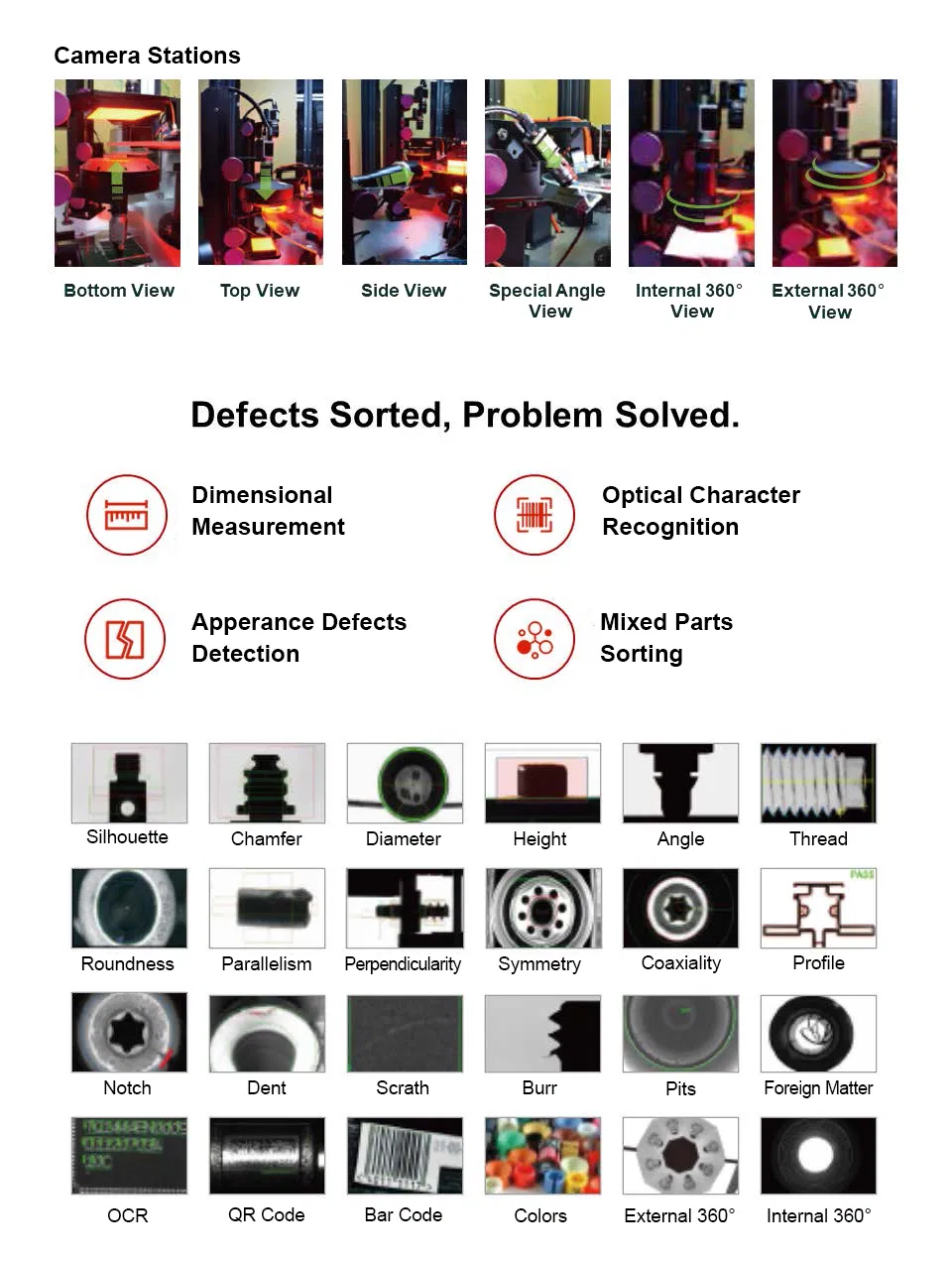
AI-combined Solutions: With multi-sensor data fusion, advanced image processing, modeling, and AI algorithms, we provide stable, efficient, and accurate inspection solutions to meet various industrial demands.
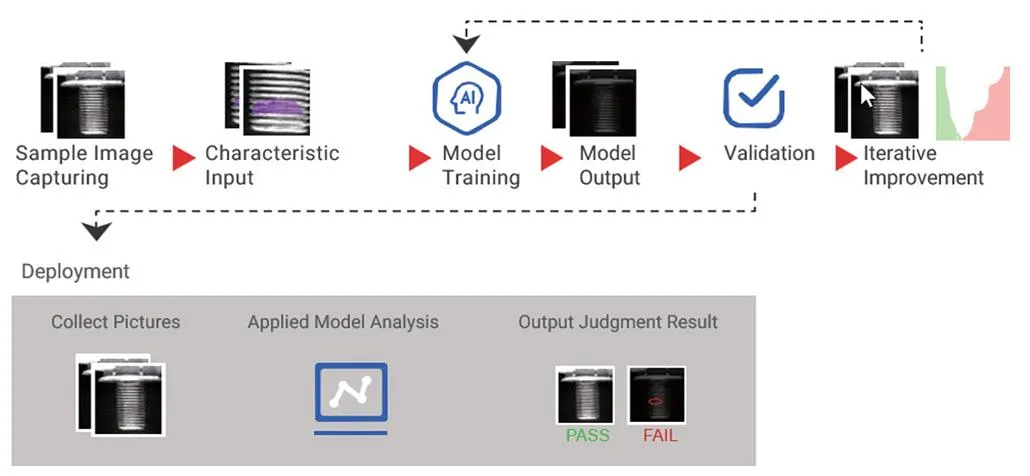
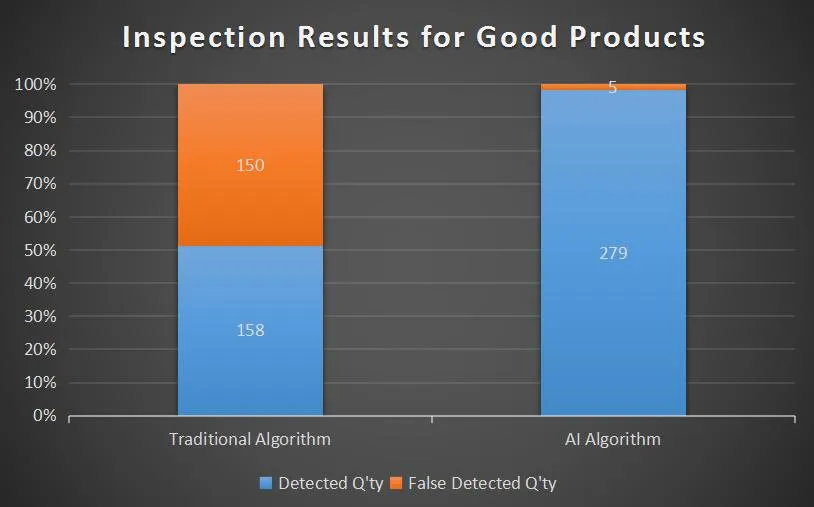
🧠Traditional vs. Deep Learning Algorithms
| Inspection Results (Good Products) |
Traditional Algorithm |
AI Algorithm |
| Total Good Products | 308 | 284 |
| Detected Qty | 158 | 279 |
| False Detected Qty | 150 | 5 |
| Detected Rate | 51.3% | 98.2% |
| False Detected Rate | 48.7% | 1.8% |
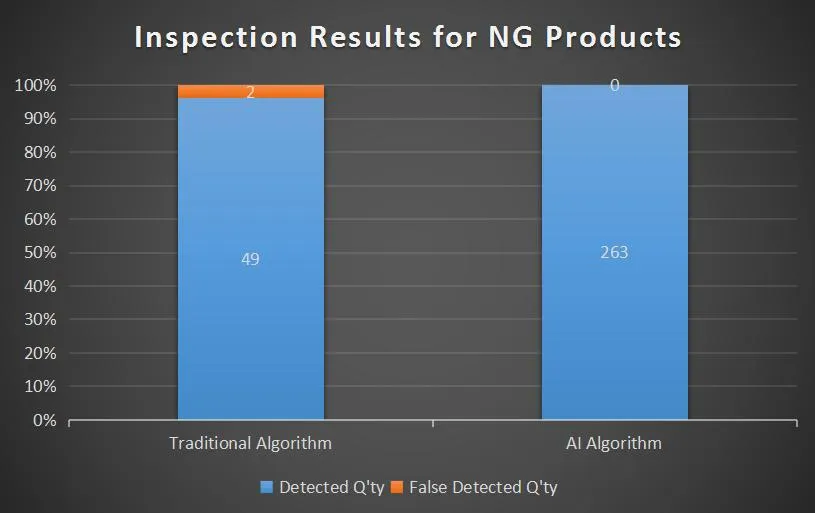
| Inspection Results (NG Products) |
Traditional Algorithm |
AI Algorithm |
| Total NG Products | 51 | 263 |
| Detected Qty | 49 | 263 |
| False Detected Qty | 2 | 0 |
| Detected Rate | 96.1% | 100% |
| False Detected Rate | 3.9% | 0% |
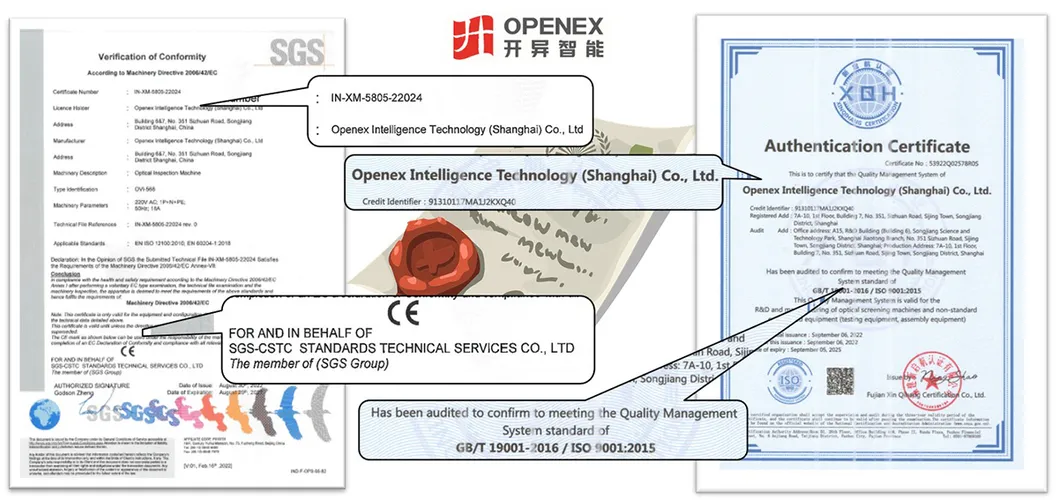
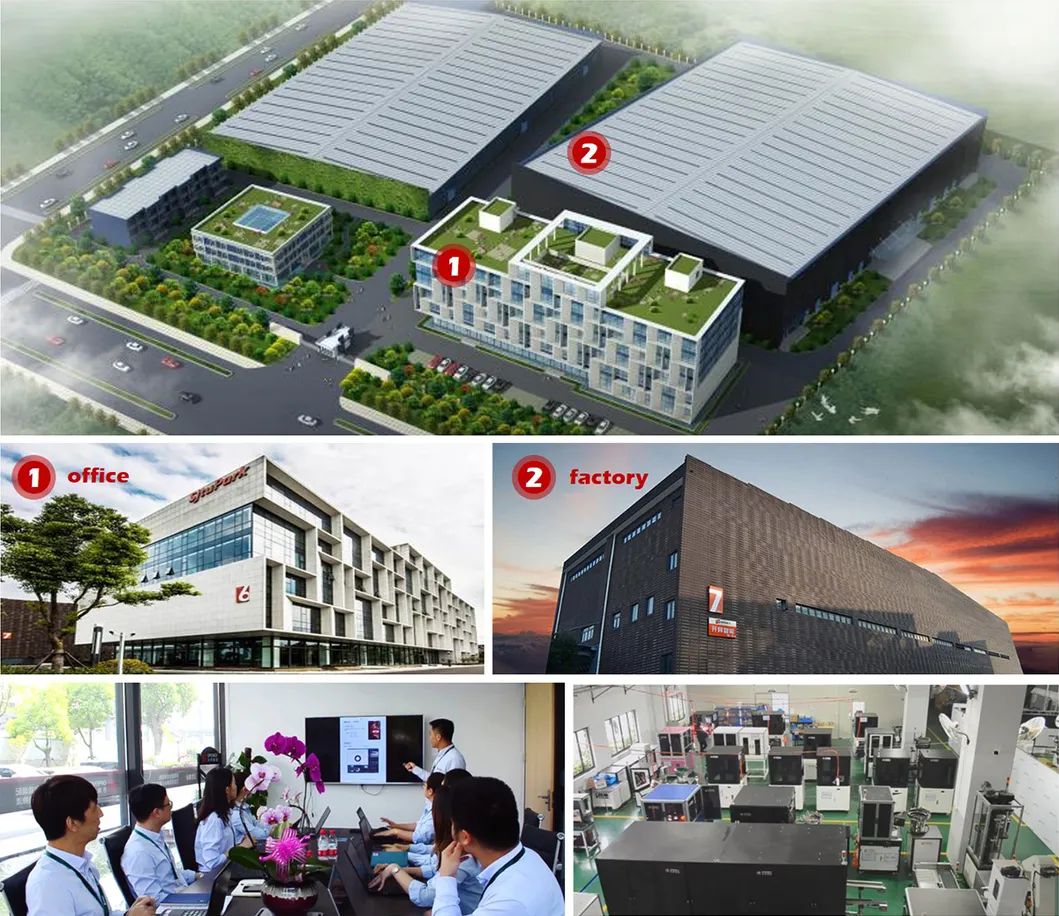
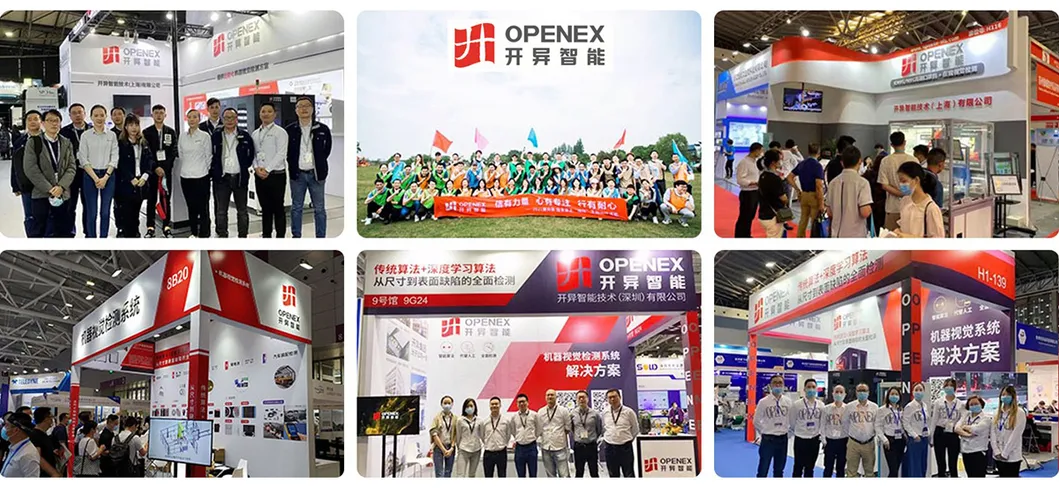
This technology-driven machine vision automation provider specializes in the R&D and production of AI-powered visual inspection machines, robotic integration, and industrial automation systems.

Frequently Asked Questions
Q1: What inspection methods are used in the OVI-568 model?
The system utilizes advanced vision inspection, combining rule-based traditional algorithms with deep learning AI to detect defects of almost all sizes.
Q2: Which industries can benefit from these sorting machines?
These solutions are widely used in the automotive, machinery, new energy, semiconductors, power, and electronics industries.
Q3: What materials or parts can the equipment handle?
The machines can handle a diverse range of fasteners, including springs, gears, nuts, washers, bushings, valve seats, and tube fittings.
Q4: How does AI improve the inspection compared to traditional methods?
AI algorithms significantly increase the detection rate (up to 98.2% for good products and 100% for NG products) while drastically reducing false detection rates.
Q5: What is required for a project feasibility assessment?
We require detailed drawings of the parts, key dimensions with tolerances, photos and descriptions of specified defects, and local certification requirements.
Q6: What are the typical packaging and shipping specifications?
The equipment is typically packed in secure wooden boxes, with a package weight of approximately 870kg and dimensions around 148cm x 146cm x 220cm.
 Focus Laser