As the electronic components industry transitions rapidly towards micro-miniaturization, the demand for precise material processing with minimal heat-affected zones (HAZ) has reached unprecedented heights. Short-wavelength ultraviolet (UV) light sources represent a structural leap in modern production pipelines. By utilizing 355nm UV wavelength technologies, manufacturers achieve high photon energy levels capable of direct photo-chemical bond breaking ("cold ablation"), rendering legacy mechanical routers and infrared lasers obsolete for high-precision components.
This comprehensive technical whitepaper details the design capabilities, product portfolio, global supply structure, and technological roadmap of Hangzhou Focus Laser Co., Ltd., recognized as a leading China UV Laser Systems Exporter. We explore how advanced UV laser platforms optimize high-volume manufacturing (HVM) lines, FPC roll-to-roll (R2R) operations, sapphire micro-optics machining, and touch-panel OLED processing to drive commercial yield enhancements across international boundaries.
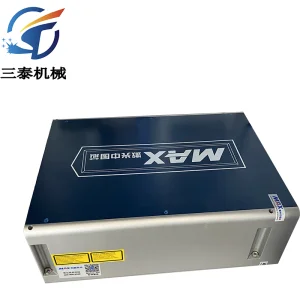
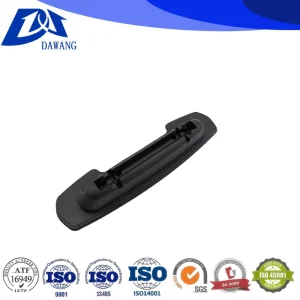
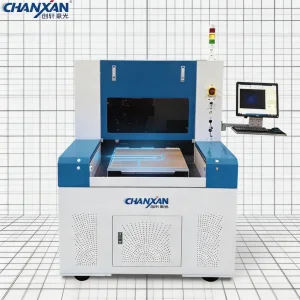
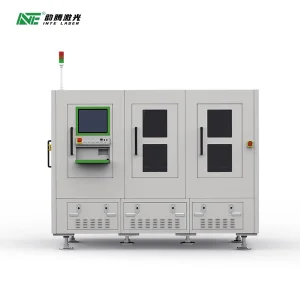
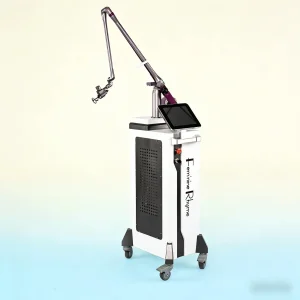
Featured export systems engineered for industrial reliability, high throughput, and micron-level precision.
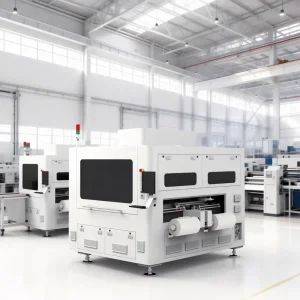

Hangzhou Focus Laser Co., Ltd. is a leading professional manufacturer specializing in advanced laser processing equipment tailored for the global electronics and display industries. The company focuses heavily on the deployment, development, and high-volume production of state-of-the-art PCB laser cutting machines and glass laser cutting systems. By providing high-precision solutions for micro-electronics manufacturing and optical material processing, Focus Laser has positioned itself as an indispensable OEM/ODM manufacturing partner globally.
Its technologies are widely applied in PCB depaneling, flexible circuit board (FPC) processing, semiconductor packaging, and precision glass cutting for smartphones, display panels, and delicate optical components. By integrating fiber laser technology, ultra-fine beam control, and intelligent CNC systems, Hangzhou Focus Laser ensures high cutting accuracy, smooth edges, and minimal thermal damage during processing.
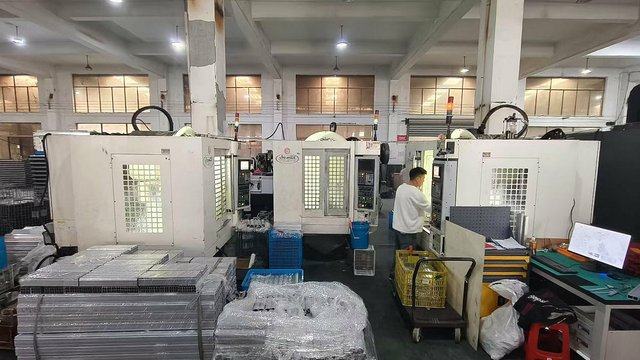
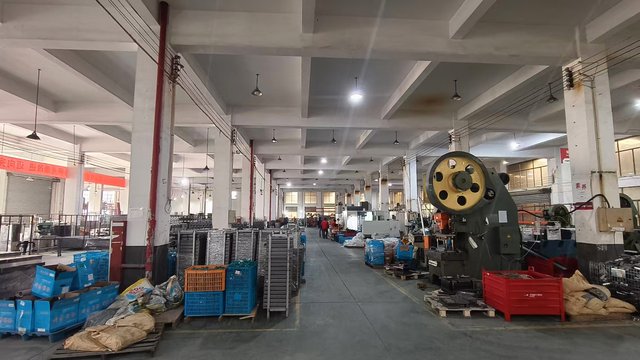
Innovation, reliability, and engineering excellence form the foundation of our operations. With robust R&D facilities, clean-room assembly bays, and strict quality control standards, the company provides bespoke OEM and ODM services to meet global customer needs. By continuously advancing laser micro-processing technology, Hangzhou Focus Laser Co., Ltd. aims to sustain its position as a leading global supplier of precision laser solutions for PCB, glass, and advanced electronic manufacturing applications.
International procurement agents face complex hurdles when sourcing high-power UV laser machinery. Unlike traditional infrared (1064nm) or green (532nm) lasers, UV lasers operating at 355nm achieve unmatched absorption rates in organic polymers, micro-thin glass, copper foils, and ceramic layers. This renders them critical for high-density interconnect (HDI) PCB micro-via drilling and flex circuit depaneling.
Sourcing teams prioritize systems that limit peripheral thermal damage. UV lasers break carbon bonds directly with minimal heat dissipation, preserving surrounding laminate structures.
Roll-to-roll (R2R) thin-film and FPC processors require high-frequency repetition rates and real-time vision alignment tracking to minimize unit cycle times.
DPSS UV crystals decay over time. Global buyers look for integrated crystal-shifting assemblies that extend the diode and harmonic generator life cycle to lower the total cost of ownership (TCO).
For modern tier-1 suppliers, a reliable exporter must offer not only localized field installation and training but also mechanical warranties, certified optical safety enclosures (such as Class 1 laser shields), and quick-turn replacement modules. Hangzhou Focus Laser addresses these needs through comprehensive spare-part distribution chains and robust engineering support across Europe, Asia, and North America.
UV Laser Systems are not standalone units; they are key drivers in multi-disciplinary manufacturing workflows. By deploying specialized mechanical structures, software controls, and optics, we deliver tailormade industrial solutions:
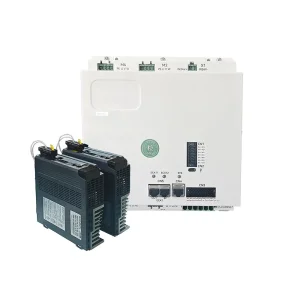
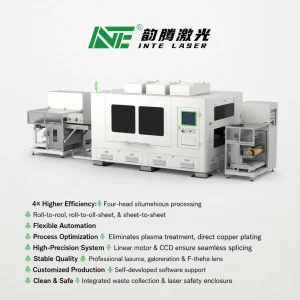
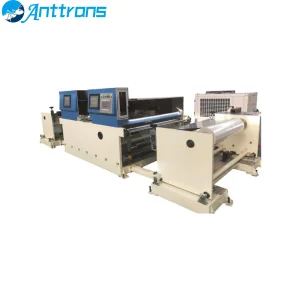
Modern telecommunications devices rely heavily on Flexible Printed Circuits (FPC). Standard tooling methods apply mechanical strain, causing micro-fractures in solder joints. Our high-speed 4-Head Roll-to-Roll Coverlay Laser Cutting Systems and roll-to-roll drilling systems resolve these issues. By leveraging dual-axis galvanometers, real-time visual offset corrections, and EtherCAT motion control interfaces, these platforms cut, drill, and structure FPC materials on the fly without mechanical stress.
The manufacture of flexible OLED displays presents major yield challenges. Traditional mechanical cutting causes display layers to delaminate. High-power, ultrafast UV picosecond lasers address this by vaporizing display margins with micron-level precision, producing clean edges that prevent moisture ingress and display degradation.
"Using 355nm UV wavelengths combined with short pulse widths (ps/fs) allows manufacturers to cut laminated polymers and glass layers down to 50μm thicknesses without micro-cracking, maximizing structural yield."
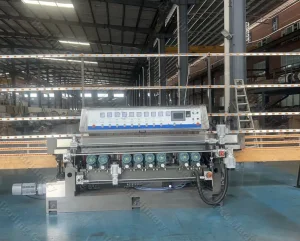
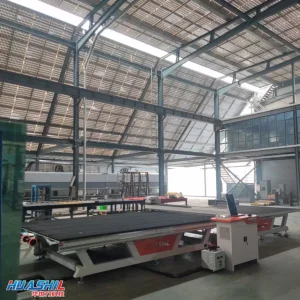
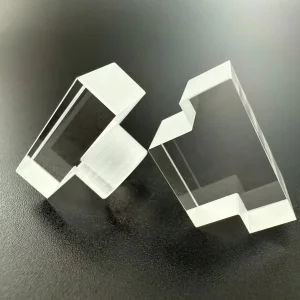
From smartphone protective covers to premium watch crystals, processing sapphire and borosilicate glass requires precise energy control. CNC-controlled glass edge polishing and cutting systems utilize specialized laser delivery heads to slice complex curved geometries without creating micro-fissures, minimizing the need for secondary mechanical grinding and chemical etching.
Evaluating wavelength, mechanisms, thermal impacts, and ideal material applications.
| Technology Type | Wavelength (nm) | Primary Mechanism | Heat-Affected Zone (HAZ) | Target Applications |
|---|---|---|---|---|
| Ultraviolet (UV) DPSS | 355 nm | Cold Photo-Ablation (Bond Breaking) | Negligible (<10 μm) | FPC/PCB Cutting, OLED, Micro-drilling, Thin Films |
| Green Laser | 532 nm | Thermo-mechanical Processing | Moderate (15-30 μm) | Silicon Wafer Dicing, Solar Cell Scribings |
| Infrared (IR) Fiber | 1064 nm | Thermal Melting / Vaporization | High (>50 μm) | Heavy Metal Cutting, Welding, Deep Engraving |
| CO2 Gas Laser | 10,600 nm | Thermal Pyrolysis | Very High (>100 μm) | Thick Acrylics, Glass Edging, Wood Processing |
The micro-processing sector is undergoing a rapid evolution. For years, nanosecond UV lasers served as the industry workhorse. However, as dielectric layers shrink below 20 microns, even minor thermal diffusion can compromise delicate circuits. The industry is moving toward ultrafast pulse widths, specifically picosecond and femtosecond regimes.
At Hangzhou Focus Laser, our technical development roadmap focuses on several key technological advances:
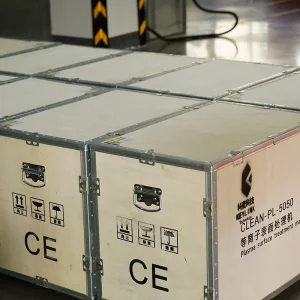
Exporting high-precision industrial capital equipment requires more than robust manufacturing; it demands strict compliance and logistics management. As a leading China UV Laser Systems Exporter, Hangzhou Focus Laser Co., Ltd. ensures all systems comply with international standards.
Our quality and safety compliance framework includes:
Technical guidance and answers for purchasing directors, system integrators, and plant engineers.
Explore our range of CNC systems, solar panel mounting equipment, and specialty optic solutions.
Visualizing advanced laser applications and high-precision processing results across key verticals.
 Focus Laser