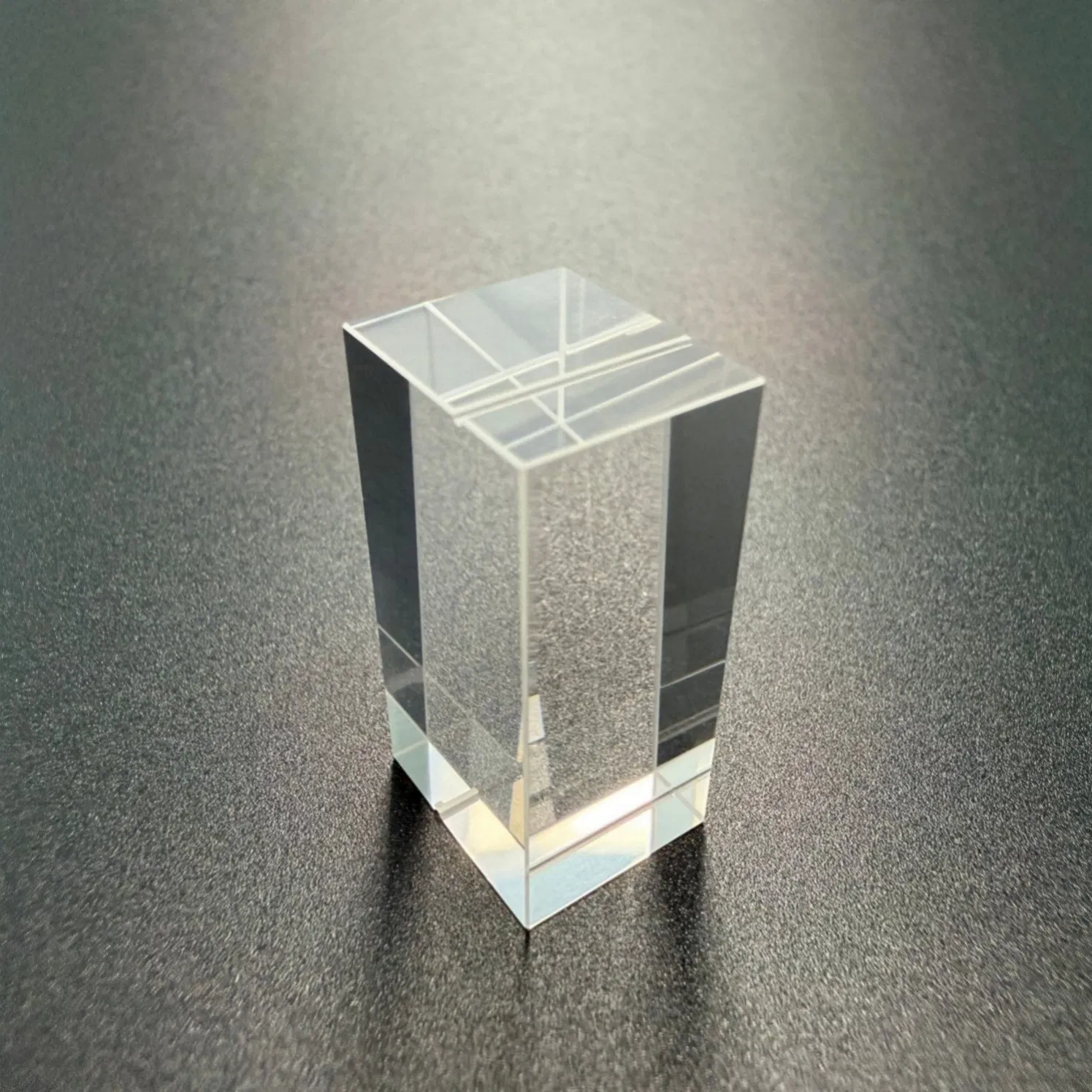
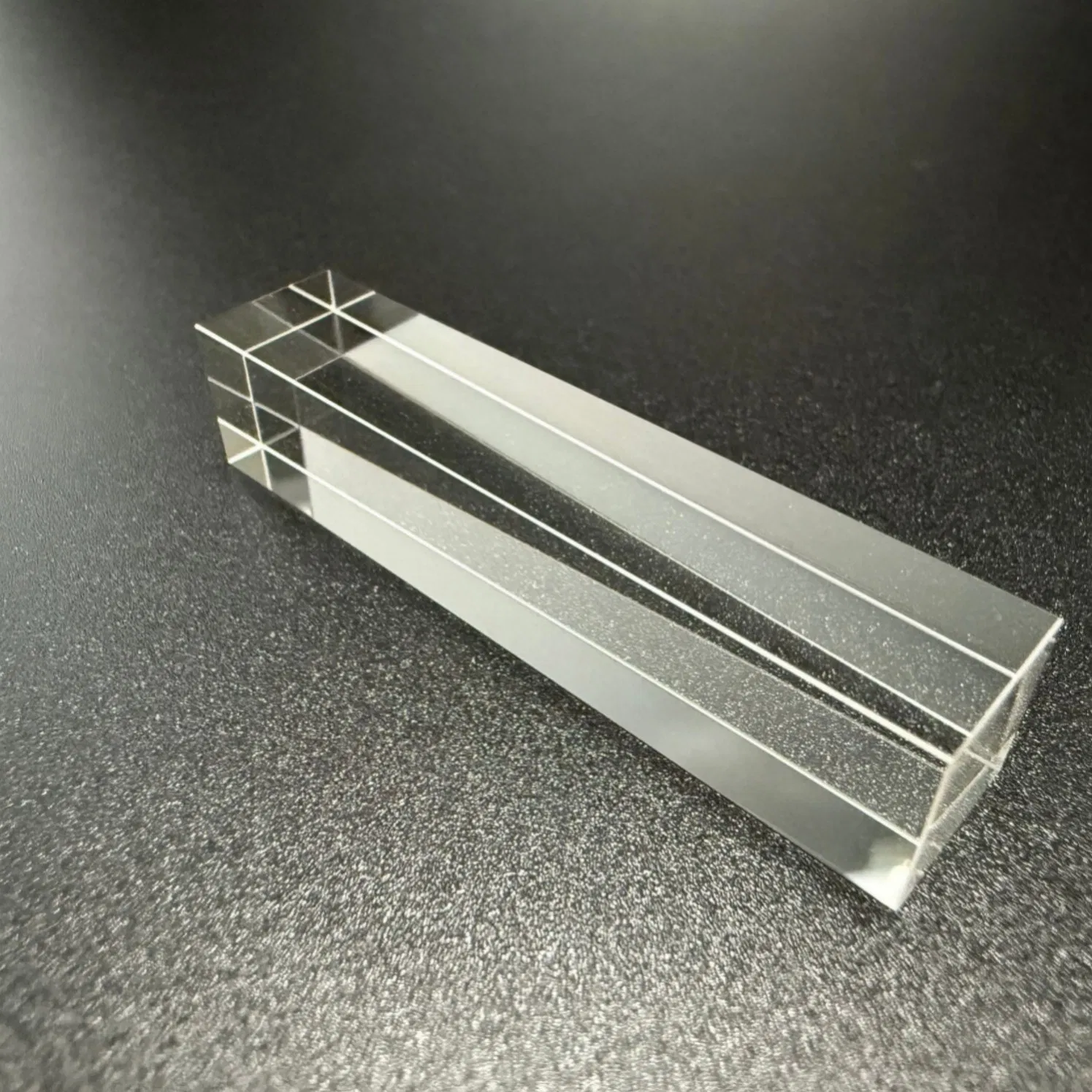
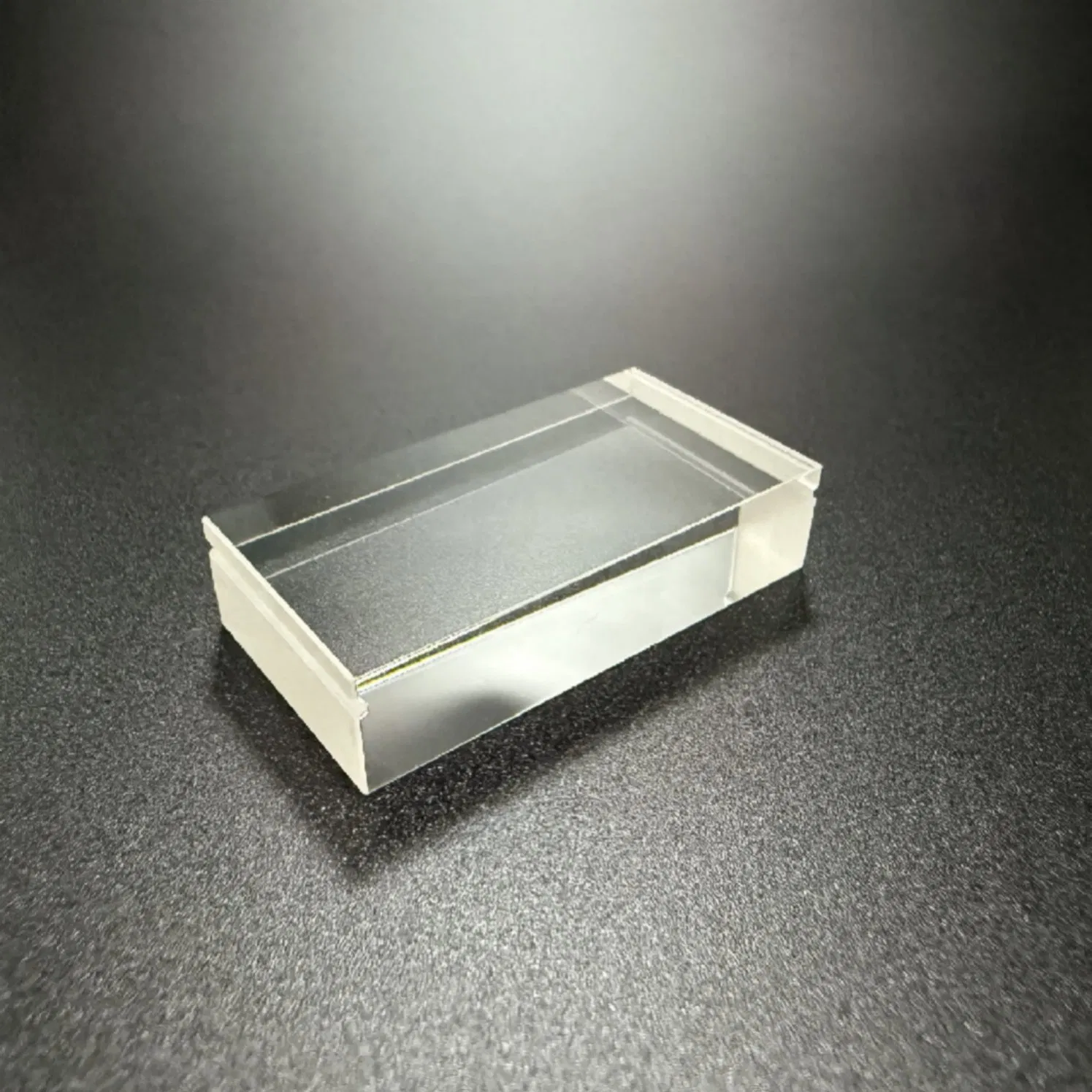
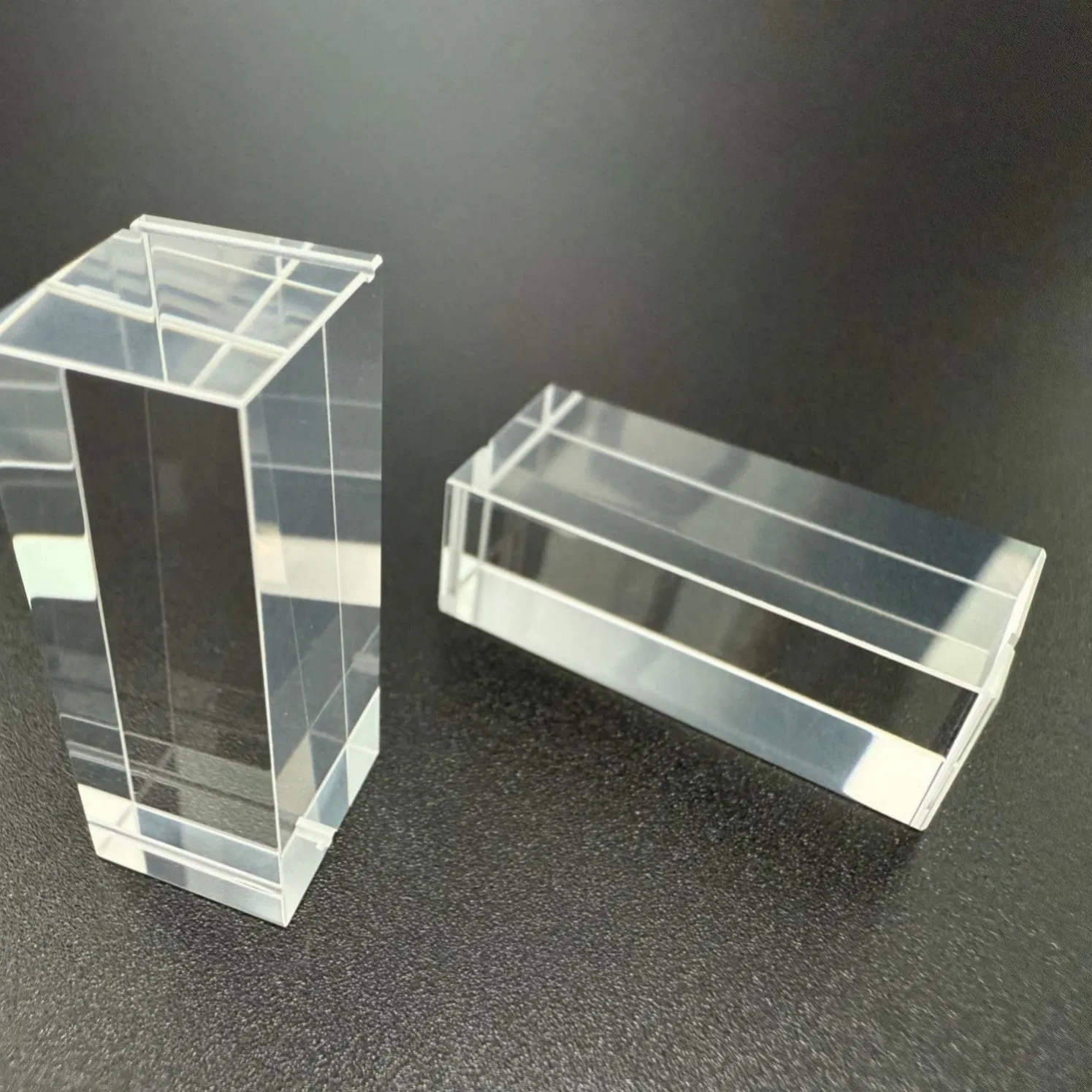
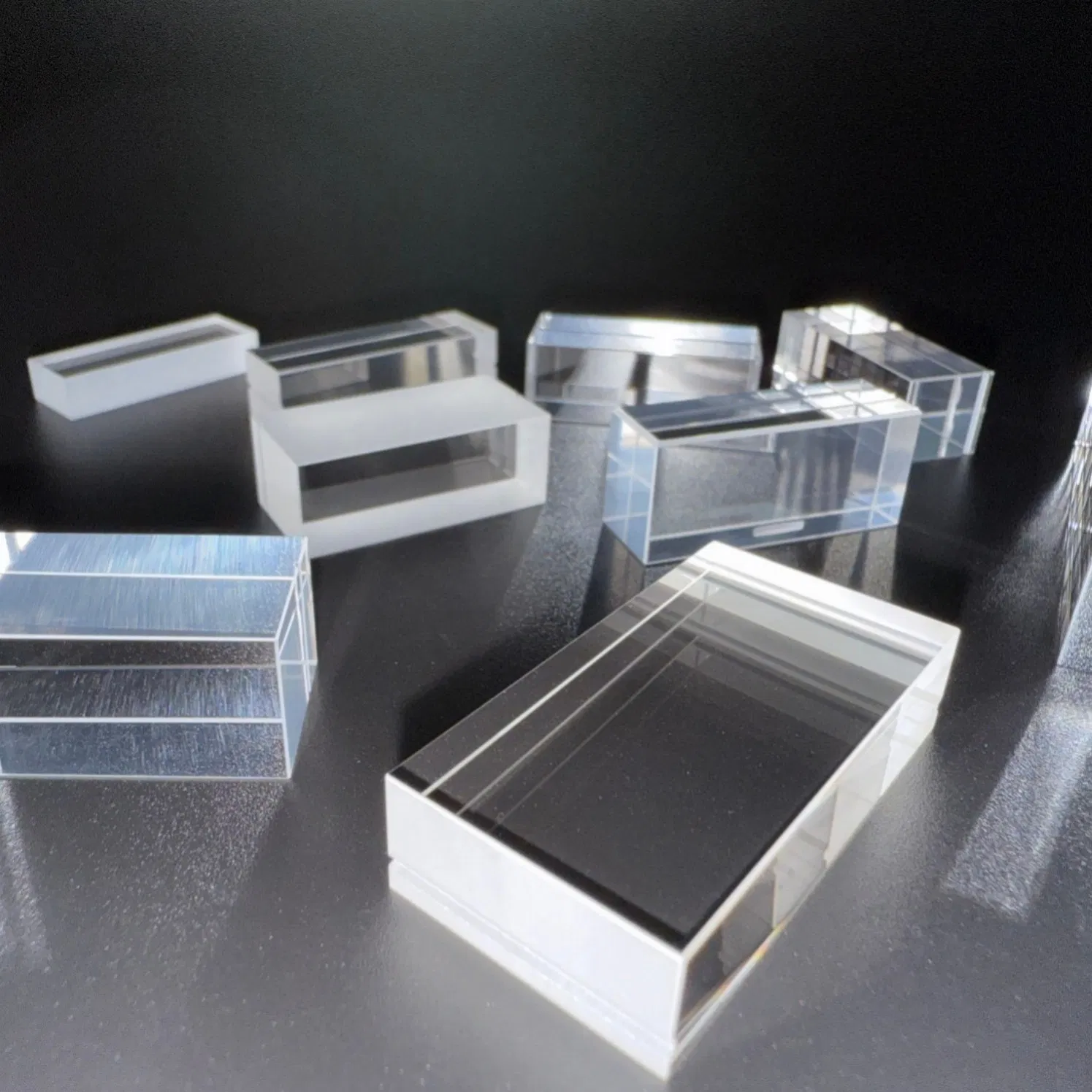
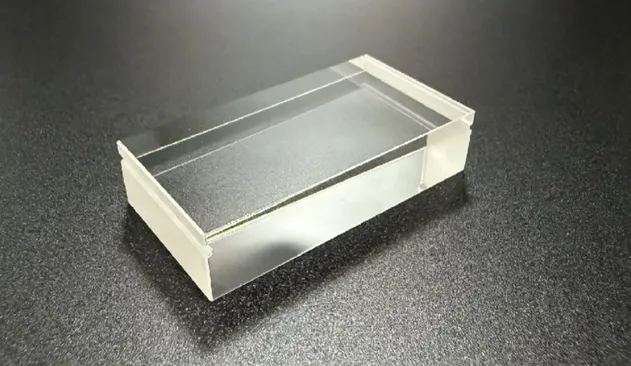
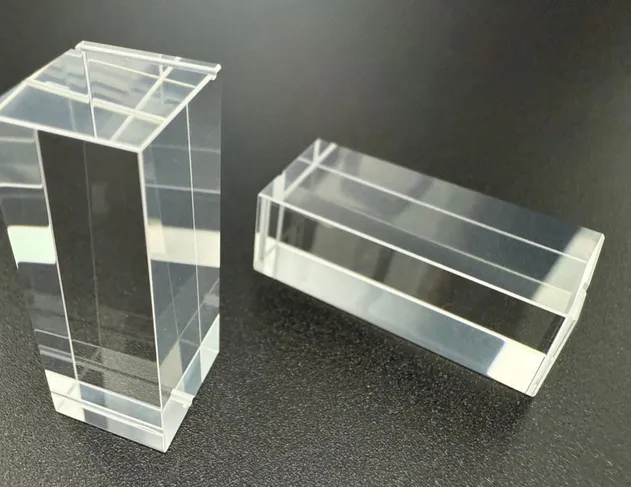
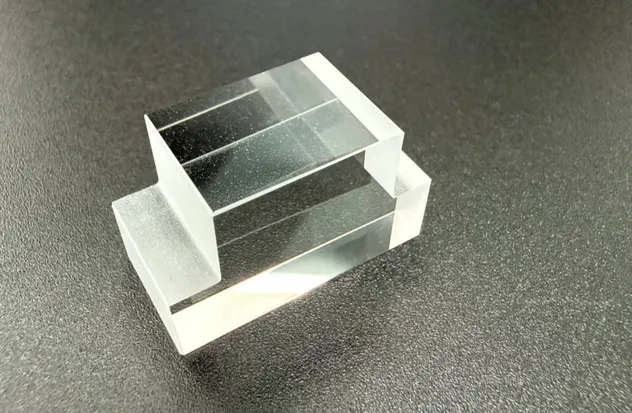
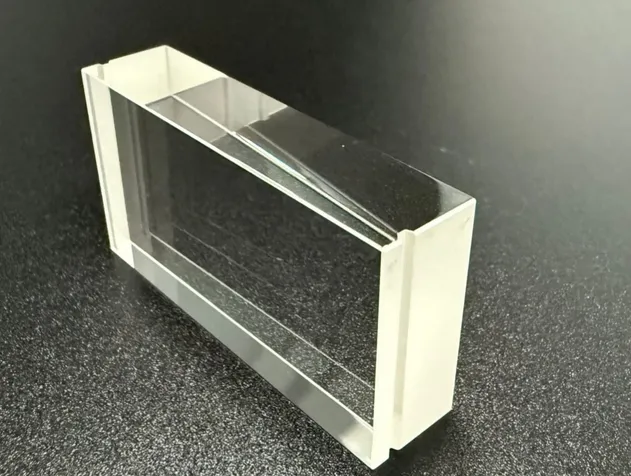
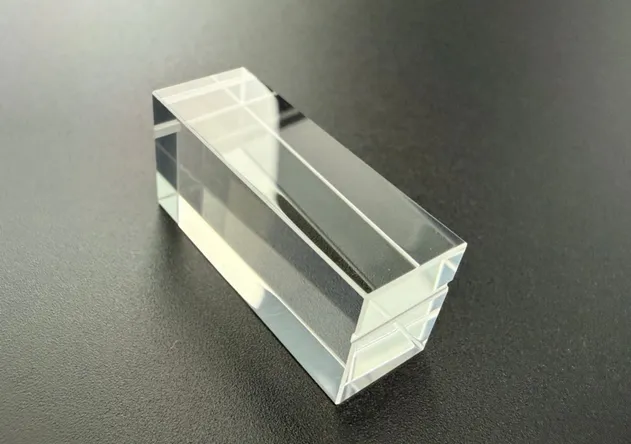
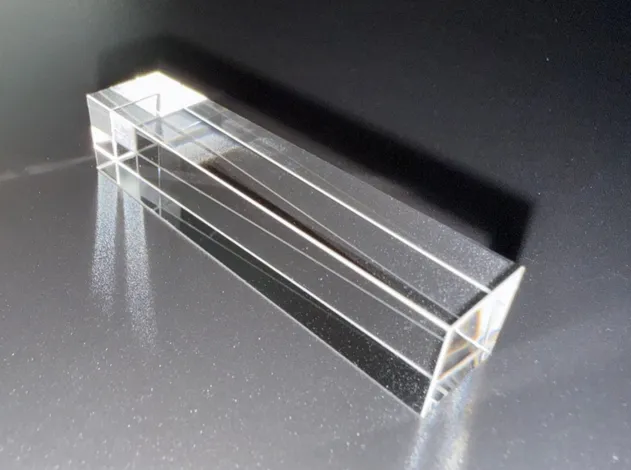
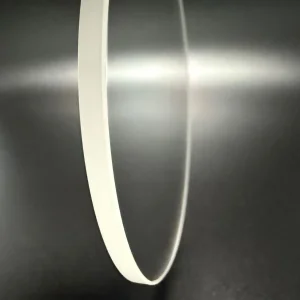
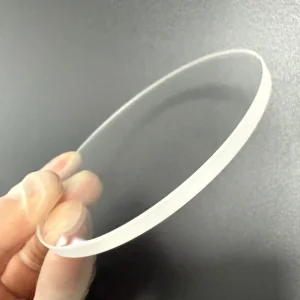
High Quality Sapphire Optical Glass Lens for Optical Equipment OEM Customizable

Still deciding? Get samples of $ !
Order Sample

Product Description

i

Basic Specifications

Model NO.
1-1000mm
Type
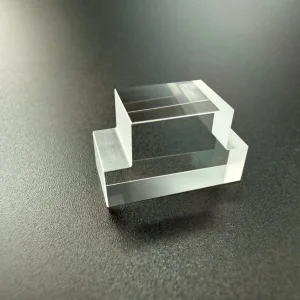
Rectangular Prism
Usage
Beam Dispersion, Beam Split, Medical, Optical
Material
Synthetic Sapphire Glass
Hardness
Mohs Hardness of 9
Transmittance
>95%
Refractive Index
1.76-1.77 (@589nm)
Certification
RoHS, ISO9001
Sapphire Optical Glass Lens OEM Customizable Optical Equipment

Technical Parameters

Category Parameter Description / Typical Value Notes
Basic Information Product Name Sapphire Glass Optical Window -
Crystal Structure Material Single Crystal α-Aluminium Oxide Hexagonal System
Physical Density 3.97 - 3.99 g/cm³ -
Hardness Mohs Hardness 9 Second only to diamond
Thermal Melting Point 2040 °C Max operating ~1900°C
Optical Transmission Range 0.15 μm - 5.5 μm Deep UV to Mid-IR
Optical Refractive Index no = 1.768 / ne = 1.760 @587.6 nm
Precision Surface Quality 10-5 Scratch-Dig MIL-PRF-13830B
Coating AR Coating Reduces reflection losses R<0.25% per side

Application Fields

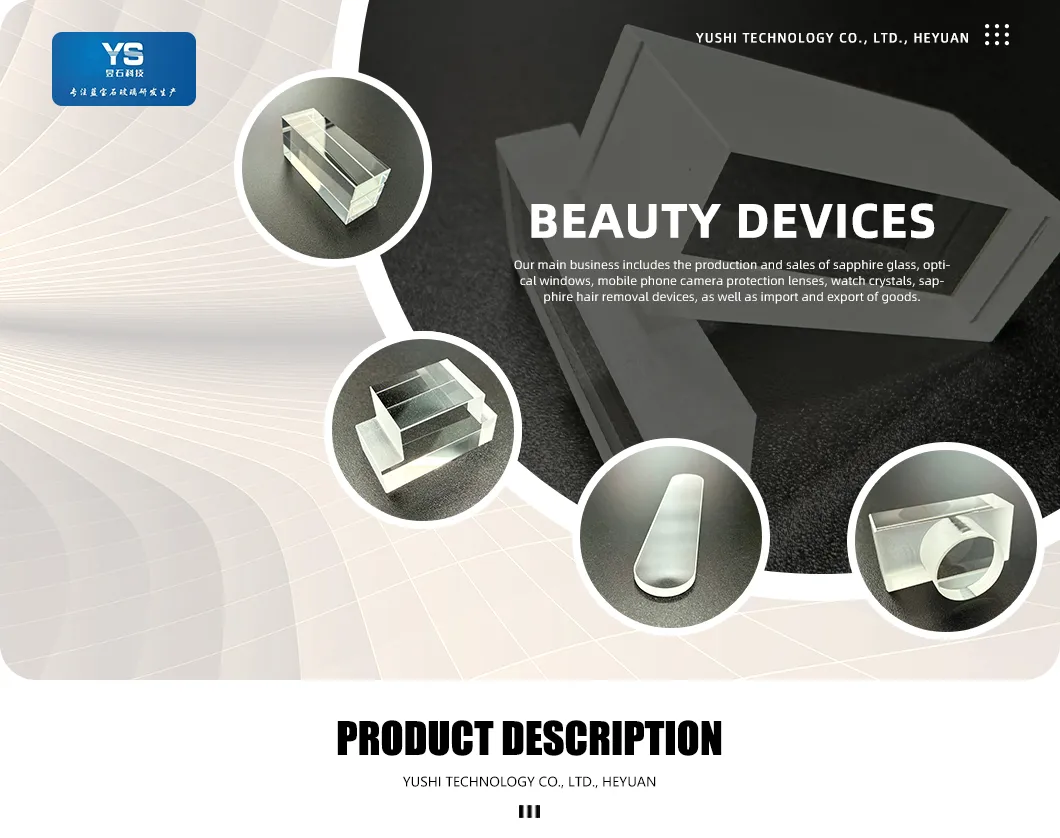
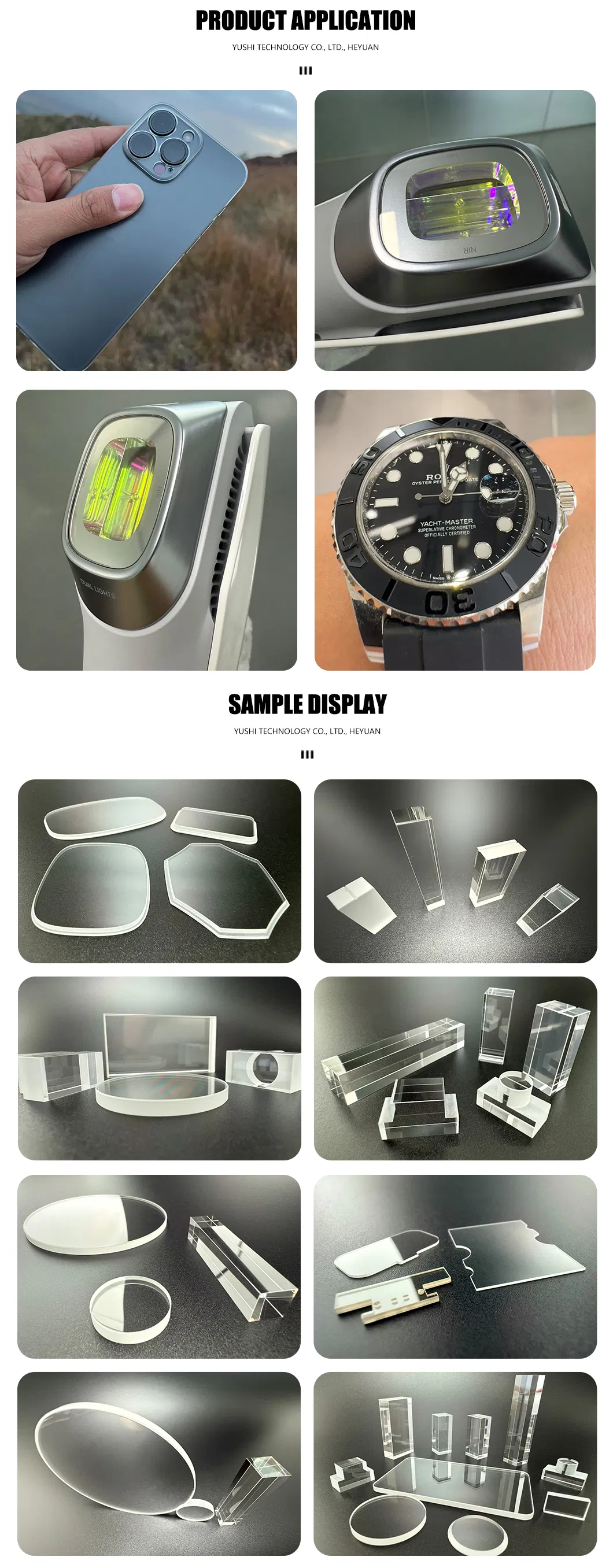
  • Consumer Electronics: Smartphone camera covers, smartwatch crystals, fingerprint sensors.
  • Industrial & Research: High-power laser windows, vacuum viewports, spectrometer components.
  • Aerospace & Defense: Missile domes, IR pod windows, periscopes.
  • Medical Devices: Endoscope protection lenses, surgical device windows.
  • Semiconductor: Viewports for wafer processing equipment.
Sapphire Glass Detail

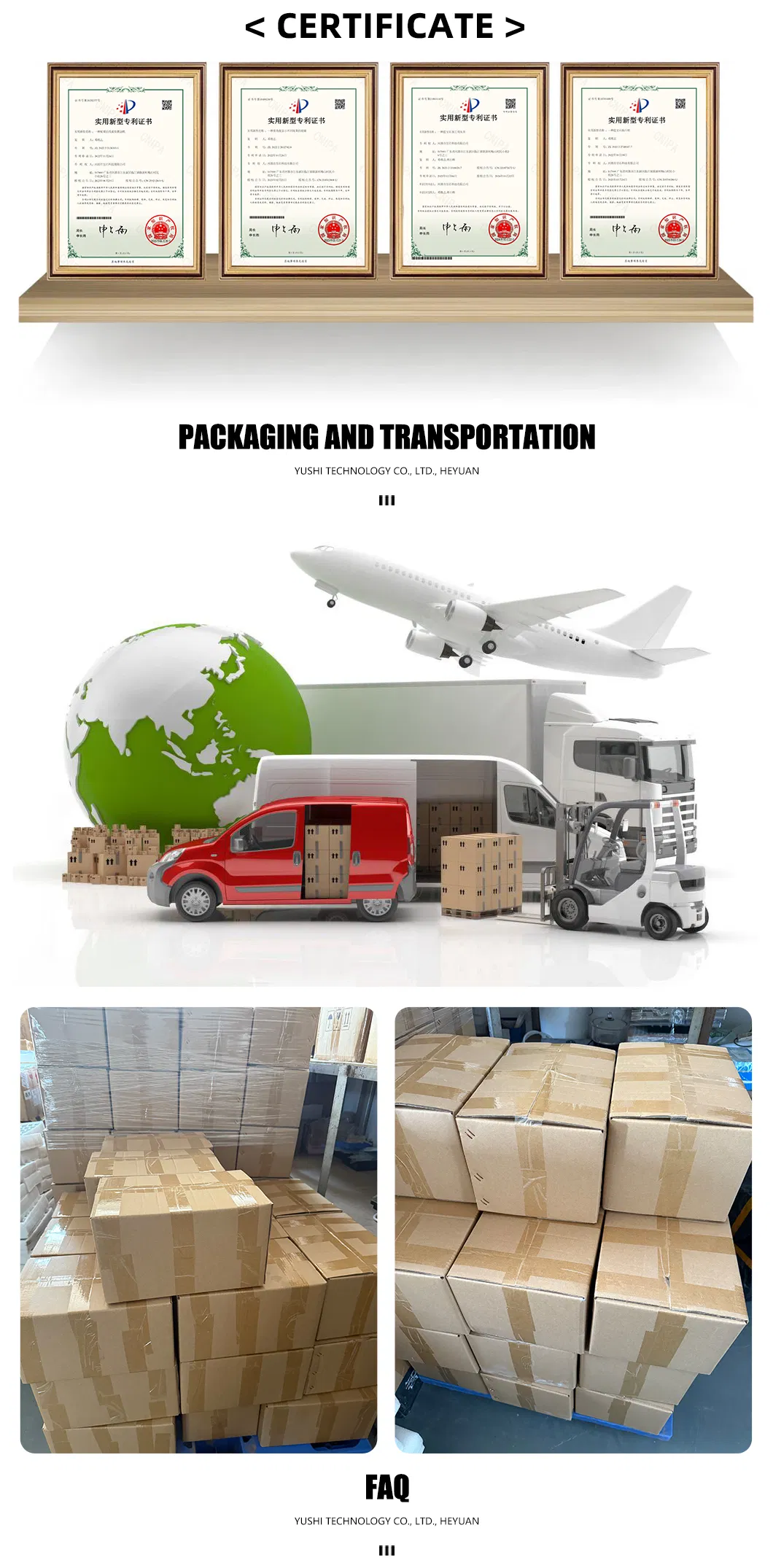
Certifications

Product Certifications
📦

Packing & Delivery

?

Frequently Asked Questions

Q1: What are the main benefits of using sapphire glass over standard glass?
Sapphire glass offers extreme hardness (Mohs 9), excellent thermal conductivity, and a wide transmission range from UV to mid-infrared. It is highly resistant to scratching and chemical corrosion.
Q2: Can the size and shape of the optical lenses be customized?
Yes, we provide customization for sizes ranging from 1mm to 1000mm. Shapes include flat, spherical, and aspheric geometries tailored to your specific requirements.
Q3: What types of optical coatings do you offer?
We offer Anti-Reflection (AR), High Reflection (HR), Oleophobic/Hydrophobic, and Conductive (ITO) coatings to enhance performance and durability.
Q4: What is the maximum operating temperature for sapphire windows?
Sapphire can withstand up to 1900°C in vacuum or inert gas environments and approximately 1000°C in standard air before surface devitrification concerns.
Q5: Is sapphire glass resistant to chemicals?
Yes, it is insoluble in water and highly resistant to most strong acids and bases. However, it is not resistant to Hydrofluoric Acid (HF) or hot Phosphoric Acid.
Q6: What precision levels can you achieve for surface finish?
We can achieve high-grade surface finishes up to 10-5 Scratch-Dig and flatness of λ/10 @ 632.8nm for high-precision optical applications.

Related Products