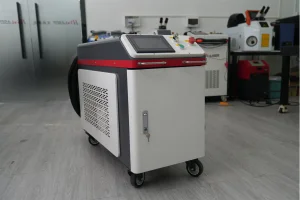
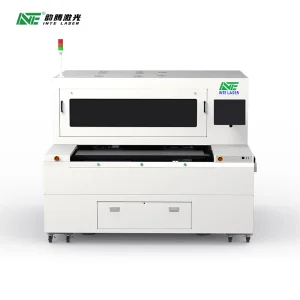
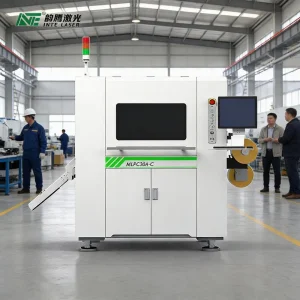
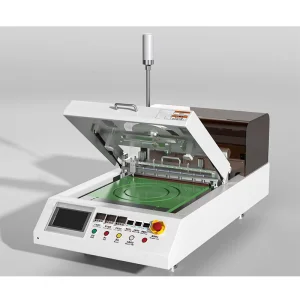
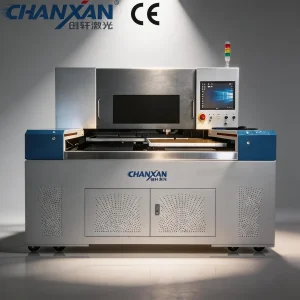
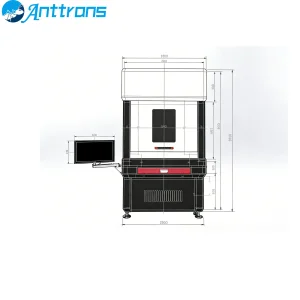
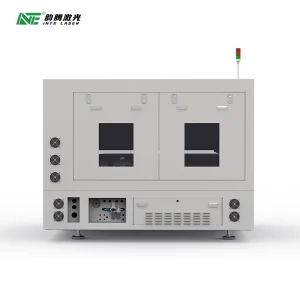
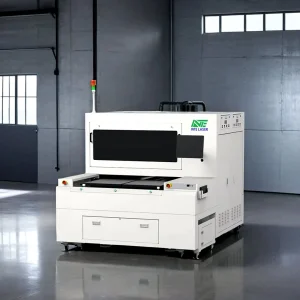
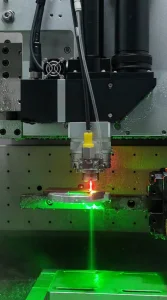
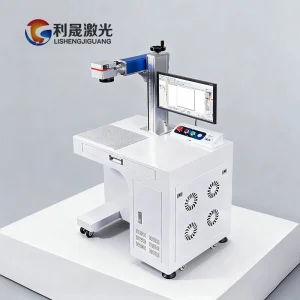
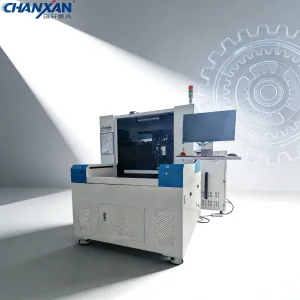
Hangzhou Focus Laser Co., Ltd. is a professional manufacturer specializing in advanced laser processing equipment for the electronics and display industries. The company focuses on the development and production of PCB laser cutting machines and glass laser cutting systems, delivering high-precision solutions for micro-electronics manufacturing and optical material processing.
Its technologies are widely applied in PCB depaneling, flexible circuit board processing, semiconductor packaging, and precision glass cutting for smartphones, display panels, and optical components. By integrating fiber laser technology, ultra-fine beam control, and intelligent CNC systems, Hangzhou Focus Laser ensures high cutting accuracy, smooth edges, and minimal thermal damage during processing.
The company’s equipment is extensively used in industries such as consumer electronics, semiconductor manufacturing, automotive electronics, and smart display production. It supports both high-volume industrial production and customized precision machining requirements. Hangzhou Focus Laser Co., Ltd. emphasizes innovation, reliability, and engineering excellence. With strong R&D capabilities and strict quality control standards, the company provides OEM and ODM services to meet global customer needs. Continuously advancing laser micro-processing technology, it aims to become a leading global supplier of precision laser solutions for PCB, glass, and advanced electronic manufacturing applications.
In the highly competitive landscape of high-precision manufacturing, global enterprise procurement demands have transitioned from standard cutting metrics to complex multi-dimensional specifications. The integration of CE-certified laser measurement technology is no longer optional; it is the baseline for access to international high-technology supply chains. Buyers across North America, the European Union, and East Asia prioritize the integration of real-time coaxial measurement systems, sub-micron position sensors, and closed-loop feedback controllers to ensure consistent output quality.
Modern semiconductor and electronic assembly lines demand defect rates measured in Parts Per Million (PPM). Integrating laser displacement sensors directly inside the processing envelopes ensures real-time flatness mapping, avoiding micro-cracking in ultra-thin glass components.
B2B procurement teams require machines that align with Industry 4.0 standards. CNC interfaces must support protocol frameworks like OPC UA, EtherCAT, and Modbus to communicate with automated material handling units and centralized MES software.
Health, Safety, and Environment (HSE) protocols force strict compliance with Class 1 laser safety enclosures and robust vapor filtration systems. CE certifications ensure that all mechanical and electrical structures conform to European directives.
Furthermore, sourcing strategies have moved toward vertical manufacturing hubs. Sourcing from a designated Laser Measurement Technology Factory offers significant advantages in cost control, technology iteration speed, and post-purchase support. These factories coordinate their component manufacturing—from structural granite bases to advanced optical mirror alignments—to achieve maximum thermal stability and drift-free laser measurement feedback.
Across key industrial segments, precision material processing systems configured with laser measurement engines solve critical processing bottlenecks. By coupling physical laser ablation with optical measurement systems, factories can execute structural changes in challenging brittle materials with zero mechanical force.
Within semiconductor production, alignment system precision directly dictates yields. High-precision wafer mounting systems require coaxial vision systems with micron-level depth measurement. Coaxial laser sensors map the topography of wafers before picosecond or femtosecond ablation. This compensates for warp, preventing focal variations from causing micro-cracking and chip-outs along the kerf line.
Flexible Printed Circuit (FPC) production relies heavily on roll-to-roll (R2R) processing. Integrating dual-head UV and picosecond lasers enables precise cutting of composite polyimide and copper structures. By placing laser measurement sensors at the intake and output zones, these machines dynamically monitor stretch and web tracking. The CNC adjust path trajectories in real-time, maintaining registration accuracy within ±20μm across expansive substrate runs.
Technical Application Insight: When processing multi-layer FPC overlayers, thermal management is critical. Implementing short pulse-width UV picosecond laser sources minimizes the Heat Affected Zone (HAZ) to <5μm, preventing copper delamination and carbonization along the cut edge.
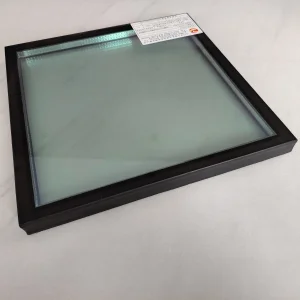
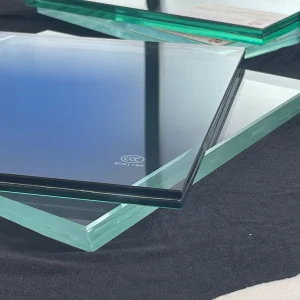
Consumer displays, smart watches, and sapphire windows require contoured profile processing with minimal edge roughness. Traditional mechanical scribing or grinding introduces micro-strains, yielding low bend strength. Femtosecond laser cutting systems coupled with integrated optical thickness meters split thin glass (UTG) by steering localized filamentation profiles. This produces highly polished edge profiles requiring minimal secondary grinding.


The progression of advanced industrial lasers points toward shorter pulse widths, higher peak powers, and integrated spatial-temporal beam profiling. As target substrates become thinner and more complex, manufacturing factories must innovate to maintain control at atomic levels.
Moving from picosecond to femtosecond lasers achieves cold ablation processing. Because the pulse width is shorter than the thermal relaxation time of most materials, target zones vaporize immediately, resulting in negligible edge micro-cracking and stress zones.
By focusing a laser beam into a high-pressure micro-water jet, the light guides internally via total internal reflection, similar to an optical fiber. This enables high-aspect-ratio, parallel-sided cuts with continuous liquid cooling, preventing dust deposition and micro-cracking.
Future measurement modules will integrate multi-spectral sensors to read surface height, material changes, and heat output simultaneously. Real-time monitoring allows the CNC to adjust laser power dynamically based on surface reflections.
From a manufacturing standpoint, this technical roadmap highlights a key shift from basic manual calibration to automated closed-loop corrections. Integrated measurement modules are evolving from passive post-processing inspection tools into active components of the laser beam delivery system, dynamically correcting optical aberrations at kilohertz frequencies.
Operating precision laser machinery on the global stage requires strict adherence to international mechanical, electrical, and radiation safety codes. Compliance certificates (specifically CE, RoHS, and FCC) verify that the manufacturing factory adheres to strict production tolerances, shielding, and safety measures.
Conformité Européenne (CE) Certification: For laser systems, CE compliance ensures adherence to the Machinery Directive (2006/42/EC), Low Voltage Directive (2014/35/EU), and Electromagnetic Compatibility Directive (2014/30/EU). Critically, for laser equipment, it demands strict conformity to EN 60825-1, classifying laser hazards and specifying necessary interlock controls, emission indicators, and safety enclosures.
Localization support is a key pillar of operational uptime. A competent manufacturing factory must offer:
• Remote Diagnostics: VPN-enabled CNC system telemetry, allowing factory technicians to adjust servo drives, scan-head mirrors, and laser parameter profiles.
• Global Spare Parts Support: Standardized, field-replaceable units like laser sources, optical scan-heads, and precision displacement sensors stocked in global distribution hubs.
• Calibration Services: Traceable laser measurement system calibration adhering to ISO/IEC 17025 standards to ensure long-term measurement accuracy.
CE certification proves the laser tool meets European health, safety, and environmental standards. It ensures the equipment incorporates required safety interlocks, optical path barriers, and electrical safety standards (EN 60204-1), preventing import issues at customs.
Femtosecond lasers generate pulses under 10^-12 seconds. Energy deposition occurs much faster than local heat can conduct into the bulk material. This vaporizes the target material directly, resulting in precise, smooth edges without melting the surrounding zone.
During roll-to-roll processing, thin flexible circuit boards stretch and distort. Coaxial laser sensors scan fiducial markers on the moving web. The machine's control system recalculates and adjusts the laser toolpath in real-time, keeping cutting alignment within sub-micron tolerances.
Yes. By employing controlled filamentation and thermal splitting, glass cutting lasers cut UTG down to 30μm thicknesses. Since it is a non-contact process, it eliminates micro-stresses and micro-cracking, improving edge strength compared to mechanical dicing.
 Focus Laser